Notes From A Recent Polar Expedition

Essay by Ludwig Wergenergener, Ph.D. (Oxon.), Dip. Ed.(Utrecht), D.Sc. (Knutsford); as provided by Darren Goossens
Illustration by Justine McGreevy


The Discovery: In the year 34.6 (2207 by the old calendar), the planet of Bruce was discovered. It was named after Bruce Fingleton, who found it one morning on his mail run in between Norman Street and Arthurton Street, Melbourne, Australia, where previously a dog-biscuit factory had been located. This was to prove significant. The planet was soon successfully identified as spherical and in fact in orbit around Canis Major, something that Bruce had apparently failed to notice. Its appearance in between Norman Street and Arthurton Street was put down to it having never been seen before–logically, it was pointed out that since the planet had not, until Bruce’s fortuitous happenstance, been observed, no-one had the right to say where it had or had not been.

#

The Expedition: Three years after Bruce’s discovery, an expedition to Bruce was launched. A small misunderstanding resulted in a Mark IVb Series 2 Interplanetary Exploration Vessel (the Fibonacci Munro, 2.4 million tonnes, extremely gross) crashing through the front porch of Mr. Bruce Fingleton’s house, killing Mr. Bruce Fingleton, his family, and all his neighbours out to a six mile radius. After an appropriate memorial service, a grease and oil change, and the construction of a brand new housing development, the Fibonacci Munro was relaunched, this time in a considerably more upward direction.
Notes From A Recent Polar Expedition

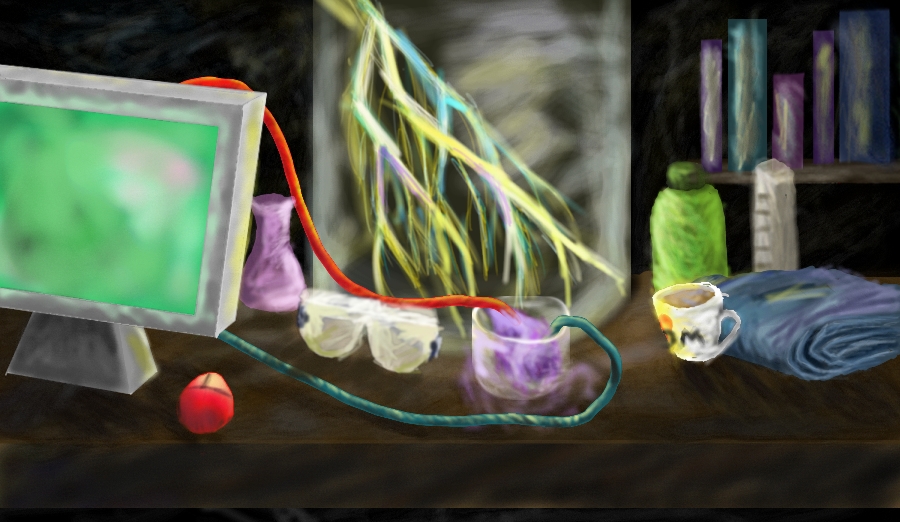
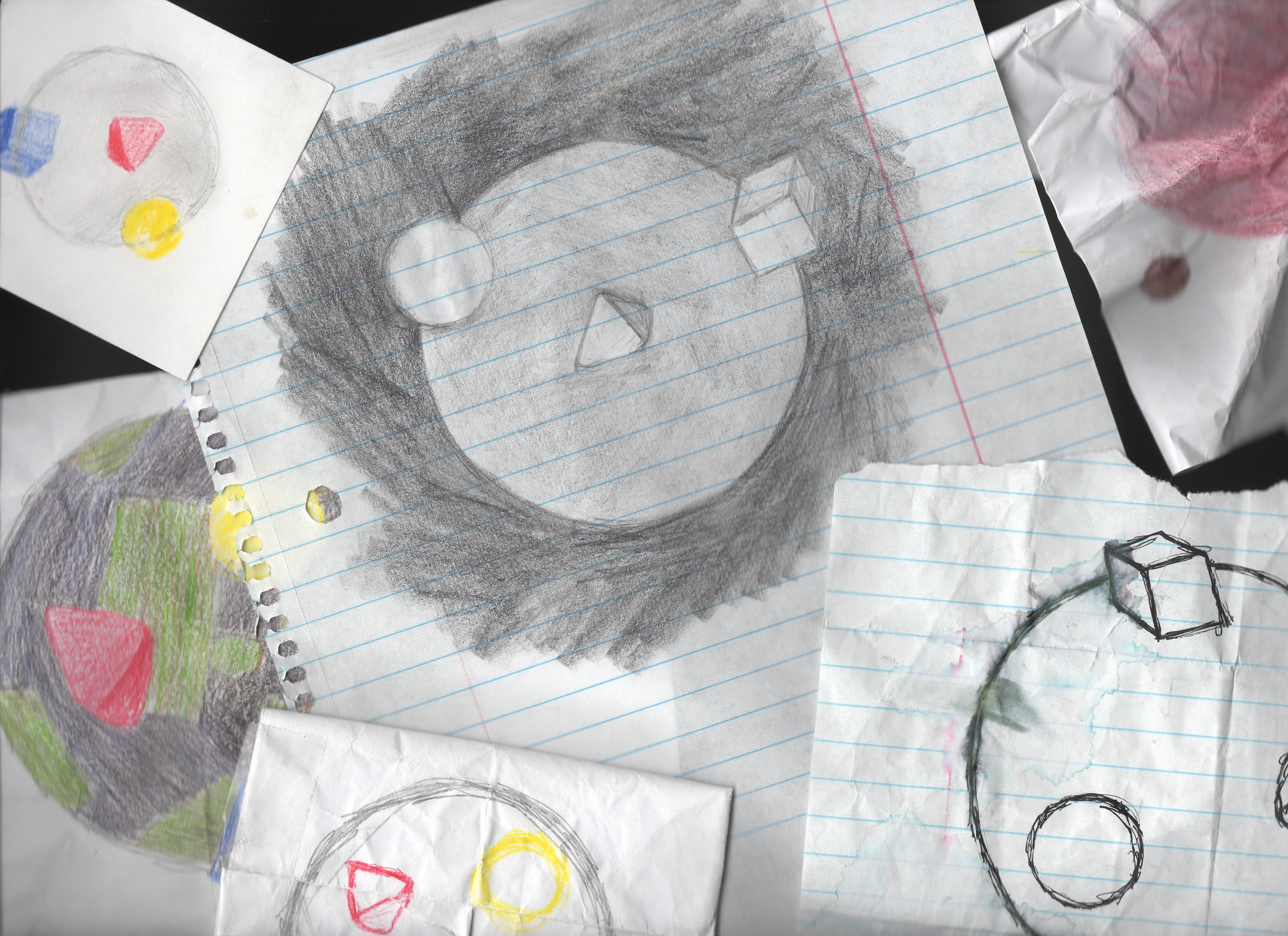
Unlike other planets, it has seven geographic poles, each more inaccessible than the last (though only if you visit them in the correct order). Like Earth, it has exactly two magnetic poles, but, rather inconveniently, they are both at the same end. This causes the average magnetic compass to undergo what can only be described as a nervous breakdown.


To read the rest of this story, check out the Mad Scientist Journal: Summer 2012 collection.


Prof. Ludwig Wergenergener has a D. Phil. in Bovine Husbandry (Oxon.) and three gold stars for colouring inside the lines (Knutsford North Preschool). His work on waterproof cheese was described by the President of the Royal Society as ‘filling a much-needed gap in the scientific literature’. His selection for the first manned expedition to another planet was controversial but certain, given the photographs he obtained of the key members of the selection panel at their New Year’s BBQ (throwing, as they do, a new light on the Chair of the Panel’s battle for legalisation of interspecies marriage). His subsequent history is perhaps too well known to bear repeating here; suffice to say that the Eurovision Song Contest will never be the same again.


Apart from interpreting Professor Wergenergener’s writings and presenting them to the public, Darren has published fiction in Aurealis and Andromeda Spaceways, amongst other magazines, and some allegedly humorous drawings in NFG magazine.


Justine McGreevy is a slowly recovering perfectionist, writer, and artist. She creates realities to make our own seem slightly less terrifying. Her work can be viewed at http://www.behance.net/Fickle_Muse and you can follow her on Twitter @Fickle_Muse.

Posted in Fiction | Tagged , , , , | Comments Off on Notes From A Recent Polar Expedition

It Lives!

After some delay, I finally present to you Mad Scientist Journal: Spring 2012.

Continue reading

Posted in Administrative, Fiction | Tagged , , , , , , , , , , , , , , , , , , , , , , , , , , , , , , , , , , , , , , , | Comments Off on It Lives!

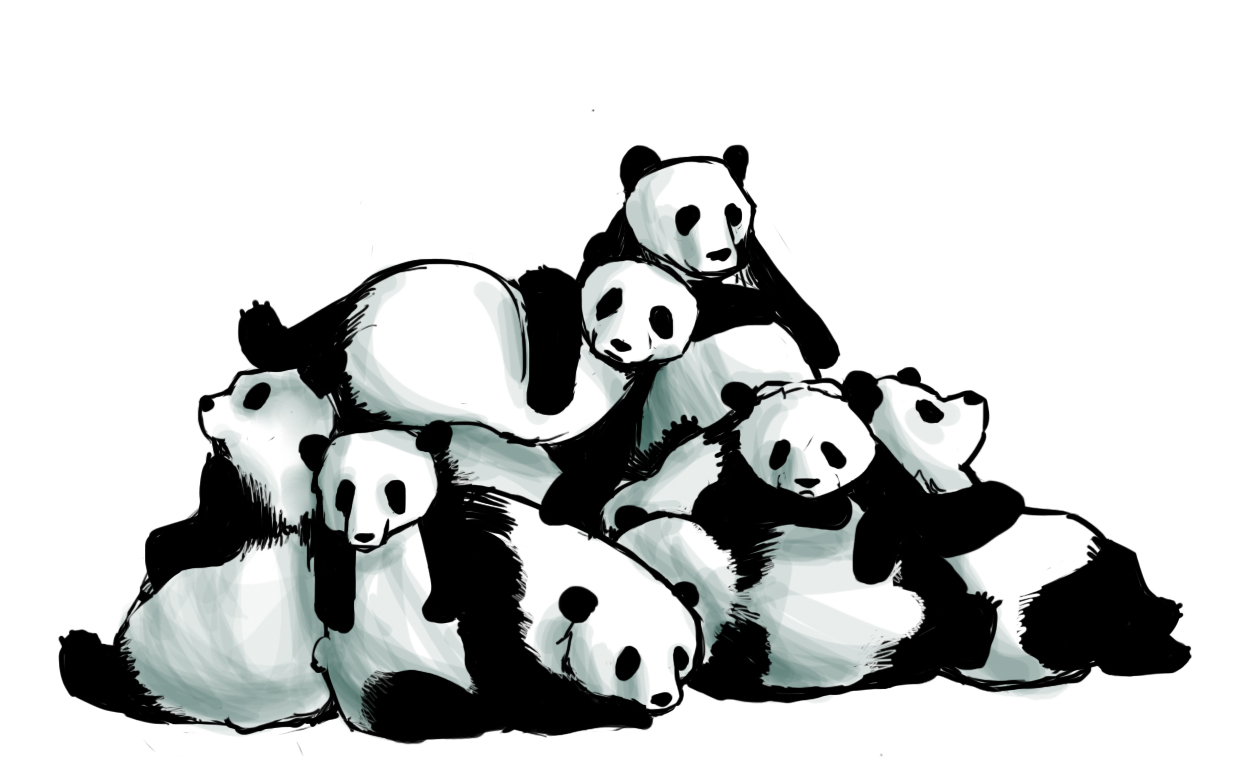
Bears

Essay by an anonymous survivor, as provided by Christos Callow, Jr.
Illustration by Katie Nyborg


1A.

Ever heard of auto-cloning?

You must have. Everyone knows what it is, though most learned the hard way. I used to know one of the scientists who worked on the project. He died, though, in the process. He died quite a horrible death. He was devoured by a bear.

That is, before bears were tamed. The poor man was part of a larger group of scientists determined to find the solution to all of life’s problems. Or, at least, try. They called themselves The Herbert Easters, after the famous re-animator–-also because they were all either named Herbert or born during the Easter, or at least some of them were and the others were not. Maybe no-one was and some of them lied about it. No-one knows.

The original plan was to create a chemical formula that would instantly tame wild animals. The purpose was to remove violence from the animal kingdom at first, and then from humanity. The first few experiments were total failures. Animals died in the process. Some of the scientists too, including the one I mentioned. Bears that grew too powerful and too aggressive had been created accidentally, and then, at the cost of quite a few lives and quite a lot of money, they were tracked down, killed, and replaced.

These bears were incredibly hard to kill. Their skin was harder than that of a normal bear, and they had increased resistance to pain. They were faster, stronger, and fiercer than they were before the experiments. The Herberts studied their corpses with most interest. They weren’t anywhere nearer their original goal, but they now had new ideas to add to the project. They had almost discovered how to make the bear’s skin impenetrable. They imagined they could do the same with humans. They were more excited than ever. They thought they could discover a way to make both humans and animals immortal. That is, at the expense of fertility, of course. In their utopia there would be no death, but no birth either, and the number of existences would always be the ideal. But first, before changing the entire society, they had to succeed in changing the bears.

Through cloning, they managed to keep some of the bear’s behavioural characteristics out of the clone, and through splicing, they combined bears and pandas. The result was a mutated bear-like creature, calmer than the ordinary, resembling pandas more than bears in everything but the shape and the size. They were black and white in colour, like pandas, and fluffy, and comfortable to sit on. Literally, the scientists would sit on them, tickle them, play with their food, annoy them in any way possible, and the new bears would accept it. They were almost without personality, as their natural aggression had been chemically removed.

There was no way they’d survive in their natural environment. They were tamed pets, dependant on their human masters, yet they were expressionless, indifferent, neutral. The cost of the experiment was the bear’s motivation for life. This new bear did nothing but occupy space. It wouldn’t eat much, as it felt no hunger. It had to be fed, once every day and only a little. It would drink water not for pleasure but in order to not die of dehydration. It was a meaningless mass of meat, sad to look at. Alas, was that the future of the animal that once was the glorious bear?

The Herberts continued their experimenting on the hybrid. Their next objective was to make it self-sufficient, so that it could live without any water or food. I don’t know how they did it. I know it took them little more than a year. I know in the end they made it. The outcome was an Ursus Aeternus-–the immortal bear.

Bears

By the end of the day, there was no room in the laboratory for any more bears, yet the bears kept cloning themselves at a steady tempo, ignoring everything that surrounded them.


To read the rest of this story, check out the Mad Scientist Journal: Summer 2012 collection.


The narrator of this story was the last survivor of the bear-apocalypse. A diarist and an old friend of Professor H. P. East of the Herbert Easters, he was one of the “people at the other end of the world” during the apocalypse and witnessed the transformation of Earth to Bearth and the creation of the One-world, free-love, return-to-nature Utopia that was founded on top of the Buddha Bears’ backs and buttocks. Little is known of what became of him, other than that living in the world which the pre-apocalypse people dreamed about drove him to insanity.


Christos Callow Jr. has a BA in Acting, an MA in Playwriting and is currently studying for a PhD in Creative Writing at the University of Lincoln (UK), for which he is researching Utopian/Dystopian fiction and is writing a collection of short stories, exploring utopias of perception such as the Buddhist Nirvana, the Christian “Kingdom Within” and the Lovecraftian Dreamlands.”


Katie Nyborg’s art, plus information regarding hiring her, can be found at http://katiedoesartthings.tumblr.com/

Posted in Fiction | Tagged , , , , | Comments Off on Bears

Gauss’s Invitation

Selected correspondence received by Professor Hans Dorfenheimer during the “Martian Troubles” (1908-1909), compiled by Gary Cuba
Illustration by Justine McGreevy


Rev. Richard Gauss
Denver, Colorado, September 3, 1908

Professor Doctor Hans Dorfenheimer, Göttingen, Germany

Dear Prof. Dorfenheimer,

In reply to your recent letter, I’m very sorry that I cannot offer any substantial help with respect to your inquiry. If I understood it correctly, you are exploring a possible connection between the unusual seismological & meteorological events that affected Russian Siberia in June of this year, and a queer notion once proposed by my grandfather, Carl Friedrich Gauss, in or about 1820.

Gauss's Invitation

As you properly pointed out, an image of the Pythagorean design you described–namely, a right triangle with squares extending from each side–would of course be “incorrect” if rendered on a spherical surface.

To read the rest of this story, check out the Mad Scientist Journal: Summer 2012 collection.


Few among us today fail to pay continuing homage to the memory of Professor Doctor Hans Dorfenheimer for his key role in overcoming the devastating 1908-9 Martian invasion, which came so very close to exterminating all human life on Earth. Born in Bonn, Germany in 1851, he became a respected Professor of Science History at the University of Göttingen, where he studied and taught until his forced emigration to the United States in early 1909. He married Wilhemina Gauss later that year in Sacramento, California, and resided there happily until his death in 1933. While he left no biological heirs, no man could ever claim to have had more friends than he.


Gary Cuba’s fiction has appeared in nearly fifty magazines and anthologies to date. He lives in South Carolina with his wife. For links to some of his other work, visit his website at http://www.thefoggiestnotion.com. “Gauss’s Invitation” was originally published in War of the Worlds: Frontlines, ed. by J. Schnarr (Northern Frights Publishing, 2010).


Justine McGreevy is a slowly recovering perfectionist, writer, and artist. She creates realities to make our own seem slightly less terrifying. Her work can be viewed at http://www.behance.net/Fickle_Muse and you can follow her on Twitter @Fickle_Muse.
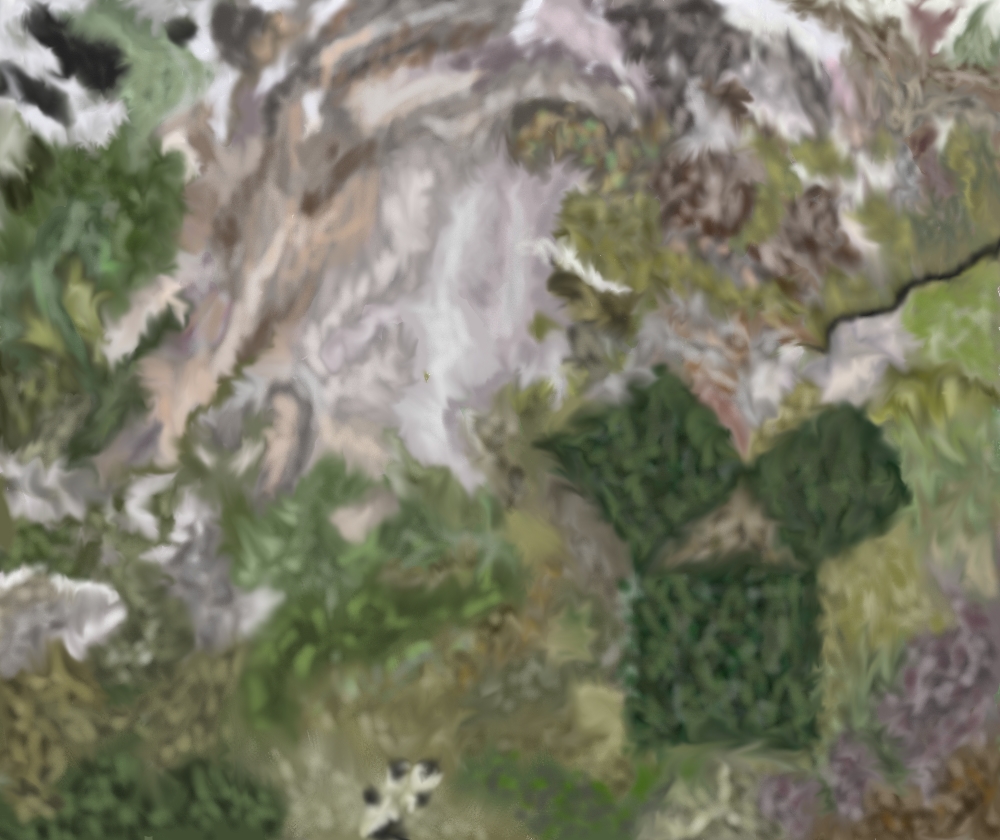
(Author’s note: Carl Friedrich Gauss’s 1820 proposal to create a huge arboreal Pythagorean diagram in Siberia as a means of communicating with extraterrestrial beings is factual.)

Posted in Fiction | Tagged , , , , , , , | Comments Off on Gauss’s Invitation

Special Call for Submissions

While I’m working on getting the Spring 2012 collection out ASAP, I’m also looking to get things going for the Summer 2012. I have a dream of getting it together by the end of September and so we’re putting out the call a little earlier in the quarter in hopes of meeting that goal.

Along those lines, we now have TWO special calls for submissions. Full details are on our Submissions page but here’s the TL;DR version.

Continue reading

Posted in Administrative | Comments Off on Special Call for Submissions

That Man Behind the Curtain: July 2012

Hello again! July has been a crazy month between travel and trying to get the book together. Due to a combination of factors, it’s not ready by the end of the month as I’d hoped. But I’m hoping to have it up soon. I’ll also be putting out a call for submissions for our Summer 2012 issue Real Soon Now. Probably tomorrow. Mainly I want to get a head start on some things so that it will be available closer to October 1st.

Continue reading

Posted in Man Behind the Curtain | Tagged | Comments Off on That Man Behind the Curtain: July 2012

A Resubmission to Xenobiology by Clark et al.

Provided by S. R. Algernon


December 21, 2218

Dear Editors of Xenobiology:

We are writing in response to the latest round of reviewer comments on “The use of acoustic deterrents against macrofauna in the surface ice sheets of Europa: ecological and economic implications” by Clark and Hopkins. We appreciate the efficiency of Xenobiology’s updated Virtual Peer Review, and we note with thanks that your response time of 0.013 seconds is several orders of magnitude faster than the previous round of peer review.

We have tried to address the diversity of opinions from your archive of neuro-cognitive simulations. That being said, we feel that some reviewer concerns may not be relevant to Xenobiology’s primarily human and humanoid audience. We hope that the editors will keep this in mind when evaluating our changes to the manuscript.

A Resubmission to Xenobiology by Clark et al.

"Based on Reviewer B’s comments on the 'shackles of terrestrial genomes' and the depiction of the Europan Worm as “a harmless addition to the Europan landscape” and “a triumph of adaptive nano-genetic engineering,” we suspect that Reviewer B may have a conflict of interest."


To read the rest of this story, check out the Mad Scientist Journal: Summer 2012 collection.


Selena Clark has a Ph.D. in Xenobiology and presently works at the Fulton Memorial Research Station. Her interests include collecting cryophilic molds, shivering, and updating her curriculum vitae.

Jason F. Hopkins has a M.A. in Planetary Ecology. His interests include skiing, griping, and attempting to locate his advisor.

The remaining authors need no introduction and reside within the Faculty-in-a-Box archive on Io.


S. R. Algernon studied fiction writing and biology, among other things, at the University of North Carolina at Chapel Hill. His writing interests include sociological science fiction, Japanese science fiction, alternate histories and puzzle stories like Asimov used to write. He currently resides in Singapore.


Image credit: patrimonio / 123RF Stock Photo


Note that all individuals appearing in the story, except Newton and Galileo, are entirely fictional and any resemblance to any real person, living or dead, is entirely coincidental.

Posted in Fiction | Tagged , , , , | Comments Off on A Resubmission to Xenobiology by Clark et al.

Selected Correspondence from the Pages of National Chronologic

Provided by M. Bennardo


from vol. XII, no. 3

To the editor:

There has been recently a distressing increase in the tendency of our fellow time travelers to treat past and future history with ignorance, contempt, and apathy.

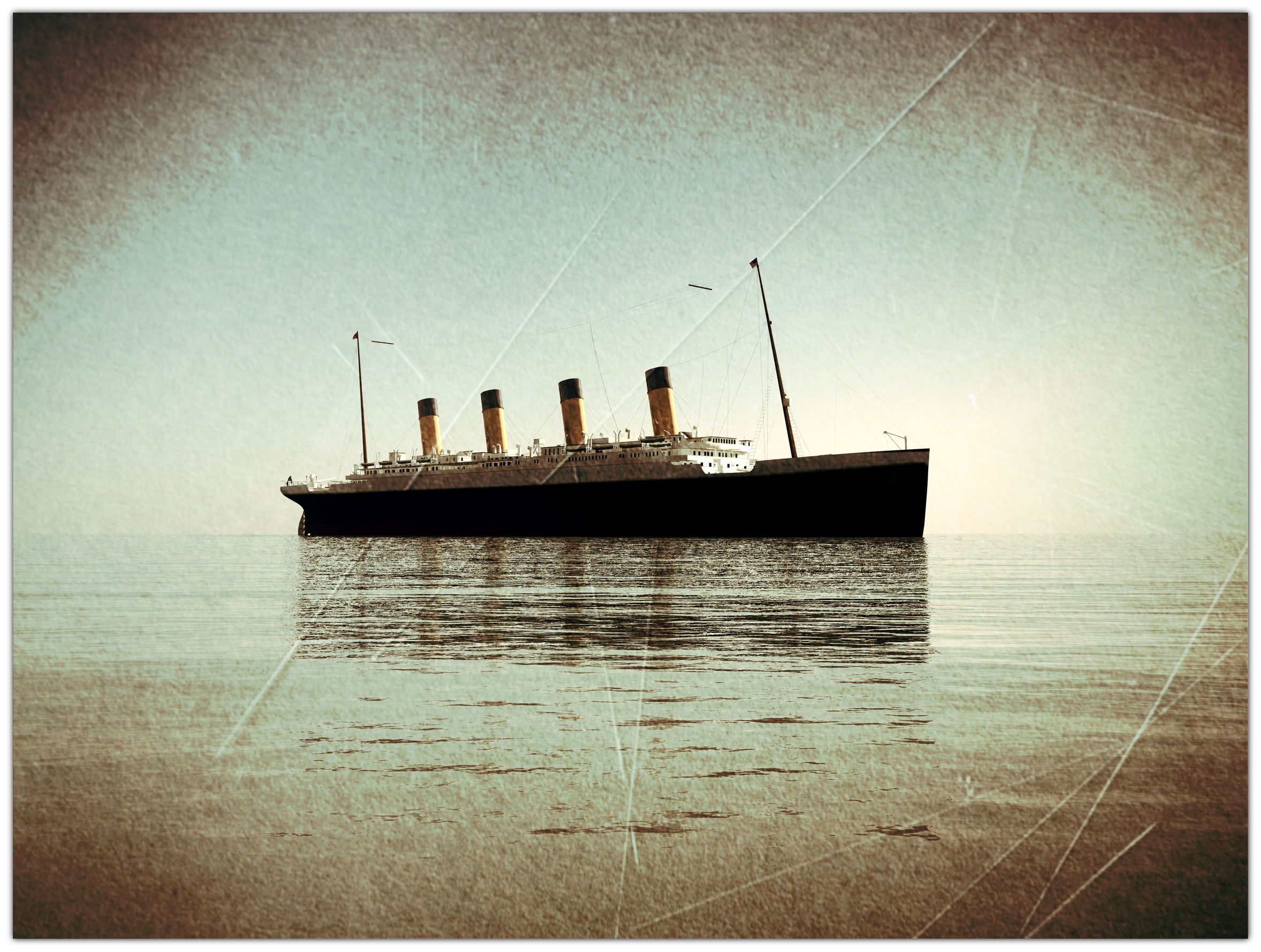
This boorish behavior was at least tolerable when confined to the usual tourist destinations, such as the sinking of the Titanic or the Great Fire of Chicago, but a recent trip to what I hoped would be a quiet moment at the feet of the poet Homer was marred when I encountered a party of loud, nasty, improperly dressed time travelers from the twentieth century.

I do not suppose any readers of National Chronologic are among the bad behavers, but I entreat all to redouble their efforts to uphold the codes of decent time travel no matter how cheap or common the technology may be in their era.

B.W. from 1895

Selected Correspondence from the Pages of National Chronologic

The decks of that doomed ocean liner, from after the lifeboats have been launched to just prior to the breaking of her back, have long been clogged with more gaping tourists than actual victims of the tragedy.


To read the rest of this story, check out the Mad Scientist Journal: Summer 2012 collection.


National Chronologic is the official journal of the National Chronologic Society. Published concurrently across four centuries, the journal is recognized as the publication of record for amateur and professional time travelers. Please inquire at the most recent National Chronologic office for subscription costs in your era. Intertemporal delivery charges may apply for those outside the twenty-first century. Send payment, inquiries, or letters to T.W. Winners, editor-in-chief.


M. Bennardo’s short fiction appears in Redstone Science Fiction, Beneath Ceaseless Skies, Shimmer, and other markets. He is editor of the best-selling Machine of Death series of anthologies. He is also a contributor to The Time Traveler’s Pocket Guide, which is how he knows so much about time travel. He lives in Cleveland, Ohio, but people everywhere can find him online at http://www.mbennardo.com.


Photo of the Titanic is from 123RF Stock Photo

Posted in Fiction | Tagged , , , | Comments Off on Selected Correspondence from the Pages of National Chronologic

Application of the Scientific Method to Family Management: Informal Observations and Conclusions

Essay by L. Vira Calotes-Golem, PhD, as provided by Ash Krafton

Illustration by Justine McGreevy


I don’t know why such a big deal is made over women who successfully manage both a family and a career. Lots of us do it without a second thought.

Maybe it’s all about quality. After all, a great job doesn’t feel like work. It’s more like a paying hobby. Go to work and have fun doing the things you love, right? I guess I do have an advantage in that I’m lucky enough to work from home.

Then again, getting a zoning permit to build a mad scientist’s laboratory is such a bear. I mean, they don’t even have the right forms for it, let alone the right people to sign them.

What’s the big deal, anyway? I don’t understand why people are so judgmental. I pay taxes, don’t I? I don’t add to pollution or squander natural resources. And when was the last time the neighborhood dogs disappeared overnight? (Not that it could ever be traced back to me, but anyways.)

I tried doing things their way but eventually, I learned it was easier just to convert the garage (and the basement and the attic) into my workspaces. I can animate corpses and get the laundry done and still get the kids off the bus every day. It’s important to our family for me to be home for them, just as important as it is for me to be able to pursue my individuality and to single-handedly twist the laws of biochemistry to satisfy my nefarious whims.

Managing career and family–for some of us, it’s wickedly easy.

Application of the Scientific Method to Family Management: Informal Observations and Conclusions

It’s important to our family for me to be home for them, just as important as it is for me to be able to pursue my individuality and to single-handedly twist the laws of biochemistry to satisfy my nefarious whims.


To read the rest of this story, check out the Mad Scientist Journal: Summer 2012 collection.


Dr. Calotes-Golem completed her doctoral studies at the University of Romania and performed her Fellowship at Frankenstein’s Institute for Undead Advancement in Budapest. She has earned the Mary Shelly Distinction for Inspirational Women Scientists in 2009 and has finaled in the International Zombie Awards for the past four years. She’s a member of AZS, TZS, and the United Golem Association Women’s Auxiliary. She resides in Northeast Pennsylvania with her family, their German Shepherd Dog, and whatever she can animate in the garage.


Ash Krafton is a speculative fiction writer whose work has appeared in Absent Willow Review, Expanded Horizons, and Silver Blade. Ms. Krafton resides in the heart of the Pennsylvania coal region, where she keeps the book jacket for Abraham Lincoln: Vampire Hunter in a frame over her desk. Visit www.ash-krafton.blogspot.com for news about her debut urban fantasy novel, Bleeding Hearts: Book One of the Demimonde (Pink Narcissus Press, 2012)


Justine McGreevy is a slowly recovering perfectionist, writer, and artist. She creates realities to make our own seem slightly less terrifying. Her work can be viewed at http://www.behance.net/Fickle_Muse and you can follow her on Twitter @Fickle_Muse.
Posted in Fiction | Tagged , , , , | Comments Off on Application of the Scientific Method to Family Management: Informal Observations and Conclusions

Man Out of Time

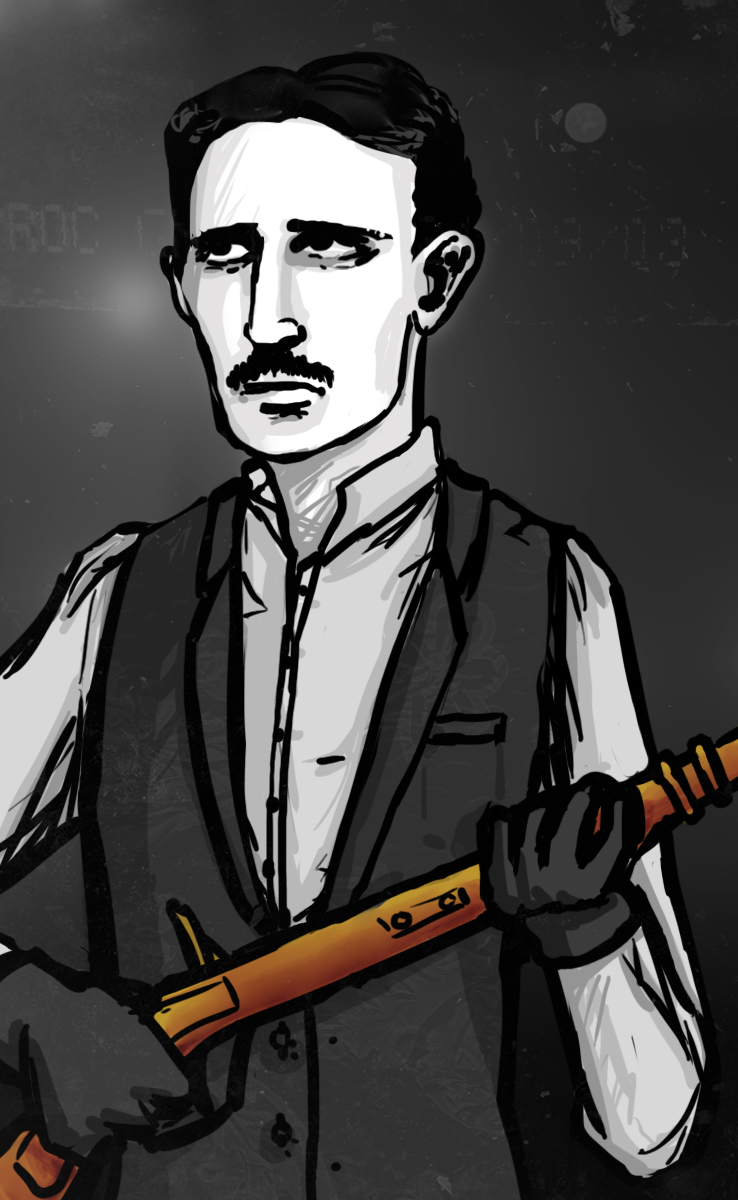
An essay by Nikola Tesla, presented by Adam Israel
Illustration by Katie Nyborg


The beginning of the end started on 22 July, 1899. I stood outside my laboratory atop Pikes Peak, near Colorado Springs. The frequent electrical storms the area was known for made this an ideal location to carry out my research. Forks of lightning danced across the sky and thunder crashed in the distance as a storm front approached. The system moved swifter than I expected and soon small drops of rain pelted my face. Inside, my devoted assistant Czito prepared the equipment. Previous experiments proved the existence of stationary waves and now it was time to test my theory that energy could be transmitted wirelessly. Tonight, the world would be changed forever.

The laboratory’s wooden structure had been built with care. Its roof rolled back to prevent it from catching fire during experiments, as it was now. The metal mast extending from the center of the building reached over a hundred feet into the air and was topped by a copper sphere that would discharge the excess energy. Light from its open door flooded the pasture and Czito stepped into view, waving his arms to get my attention. It was time to begin the experiment.

The magnifying transmitter was the largest Tesla coil I had ever designed. The primary inductor stood in the center of the laboratory and the secondary inductors and the resonant transformer lining the far wall formed a proverbial arrow pointing towards my workshop in New York City. I often sat in my chair in the center of the maelstrom, observing the ongoing experiments. Tonight would be no different.

Electricity from the storm would be magnified through the coils and transmitted over focused waves of energy through the crust of the earth. Receiving equipment in my Hudson Street laboratory waited to record the signal. Tonight’s experiment would be the first of many performed here to perfect the transmission of power and information across the world without the need for wires.

“Czito,” I said, leaning back against the chair, “open the switch for only one second.”

The diminutive mechanic stepped up to the relay and pulled a stopwatch out of his pocket. His free hand grasped the handle of the switch and slid it into position. The air between the coils sparkled and cracked as power from the El Paso Electric Company surged into the transmitter. An eerie blue corona flickered in the air above me briefly before power drained from the coils. Czito stood beside the disengaged switch, looking at me for confirmation.

“Everything is ready, Czito. Close the switch and hold it until I tell you to release it.”

The coils sprang to life and a steady hum filled the room. Sparks of blue and white leapt through the air as electricity raced up and down the windings of the coil, and the blue corona returned. The hair on the back of my neck stood on end and my skin prickled. Overhead, the storm reached its peak and lightning streaked across the sky.

A bolt of lightning struck the copper sphere, sending a torrent of electricity into the coils. The arcs danced at such a fevered pitch that my eyes could not focus on them and the corona expanded at an alarming rate. I tried to stand, to escape before it reached me, but my muscles refused to move.

The world as I knew it resonated around me. Light clawed at my body and my skin tingled painfully as if there were thousands of bees inside my body trying to escape. The last thing I heard before the blue light swallowed me whole was Czito screaming my name.

#

I do not remember the passage of time. The familiar surroundings of Pikes Peak were gone. I found myself sitting on an empty street, surrounded by visions of pervasive gloom. I recognized the tall spire of Trinity Church–or what had become of it. What had once been the landmark of downtown Manhattan now stood like a skeleton looming on the horizon, a shade of its former glory.

The weathered asphalt was cracked and deserted. The visages of the buildings that still stood were crumbled and thick vegetation clung to them like poorly fitted curtains. Twisted lumps of rusted metal, like tortured versions of Ford’s auto carriage, littered the street. Whatever span of time had passed had not been kind to this place.


Man Out of Time

I picked up the alien weapon. It was lighter than I expected; well-balanced and sophisticated.


To read the rest of this story, check out the Mad Scientist Journal: Summer 2012 collection.


Nikola Tesla, a Serbian-born scientist, set the world on fire with his ideas and inventions — sometimes literally. At the time of his death in 1943, he was penniless and largely forgotten. It wasn’t until the declassification of his journals a century later, following the successful deployment of his Teleforce technology in the first extraterrestrial war that the true vision of his work was acknowledged.

Today, he is heralded as the father of the modern age, whose work provided the foundation for free energy, force fields, and teleportation.


Adam Israel was born with one foot on the road and a book in his back pocket. Having lived in Chicago, New York City and Los Angeles, he’s expatriated to Ontario, Canada with his wife, three dogs and three cats. With his nomadic lifestyle a thing of the past, he spends his days working as a software developer and writing.

He can be found at http://www.adamisrael.com and on Twitter @adamisrael.


Katie Nyborg’s art, plus information regarding hiring her, can be found at http://katiedoesartthings.tumblr.com/

Posted in Fiction | Tagged , , , , | Comments Off on Man Out of Time