Robot Ethics and the Turkish Turtledove

An essay by Mando Viday, as provided by Django Mathijsen


Dylah wasn’t the prettiest girl I’ve ever known. Still she is the only one I often recalled with melancholy and even regret. Because although we’d been close, we’d never become “an item.” I’ve often wondered if she should have been the one. So it was no surprise that I recognized her straight away this afternoon, in spite of the fact that I hadn’t seen her since March 2029, almost six years ago. In hindsight, it was also no surprise what subsequently happened. I couldn’t see it coming though. Not for one second. Not even if I’d stopped to think about it.

#

As usual I’d escaped my office and its choking air-conditioning for an hour around lunchtime. Outside a soothing warmth enveloped me, nurturing like a child’s blanket. A big, white blob splashed apart exactly on the tip of my shoe. A “message of love” from a turtledove that flew up and brushed past my head, chased up by two screaming crows.

“Missed me!” I yelled up to the bird as I burst out laughing. The sunlight stabbed my eyes. I bent over to wipe my shoe. A playful breeze caressed my cheeks. The silver birches at the fountain, which were planted in geometric patterns, were waving back and forth. Loudly rustling in its foliage, the dove found refuge.

That’s when I realized that even on these corporate premises, cordoned off from the outside world with razor-wire, high-voltage fencing, and aramid-concrete walls, nature couldn’t be locked out. Mother Nature was defiantly radiating as if she was celebrating the beginning of summer tomorrow. Even the thirty-foot-high, horizontally whirling windmill that shone on top of the twelve-story office bunker like a crumpled up helicopter rotor, was merrily dancing to her rhythm.

Maybe it’s not fair to call the office building, which was shaped in “biometrically dynamic curves,” a bunker. Sure, you’d be hard pressed to find any heavy stones or stern angles on it. The building had completely been wrapped in flowing curvatures with inflatable plastic façades in primary colors. Those façades opened like rose petals when the solar rays hit them and closed again as it got dark.

But under that “essence of nature and humanity encapsulating” illusion I could still feel the bunker that swallows up people and forces them to degenerate into efficient, creative office slaves.

Don’t get me wrong. I’m not complaining. Like most people in the civilized world of today, I had entered into this daily incarceration of my own free will and happily endured it. That was just the price I had to pay to be allowed to do groundbreaking research, to work with the best tools and cooperate with the smartest people. People who were now all huddled together in the office canteen, which was craftily disguised as a tropical oasis. With air-conditioning of course.

#

With the scent of freshly cut grass in my nose and the languor of the day in my legs I strolled along the test track. All over the place, unmanned cars, laden with sensors and electronics, were autonomously making their way through complicated circuits.

Robotic Ethics and the Turkish Turtledove

“Twaddler really knew how to sell it,” she said and started to scribble on my chest with the lipstick. “Emotions and feelings are essential for the successful functioning of people. And so it follows we have to build them into robots as well.”


To read the rest of this story, check out the Mad Scientist Journal: Summer 2012 collection.


Mando Viday always was into robotics and always wanted to be the best. He already competed in Mindstorms competitions at the age of six and in Robot Wars as a student. Historians disagree whether Mando’s jail time and the sex-scandal following the incident at RCI ended his scientific career, or that it allowed him to find his true vocation. The only thing we know for certain is that he went on to join Helger Scheckman’s detective agency “Roborec”, becoming the first and foremost private detective, specialized in robotics technology.


Dutchman Django Mathijsen (www.djangomathijsen.nl) is the only author who’s won the Unleash Award, the most prestigious Dutch SF-story award, three times.

As a son of professional musicians, he was a jazz-organist while graduating as an engineer at the Eindhoven University of Technology. He was technical consultant on the award winning British TV-programs Robot Wars and TechnoGames. And as a science journalist he’s written over three hundred articles for English and Dutch magazines.

Now, he concentrates on writing music and fiction. His first novel, a science fiction techno-thriller published in Dutch in March 2010, was based on Mando’s story.


Image credit: imagesource / 123RF Stock Photo
Posted in Fiction | Tagged , , | Comments Off on Robot Ethics and the Turkish Turtledove

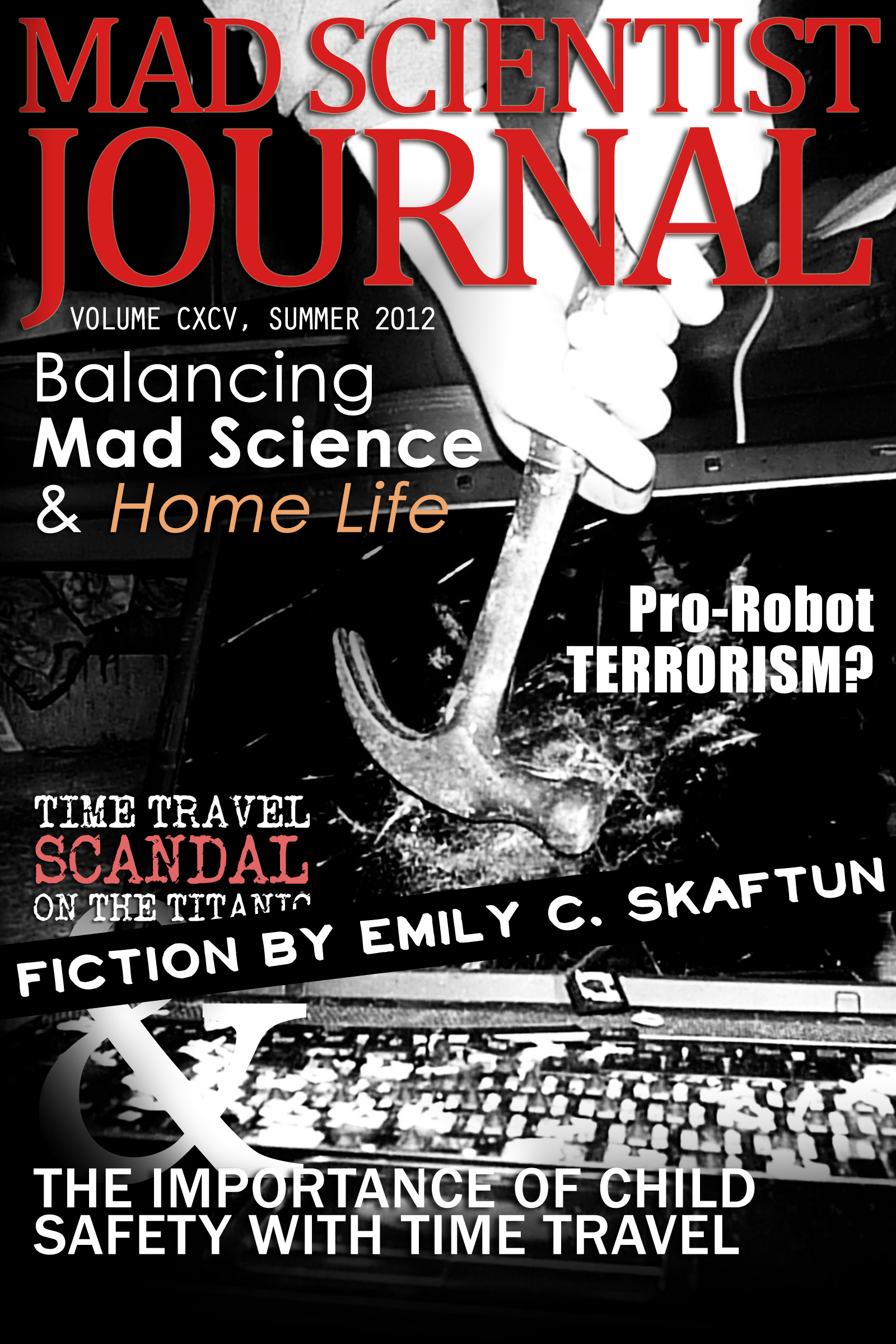
Mad Scientist Journal Summer 2012 Cover Art!

Just thought I’d drop in with a quick mid-week post to share something with all y’all. Last night I got the laid-out cover for the next collection of Mad Scientist Journal. I liked it so much, I had to share it.
MSJ Summer Volume 2012

The photo is by Eleanor Leonne Bennett, the layout work is by Katie Nyborg. I’d like to say I offered insightful art direction, but really I just trusted them to know what they were doing, and they exceeded expectations.

I’m hoping to have the ebook available for purchase by the end of the month.

Posted in Administrative | Tagged , , | Comments Off on Mad Scientist Journal Summer 2012 Cover Art!

Maturity

An essay by Max Steiner, as presented by Nathaniel K. Miller


Scientist profile: Dr. Marvin Steiner was a controversial and pioneering nodal physicist, known for developing the Jaunte Drive, an early prototype teleportation engine. He and his son Max disappeared under mysterious circumstances after an apparently disastrous test of the device. The bodies of Steiner’s wife and lab assistant were later found in a nearby area. Steiner has been suspected in several other disappearances, but remains at large. His current whereabouts and status are unknown. Despite his apparent age, authorities now believe Steiner may still be alive due to the Bester effect (type two).

#

When I crawled into the machine, my dad was still bashing Meier in the face with the stool. My mom kept screaming at him to stop, but he was gone to that place he goes sometimes.  He was screaming about the calibration, calling Meier lazy and stupid. He kept saying “Toby,” which is our dog’s name. He kept saying, “Distance! Distance, not duration!” He was almost dancing, whipping the stool around, dancing and screaming. The last thing I heard before I hit the switch was his voice, angry as all get-out, saying “Just distance!”

When the machine stopped whirring, I was back where I was born. I wanted to see the place where they’d made me. I started walking, real casual, down the sidewalk, heading for the hotel. I’d seen it in pictures: “The Winchester.” People passed by, looking scared. I scowled right back at them, and they all turned away. What a dead-end place this town was. What a hole.

By the time I got to the hotel, my guts started feeling sloshy. I made my way around to the back of the building–-I didn’t want to get caught–-and that’s when I saw myself. At first I thought it was the glass, which was old and lumpy, but it wasn’t–-it was me.

I was huge. My head was as big as a pumpkin, and my hands looked like baseball gloves. I was too big, and sort of melted looking, like I’d been stretched out and then let go. I shrieked, but the sound was awful and low. That was the last thing I saw before my panic pulled me back.

Maturity

I was too big, and sort of melted looking, like I’d been stretched out and then let go.


To read the rest of this story, check out the Mad Scientist Journal: Summer 2012 collection.


Max Steiner is trying to look on the bright side.


Nathaniel K. Miller is a writer and psychologist-in-training living in the Philadelphia area. His fiction can be found in at Mad Scientist Journal and is forthcoming at Apocrypha and Abstractions and Theurgy Magazine.


Image credit: harveysart / 123RF Stock Photo

Posted in Fiction | Tagged , , | Comments Off on Maturity

Suzanne van Rooyen’s Young Adult SF Coming December

In further news from the world of mad science, alumnus Suzanne van Rooyen has just signed a contract with Etopia Press for the publication of her book, Obscura Burning. This young adult science fiction novel is due for release this December! She has also just signed with an agent: Jordy Albert of the Corvisiero Literary Agency. Jordy is representing her YA urban fantasy/cyberpunk novel. This novel made it to semi-finals in the 2012 Amazon Breakthrough Novel Award contest.

Please help share the good news!

Posted in Mad Scientist News | Tagged , , , , | Comments Off on Suzanne van Rooyen’s Young Adult SF Coming December

Mad Scientist Alumni in the Wild

Mad Scientist Journal alumnus Torrey Podmajersky has a new story up at Daily Science Fiction. You can click here to read “The Gifter” now.

Concurrently, assistant editor Dawn Vogel has a new story up at Fickle Muses. You can click here to read “Bringing Light to the World” now.


We now return you to your regularly scheduled mad science.

Posted in Mad Scientist News | Tagged , , | Comments Off on Mad Scientist Alumni in the Wild

Death-Ray Barking Dog Torches Home

Article by Dan Foley, as provided by Kyle Yadlosky
Photography by Eleanor Leonne Bennett


Pine Lane, New Jersey, was rocked yesterday afternoon, when neighbors heard an explosion from one of the houses in the gated community. Apparently, a two-month-old Jack Russell terrier was responsible for the explosion, barking what residents claimed was “fire.”

“I saw that–that Peterson boy walking the dog back from the neighbor’s yard. The thing was real quiet then. I watched them go in. Not two hours later–bam! The whole place was up in flames. The last thing I heard was that little dog rapping out his mouth,” a resident stated.

The Petersons were all home at the time. The father, Raymond, was a college professor. Son and daughter, Ray and Lila, were 11 and 2, respectively, and going to a local private school. And the mother, Lidia, was a stay-at-home mom. No one survived.

Police arrived on the scene around 5:00 pm, roughly a half hour after the explosion.

“The house was on fire, burning rapidly. Firefighters burst in. We pulled out buckets of human remains, ashes. Most had already been burnt down to the bone. This is highly unusual so soon into a fire,” Police Chief, Mike Hutchinson said. “We also found the ashes and teeth belonging to a neighborhood cat.”

Death-Ray Barking Dog Torches Home

We pulled out buckets of human remains, ashes. Most had already been burnt down to the bone.


To read the rest of this story, check out the Mad Scientist Journal: Summer 2012 collection.


Ever since graduating from Rowan University, Dan Foley has been reporting the stories that matter in New Jersey. Over the past decade, he’s covered floods, fires, plane crashes, and riots. He loves to investigate and will never stop uncovering the truth.


Voodoo, sideshows, and a good ghost story—if it’s outside of the everyday, Kyle Yadlosky revels in it. He lives in-between corn fields in Pennsylvania and has been published on Dorkly.com and in Shoofly and Essence literary magazines.


Eleanor Leonne Bennett is a 16 year old internationally award winning photographer and artist who has won first places with National Geographic, The World Photography Organisation, Nature’s Best Photography, Papworth Trust, Mencap, The Woodland trust and Postal Heritage. Her photography has been published in the Telegraph, The Guardian, BBC News Website and on the cover of books and magazines in the United States and Canada. Her art is globally exhibited, having shown work in London, Paris, Indonesia, Los Angeles, Florida, Washington, Scotland, Wales, Ireland, Canada, Spain, Germany, Japan, Australia and The Environmental Photographer of the Year Exhibition (2011) amongst many other locations.

Posted in Fiction | Tagged , , | Comments Off on Death-Ray Barking Dog Torches Home

A Thread Finer than Hope

Essay by Malini Gupta, as provided by Jack N. Waddell
Photography by Eleanor Leonne Bennett


“Professor Gupta,” Dr. Cowen says, voice raised. Had she been speaking? “I’m afraid you must make a decision.”

My undergraduate quantum physics students might have thought it grimly funny, this doctor observing me and expecting an answer, forcing me into one state or another. But of course this notion stinks of a Copenhagen perspective, and that sours the joke as much as the circumstances.

The ventilator hisses, pops, and then hisses again with higher overtones. Its grating rhythm keeps Javier’s blood oxygenated. His face is barely visible beneath the tubes that run into his mouth and nose.

“I hope–” Dr. Cowen hesitates. Her eyes jump to objects in the room, a sad plastic fern, a prism sticker attached to the window glass, the rainbow the sticker casts onto my husband. She looks anywhere but at me.

“I hope you are not letting your theories unduly influence your decision.” Her words spill from her mouth like sweets spilling from a piñata. “I have read your book, Professor. Despite your impressive longevity, you must recognize that it proves nothing.”

How many Drs. Cowen are saying these words just now, throughout state space? There are better than ten to the eightieth power baryonic particles in the universe, each one right now emitting or absorbing photons, flipping their spins, changing energy states. An unfathomable number of quantum events occurs in each moment, and each splits the quantum wave function of the universe. My undergraduates would say that each split of the world’s wave function splits the world in twain, making a pair of worlds that could never touch again, that evolve independently from that point on. This is wrong, but only in its semantics. It has been happening since time itself started.

A Thread Finer than Hope

If I were to remove all the tree but the path I traced with my eyes, only one twisting wooden sculpture would remain.


To read the rest of this story, check out the Mad Scientist Journal: Summer 2012 collection.


Dr. Dhana Gupta is a theoretical physicist at the University of Michigan, where she studies loop quantum gravity. She formally obtained her PhD in physics from Cambridge in 1950, after she had been publishing work in quantum mechanics for thirty years.


Jack N. Waddell is a Southern writer, physicist, and educator. He and his wife live in Arkansas, where he enriches young minds, but only to reactor-grade levels. He is immortal so far.


Eleanor Leonne Bennett is a 16 year old internationally award winning photographer and artist who has won first places with National Geographic, The World Photography Organisation, Nature’s Best Photography, Papworth Trust, Mencap, The Woodland trust and Postal Heritage. Her photography has been published in the Telegraph, The Guardian, BBC News Website and on the cover of books and magazines in the United States and Canada. Her art is globally exhibited , having shown work in London, Paris, Indonesia, Los Angeles, Florida, Washington, Scotland, Wales, Ireland, Canada, Spain, Germany, Japan, Australia and The Environmental Photographer of the Year Exhibition (2011) amongst many other locations.

Posted in Fiction | Tagged , , , | Comments Off on A Thread Finer than Hope

That Man Behind the Curtain: August 2012

Sorry for the delay. Yesterday was an adventure in health. So you get this the afternoon of the second.

This month we get to look at our first full month of ad revenue, the biggest advertising budget to date, and our first collection out for sale. It all comes out a little depressing. Grab your hankies, folks!

Continue reading

Posted in Administrative, Man Behind the Curtain | Tagged , | Comments Off on That Man Behind the Curtain: August 2012

The Rods of Baghdad

An essay by Barnetby Richards, as provided by Paul Williams
Illustration by Justine McGreevy


The author recognises that a scientific journal is not the place to mention personal information, but is grateful for the editor’s indulgence, and trusts that the reader will understand the significance.

14 April 2020 was the day that I saw the world drown and the day when I was reunited with my son.

We met outside the only surviving cinema in New York. Nineteen screens reduced to six in less than a decade. Five of the films being shown could be hired from the DVD shop over the road for a fraction of the price. The sixth, which everyone was queuing for, was officially labelled Time Recorder 512. The nickname on the streets and on the blog-sites was Deluge.

None of the previous 511 Time Recorders, not even the first, had generated such publicity. It was a return to the days of big, eagerly anticipated Hollywood blockbusters, with the difference being that this popularity was dictated solely by the prospective audience rather than a corporation’s marketing budget. Even so, I would not normally have bothered watching, but Aidan expressed an interest and my presence in the American States gave us an opportunity to meet. The cinema is still recommended as a sensible place for a first date when you don’t yet know how to talk to your new prospective partner. I took Aidan’s mother to one, shortly after she responded to my repeated requests for more contact. Aidan and I had lots to talk about but neither of us really wanted to confront the past.

I recognised him from his internet photo. He stood outside a poster that showed one of the original Time Recorders, or rods of Baghdad, as they were then called. My colleague, John Chrisholm, had cashed in on the rods with a documentary that charted their history, or the parts of it that we knew about. There was thirty minutes before the movie began so I talked through the highlights of the documentary, not yet available in the American States due to a delayed copyright deal, with Aidan. It was easier than talking about the divorce, the women, and the decade of no contact. A decade in which I had tried to forget his existence, believing that it was the only option.

I explained that the rods of Baghdad were first sighted over that historic city during the war in the early years of this century. We do not know how long this airborne life form had existed, beyond the perception of humanity, until advanced infrared cameras began scanning the skies above Iraq. They detected several of these minute organisms, noting them for the attention of cryptozoologists, whilst concentrating on the search for human enemies and weapons.

Initially it was thought that the rods were insects, to join the sixteen thousand other new species reported each year. In depth examination revealed that this was not the case, as they do not have any recognisable insectoid features. They are sentient creatures, functioning as organic cameras, created by nature or a deity depending on your particular sensitivity. They capture images within their bodies, storing them on a gelatine-like belt that seems to serve no other purpose. It is possible to retrieve the images by dousing the time recorder in a chemical concoction that destroys the host but allows the film to first be converted so it can be shown to people. I had to explain the concept of traditional film photography to Aidan and was pleased that he showed a genuine interest in science.

The Rods of Bagdad

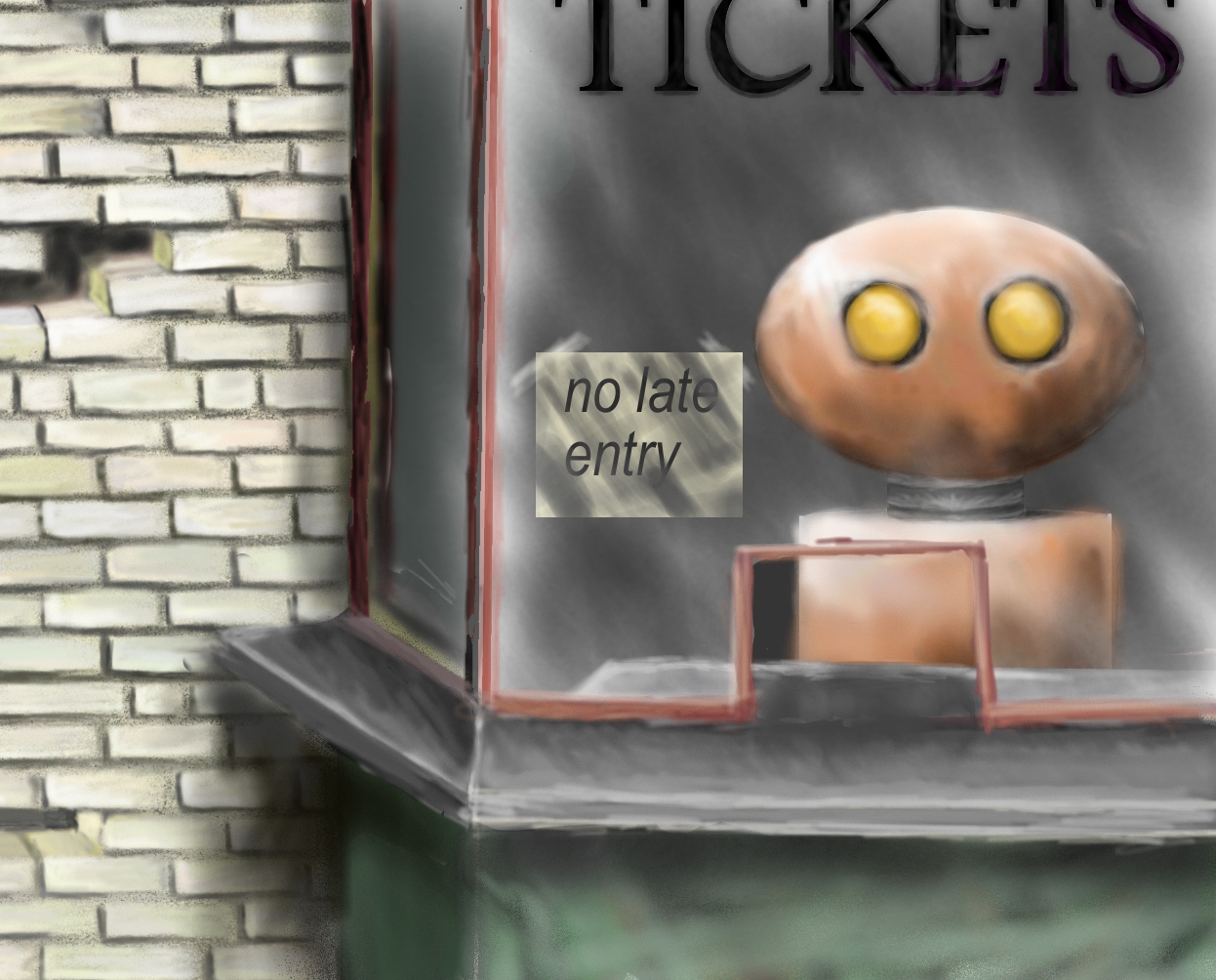
The New York cinema, like all others, had declared that no late entrants would be admitted and, so I was told by the obliging robot at the entrance, had increased their usual prices. The advance booking had cost fifty dollars each, although I paid for Aidan, plus a three percent booking fee.


To read the rest of this story, check out the Mad Scientist Journal: Summer 2012 collection.


Barnetby Richards is Professor of Forensic Pathology at London Hospital. He was born in Dallas and educated at the New York State University. His television series, CSI Reality, ran for two series and was shortlisted for Best Science Program. He is the author of two acclaimed textbooks and is frequently called upon as an expert witness in legal cases.


Paul Williams is a writer best known for his study of the wolf in England, Howls of Imagination, published by Heart of Albion in 2007. He also wrote The Mystery Animals of Great Britain: Gloucestershire and Worcestershire and has contributed articles to magazines such as BBC History and Ripperologist. 44 of his short stories have been published, including the following contributions to anthologies, “To Kill a Nandi Bear” in Doctor Who Short Trips Past Tense, and “Song Ji and the Wolf” in The Blackness Within.


Justine McGreevy is a slowly recovering perfectionist, writer, and artist. She creates realities to make our own seem slightly less terrifying. Her work can be viewed at http://www.behance.net/Fickle_Muse and you can follow her on Twitter @Fickle_Muse.

Posted in Fiction | Tagged , , , | Comments Off on The Rods of Baghdad

Special Call for Submissions: Don’t Forget!

Submissions for the Summer 2012 issue have been pretty slow, so I thought I’d send out a reminder: We are looking for submissions outside of our normal requirements. Not only are we taking general fiction submissions, but we are also taking flash fiction in the form of classified ads. More details can be found on our Submissions page. Submissions are due September 7th, which is only two weeks away! Admittedly, some people will send it in at the last minute but we didn’t want to get to the 7th and think, “Wow, guess we should have reminded people.”

To help you remember, I’m going to get all Breakfast Club on you!

Posted in Administrative | Comments Off on Special Call for Submissions: Don’t Forget!