Another Living Body

From the New York Times Op-Ed. April 11, 2119, by Arlene Morris. Provided by Adam Aresty
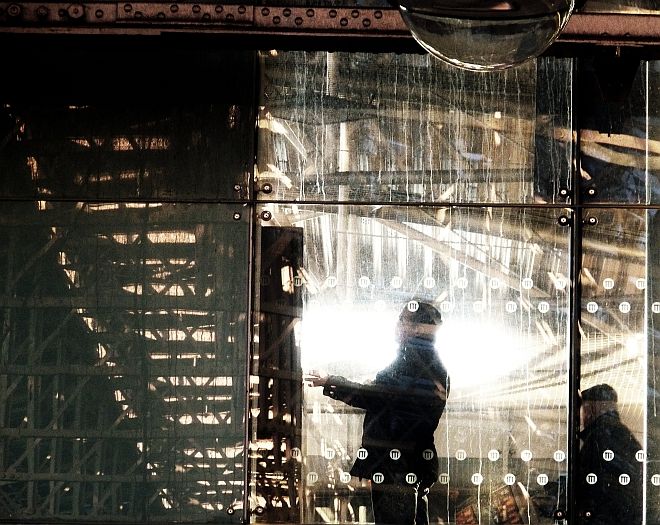
Photography by Eleanor Leonne Bennett


When the info-cube landed in Sydney, the whole world was watching. The Japanese picked it up on their long-range sensors, then the Koreans, then the United States, then everybody else. We knew it was coming, and we knew where it was going to land. What we did not know was how it would change the world we lived in forever.

But this isn’t about the info-cube–that craft the size of a warehouse, geometrically perfect in every way we could measure. This isn’t about the wonders of technology that were gifted unto the human race when its east wall lowered, bathing Sydney Harbor in blue light, inviting any and all to share in the previously unknown knowledge of the universe. This isn’t about the quantum enlightenment that spread around the globe at a pace we could barely keep up with. We cured much of what ailed our planet. Hunger, poverty, pestilence–all forgotten. The cube brought with it a sense of giddy wonder at first, shared by yours truly, but that wonder faded once we had unlocked its knowledge-drive and begun to build the teleportation hubs that would eventually allow us to be anywhere, anytime. No, instead, this is about one man and the complicated choice he made leading up to January 19th, 2119. As the world watched the info-cube close its east wall and float away through the sky, we all wondered who had given themselves to that empty center chamber. More importantly–we all wondered why?
 

Another Living Body

Who built the cube? What did its knowledge mean to these thousands upon thousands of species? These are questions I wondered myself, and I can only imagine Jay had dozens more to ask–only the frustrating nature of the cube prevented us both from doing so.


To read the rest of this story, check out the Mad Scientist Journal: Autumn 2012 collection.


Arlene Morris is an author of technical manuals, and a contributing editor to The New York Times. She is currently working on a book about the history of nano space travel.


Adam Aresty is an award-winning screenwriter who lives in Los Angeles.


Eleanor Leonne Bennett is a 16 year old internationally award winning photographer and artist who has won first places with National Geographic, The World Photography Organisation, Nature’s Best Photography, Papworth Trust, Mencap, The Woodland trust and Postal Heritage. Her photography has been published in the Telegraph, The Guardian, BBC News Website and on the cover of books and magazines in the United States and Canada. Her art is globally exhibited, having shown work in London, Paris, Indonesia, Los Angeles, Florida, Washington, Scotland, Wales, Ireland, Canada, Spain, Germany, Japan, Australia and The Environmental Photographer of the Year Exhibition (2011) amongst many other locations.
Posted in Fiction | Tagged , , , | Comments Off on Another Living Body

Interview with a Mad Scientist

MSJ alumna, Rosemary Jones, has an interview on the Timid Pirate Publishing site about her new young adult novella, Wrecker of Engines. This novella is one of three being published together in Cobalt City Rookies. You can find the interview here.


Posted in Mad Scientist News | Tagged , | Comments Off on Interview with a Mad Scientist

Turkey of Frankenstein

An essay by Max Frankenstein, as provided by Richard Zwicker
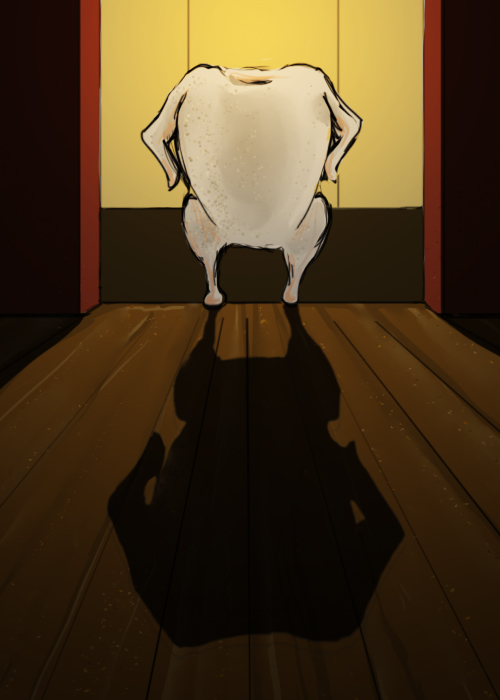
Illustration by Katie Nyborg


There’s a certain justice in not being able to escape your own past. You make your bed, you sleep in it, I always say. It seemed less equitable, however, that I was doomed to sleep with my great-uncle Heinrich Frankenstein, or rather, in his bed. But then again, why should I refuse the inheritance of a large sum of money and a castle in eastern Germanyjust because my great-uncle was a direct descendant from the infamous Victor? Why? Because only someone who’d never watched Creature Feature would move into that castle and resume the Frankenstein experiments. But I fell for it, hook, line, and lightning bolt.

At the time I received the notice of my great-uncle’s death, I was a career student in western Massachusetts, working on a double major of organic chemistry and comparative literature with a minor in German. With twelve years of full class loads, I had amassed a student debt large enough to make myself known to the International Monetary Fund. I needed money and, in lieu of that, a place to hide, so the Frankenstein castle held an appeal for me. It had been in the family since Centurion Frankenstellini needed something to keep his military unit busy. After erecting it, he had them say his name ten times fast.

I should add that I have not kept the name Frankenstein.  To have done so, with my large-sized build, size 13 shoes, and somewhat clumsy lope, would have made me a magnet for cruel humor. I go by Maximillian Stein. The shortened last name left me vulnerable only to the biergarten japes, “Hey, Stein! How about another stein?” and “Thank a million, Maximillian.” These I could deal with.

Within days of receiving the letter, I took incompletes in my classes and bought a ticket to Berlin. I initially had difficulty finding my property. The letter stated it was the only castle in the hamlet of Tubin and that once I got off at the train station, I should “ask around.” But the German equivalent of “castle” earned me nothing but blank looks from the townspeople, all of whom, even the women, seemed to be with mustache. Finally, a heavy set, older man with an uneven beard and limp gray hair said, “Oh, you mean the ruin. It’s on Nachdunkel Hill, ten kilometers west of the village.”

There’s something about the word “ruin” that doesn’t connote rising real estate values. The old man went on to tell me my castle had a caretaker, a Dr. Schwenden, once the most admired medical mind in Tubin. Tragically, his reputation was destroyed by his inclination to prescribe opium regardless of what plagued his patient. Words of wisdom from Dr. Schwenden: “Stubbed your toe, did you? Here, fire this sucker up.” One day, his life’s profession on the line, Schwenden got up in front of an angry crowd of ex-patients gathered in the market square. “I tell you there is nothing harmful about opium, and to prove it to you, I will administer it to myself.” Schwenden lit a thick opium cheroot and calmly smoked it down to a one-inch butt in front of the fruit and vegetable throwing crowd. He then finalized his trip into medical oblivion by falling off the platform and landing on top of the mayor’s teenage daughter. Heinrich took pity on the man and offered him the caretaker job. Rarely leaving the castle’s crumbling walls, Schwenden cultivated his habit. The old man finished his story by saying, “I hear he doesn’t even call himself Dr. Schwenden any more. He prefers the name ‘Schweinhund’.”

Turk of Frankenstein

“So, isn’t this nice,” the turkey said sarcastically. “As if the rich, pampered class of this town doesn’t have enough holidays. You have to borrow holidays from other countries.”


To read the rest of this story, check out the Mad Scientist Journal: Autumn 2012 collection.


Max Frankenstein is a career student with a college debt larger than some mismanaged small countries. The direction of his life–away from his creditors–takes a different turn when he inherits his great uncle’s castle in Germany.


Richard Zwicker is an English teacher who lives in Vermont with his wife and beagle. His hobbies besides writing are reading, playing piano, and fighting the good fight against middle age. His short stories have appeared in “Stupefying Stories,” “Mindflights,” “New Myths,” and “Flagship.” Despite the fact that he lived in Brazil for eight years, he is still a lousy soccer player.


Katie Nyborg’s art, plus information regarding hiring her, can be found at http://katiedoesartthings.tumblr.com/

Posted in Fiction | Tagged , , , , | Comments Off on Turkey of Frankenstein

Podcast Featuring a Mad Scientist

The first chapter of Rosemary Jones’s novella is available in audio format, for those who enjoy such things. You may find it here.

Posted in Mad Scientist News | Tagged , | Comments Off on Podcast Featuring a Mad Scientist

The Fine Point

A secret memoir of Dr. Henry Tuttle, discovered by his nephew and executor, Gary Cuba.


An audio version of this story is available on Drabblecast.


“Once you start to see them, they seem to be everywhere.”

After rendering this enigmatic statement, my friend Rolfson brought his snifter of brandy close to his lips, swirled it gently, and took a sip. The chessboard on the small table between our chairs was devoid of all but a few pieces; he had beaten me once again. Every game we’d played over the last ten years had ended the same way.

To me, it was just a game, an excuse to enjoy Rolfson’s company each Saturday afternoon at his isolated manor house. I felt a touch of pity for the old bachelor, sequestered away as he was. Were it not for my visits, he’d have little contact at all with humanity. But I did relish our conversations.

“See who, Rolfson?” I asked.

“Not who. What. The quanta of reality.” He leaned toward me, his long, silvery locks sweeping, unkempt, over his shoulders. “The stuff that the Supreme One makes the world out of, thinking He’s done a sufficient job of disguising its seams from us.”

I studied one of the antique ivory chess pieces, its base intricately crafted in an impossibly complex series of lacy balls carved within lacy balls, continuing on, seemingly, to infinity. Rolfson had always been eccentric and given to odd speculations.

“You’re being mystical again, Rolfson. What in heaven’s name are you on about now?”

“Look there,” he said, pointing to the oil painting on the wall over the mantel.

I turned in my chair and looked at one of Rolfson’s prized possessions, an original impressionist painting by Signat, done in the artist’s pointillist style. I’d marveled at it before: a busy urban landscape containing buildings and vehicles and energetic people–and one that devolved into a totally incomprehensible pastiche of individual pastel dots when viewed close-up.

“Yes. It’s a wonderful piece. But I’ve always felt impressionism to be … cheating, somehow.”

“As you’ve remarked before,” Rolfson said. “But why, exactly? What is it about the style that makes you feel that way?”

I stood and approached the painting, the heat of the low wood fire below it warming my woolen trousers. “It seems false, Rolfson.” My fingers reached up and hovered an inch from the painting’s surface. “It’s simply not what reality is. I don’t see my reality broken up into dots like this. It’s artifice, a clever trick. That’s all it is.”

“But that is what the Supreme One depends on, my friend,” Rolfson replied. He rose and stood beside me, looking up at the painting. “This painting is merely symbolic, a clue. Surely, you must admit that the universe is constructed from a uniform set of atomic building blocks?”

The Fine Point

Otherwise they were identical in all respects, down to the shape and placement of the oak leaves in the foreground trees, the organic detritus on the ground, the angle of the limbs that stretched above. Absolutely identical in all detail.


To read the rest of this story, check out the Mad Scientist Journal: Autumn 2012 collection.


Dr. Henry Tuttle was a respected Professor of Physics at Manley University prior to his arrest and conviction for the murder of his good friend Jacob Rolfson. Tuttle admitted the crime but never divulged his reason for committing it, nor did he offer any personal defense at his trial. He was executed by order of the Court on June 29, 2002.


Gary Cuba’s work has previously appeared in Mad Scientist Journal (“Gauss’s Invitation“), as well as in 50 other publications to date, including Jim Baen’s Universe, Flash Fiction Online, and Grantville Gazette. Visit his website at http://www.thefoggiestnotion.com for links to some of his other quirky stories.


Image credit: slanas / 123RF Stock Photo

Posted in Fiction | Tagged , | Comments Off on The Fine Point

Spaceship Repair Man Inc.

Essay by Yesbot, as provided by Roger Pattison
Graphic work by Katie Nyborg


Setting up my business hinged on one pivotal piece of equipment that didn’t exist at the time.

Having gone into the marketing strategy in some depth, it had become clear that this was an opportunity in a completely undeveloped niche market. There was just nobody you could call if your spaceship broke down. This was a situation of which I had some first-hand experience, having owned a second-hand ScubaStingray that spent nearly all its life being stationary. I could never find anybody in the Yellow Pages who would come out to fix it. You should try pushing one of those things in space.

It was on one of these unfortunate outings that I realised how wonderful it would be if somebody actually turned up to repair it. It was through this that I discovered the “Proposition of the Infinitely Sliding Scale” and its mathematical connection with another proposition, that being the calculation of the “Infinite Profit Margin.” These two expressions can be logged in graph form and, although this is not the place to extrapolate, the logarithmic interaction of these two expressions is clear.


Spaceship Repairman


To read the rest of this story, check out the Mad Scientist Journal: Autumn 2012 collection.


Curriculum Vitae.
Name: Yesbot.
Qualifications: Screw-on arms and legs: M.D.- Spaceship Repair Man Inc.; not open on Sundays; cheerleader for Martian Chess Championships; best taken with water.
Born: No (Optional)
Previous Experience: Generally bad.
Hobbies: Anything you have to oil. Fridge magnets. Breaking telephones.
Ambitions: To be a cuckoo clock. Who doesn’t?


Brief bio for Roger Pattison.

Musician, teacher, electronics engineer, writer on bad days. Retired on good days.
Interests/obsessions:- keeping away from things (e.g. Hot air balloons, moving stairways, stationary stairways, stairways of alien origin, all stairways called Allen).
Ambitions:- to fail at aqua ballooning. To fail at failing. To fail at black belt cake decorating. To have a cake named after me. To spell my name right. To spell anything right without the aid smoke signals.

Posted in Fiction | Tagged , , , , | Comments Off on Spaceship Repair Man Inc.

That Man Behind the Curtain: October 2012

Another month of the numbers behind the mad science! This month was a little delayed by NaNoWriMo. Sorry!

Continue reading

Posted in Man Behind the Curtain | Tagged | Comments Off on That Man Behind the Curtain: October 2012

Mad Scientist Rebecca L. Brown launches new novel!

It’s always exciting to see our writers out there doing great things! If you’re craving a bit of vampire fiction, Rebecca L. Brown has just launched her new book, A Fever in the Blood, for the Kindle. I’ve bought my copy and I’m looking forward to reading it. If you’d like to support an MSJ alum, then go check out her latest endeavor!

Posted in Mad Scientist News | Tagged , | Comments Off on Mad Scientist Rebecca L. Brown launches new novel!

Superhero Fiction from Rosemary Jones now available!

As announced last week, Cobalt City Rookies is available today. It features  three novellas under one title: Wrecker of Engines by MSJ alumnus (or alumna, if you’re fussy) Rosemary Jones, Tatterdemalion by Nikki Burns and Kensei by MSJ editor Jeremy Zimmerman (who hopes you can forgive this moment of self promotion). Information on the book can be found here: http://www.timidpirate.com/books-booty/cobalt-city-rookies

Posted in Mad Scientist News | Tagged , , | Comments Off on Superhero Fiction from Rosemary Jones now available!

On the Perils of Self-Mummification

An essay by Dr. Constanza Vivette as provided by Sylvia Cullinan
Art provided by Justine McGreevy


Never underestimate the value of a good lackey–or the scheme-destroying potential of an incompetent one.

Perhaps Hairy Joe’s willingness to adopt such a misleading moniker should have been my first clue that the man was as inept as a one-legged unicorn wielding a chainsaw–our correspondence had prepared me for a hulking ape of a man, not the slight, ragged, and embarrassingly hairless gentleman whose sopping-wet clothes left a trail of water on my nice hardwood floor as I led him into the heart of my lair. Nor had I expected the incessant chatter that spewed forth from the man’s fleshy pink lips.

“A bit stormy tonight, eh?”

I shot him one of my best withering looks, well-perfected after hours of intensive training, and carried on towards the dungeon. “Your job, Misleadingly-Hairless Joe, will be to serve as my replacement laboratory assistant until Gretchen starts returning my calls again and comes back to work. I’m currently working on …”

“What happened to Gretchen?” Joe’s voice contained a note of suspicion–a bad sign. My professors at the University had squabbled over every facet of the malicious sciences, and disagreed about every idea but for one–that a good henchman was as loyal as he was silent. My new friend, I feared, lacked both of these salient qualities.

“She had a personal issue.” I wasn’t ready to open up to Joe about the anguish I’d experienced when Gretchen had lost a few layers of skin to the pore-sealing serum we’d been concocting and stormed out of my lair in rage. I hadn’t had a good afternoon snack since she’d left–the hussy had gone so far as to steal the last of the snickerdoodles on her way out. It was a grievous sin, indeed, but the longer I spent in the presence of Hairy Joe, the more eager to forgive my heart grew.

On the Perils of Self-Mummification

Suddenly I felt something dripping down my face. I brushed my hand against my cheek, only to realize that the strange concoction of chemicals I’d used to preserve my youthful allure had caused my skin to break out into pus-oozing boils.


To read the rest of this story, check out the Mad Scientist Journal: Autumn 2012 collection.


Dr. Constanza Vivette received her doctorate in experimental biology from the Academy of the Malovent Arts & Scienes in 1992. Since then, she has published a number of papers documenting her experiments, including her Hershowitz Prize-winning article, “The Diabolic Utility of Domestic Felines.” She currently resides in a spacious lair in the Swiss Alps where she lives with her wretched henchman, Hairless Joe, and a clowder of tricloptic cats.


Sylvia Cullinan likes writing stories about giant mantises, virgin sacrifices, and, occasionally, mummies. She also likes making friends rather a lot, so follow her on Twitter @SylviaCullinan if you enjoy reading about bizarre creatures, discussing speculative fiction, or viewing pictures of the writer’s cat.


Justine McGreevy is a slowly recovering perfectionist, writer, and artist. She creates realities to make our own seem slightly less terrifying. Her work can be viewed at http://www.behance.net/Fickle_Muse and you can follow her on Twitter @Fickle_Muse.

Posted in Fiction | Tagged , , , , , | Comments Off on On the Perils of Self-Mummification