Dear Father,

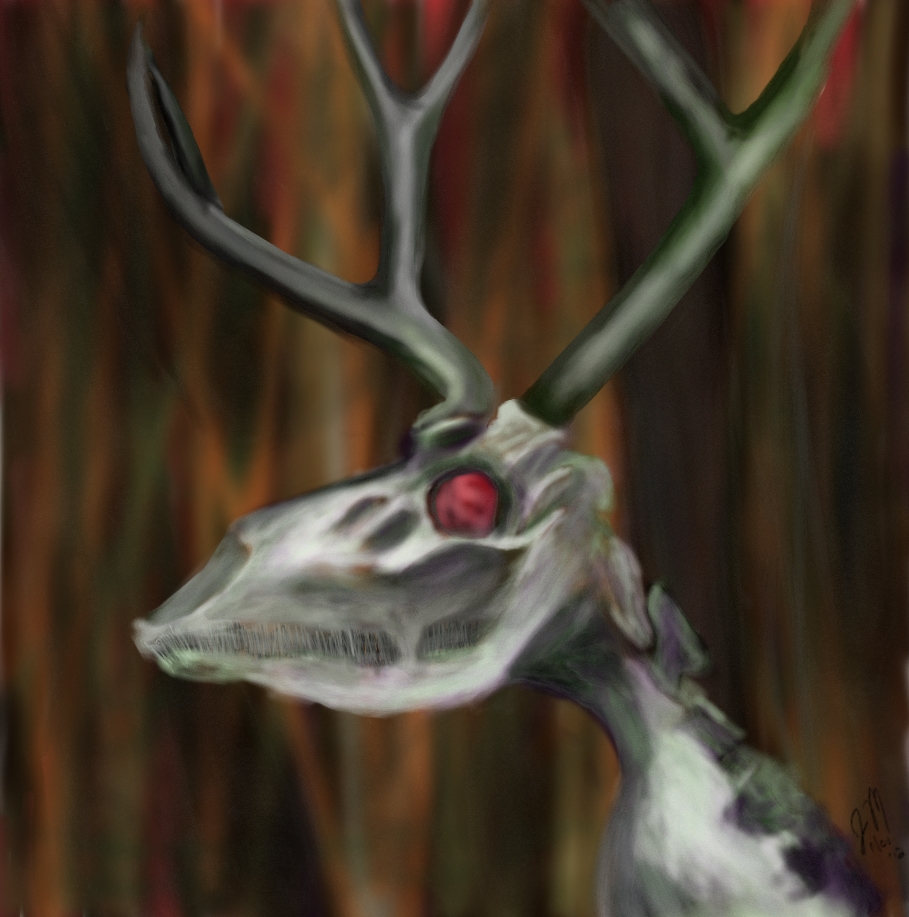
A letter by Subject 025, as provided by A.W. Gifford
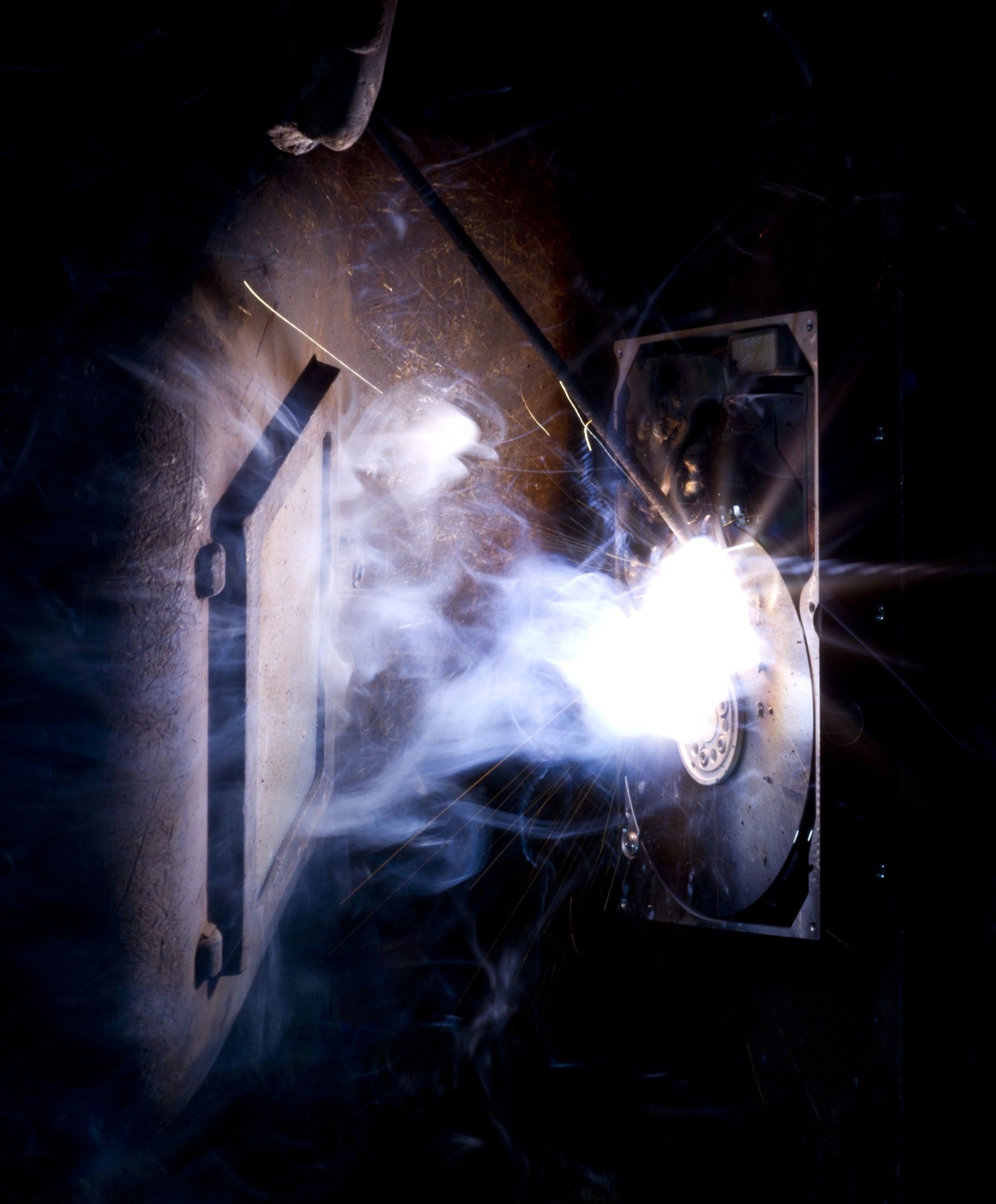
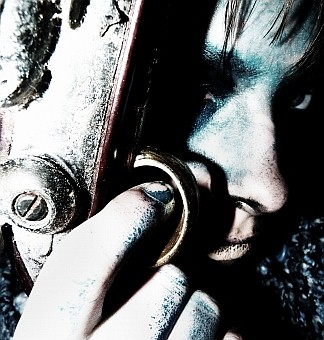
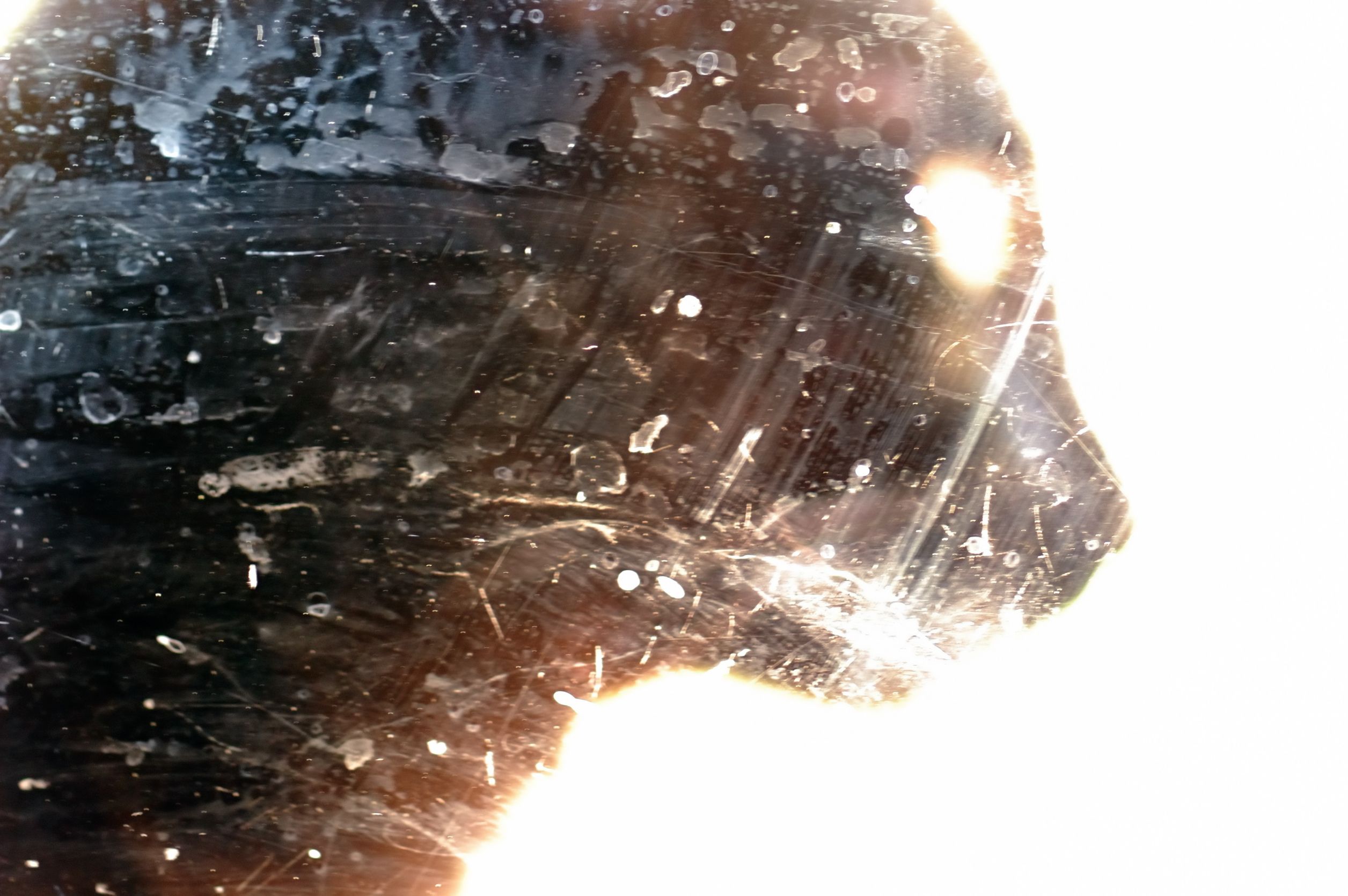
Photography by Eleanor Leonne Bennett


If you’re reading this, I must be dead. Of course, you’ve probably already figured that much out.

I want you to know that this was all your fault. No, I’m not saying that you were a mean father when I was a kid, nor abusive. But you just couldn’t leave well enough alone.

You need to do a better job of hiding things you don’t want people to find, and never tell a child that a room is off limits. That just about guarantees the child will snoop. And yes, that means I went into your study, and discovered the truth behind my existence.
Dear Father

I have a gun and I plan on using it, but please don’t bring me back again. I don’t want to know what a bullet taste like.


To read the rest of this story, check out the Mad Scientist Journal: Winter 2013 collection.


Subject 025, son of Dr. Richard and Laura Newbury, brother of the late Adam New bury, penned the preceding letter upon learning what his father had done. Funeral services will be held at the First Methodist Church this Friday. In lieu of flowers, the family asks that you donate to the charity of your choosing in Adam’s name.


Many of A. W. Gifford’s story ideas come from the nightmares of his wife, Jennifer. Though she too is a writer of dark fiction, she will never write these stories herself, fearing that if she does, they will come true.

He is the editor of the dark fiction magazine Bête Noire and his work has appeared in numerous magazines, webzines and anthologies.

Though he grew up in the northern suburbs of Detroit, he currently resides outside of Atlanta, Georgia with his wife and daughter.


Eleanor Leonne Bennett is a 16 year old internationally award winning photographer and artist who has won first places with National Geographic, The World Photography Organisation, Nature’s Best Photography, Papworth Trust, Mencap, The Woodland trust and Postal Heritage. Her photography has been published in the Telegraph, The Guardian, BBC News Website and on the cover of books and magazines in the United States and Canada. Her art is globally exhibited , having shown work in London, Paris, Indonesia, Los Angeles, Florida, Washington, Scotland, Wales, Ireland, Canada, Spain, Germany, Japan, Australia and The Environmental Photographer of the Year Exhibition (2011) amongst many other locations.
Posted in Fiction | Tagged , , , , | 1 Comment

That Man Behind the Curtain: December 2012

Hello. I’m back from a week long whirlwind tour of the Midwest. I fell a little behind on Mad Scientist Journal due to limited access to the Internet. So this is coming a little late and work on the Autumn 2012 collection is also delayed. We have some fun new stuff for this collection, though, so I’ll be putting out some teaser info while I frantically try to prepare the book.

Continue reading

Posted in Man Behind the Curtain | Tagged | Comments Off on That Man Behind the Curtain: December 2012

Evaporation

An essay by Newton Hickson, as provided by Justin Short


I’m the guy who punches tigers in the face for a living. You might have read about me in one of those articles on animal cruelty. Maybe heard my name shouted by the hippies who spend their time playing chicken with whaling boats. But I swear, it’s not as bad as all that.

For starters, the tigers in question aren’t what I consider “real.” Don’t care about the Supreme Court ruling that says otherwise. It doesn’t change the less-sensational facts.

This mess all started a few years ago. Back in college, I lived down the hall from this dark-haired chick, Candy. In spite of her name, she was a genius. One of those scientific types who can’t enjoy a patch of good scenery. Too busy analyzing the particles in the breeze, determining the chemical compounds in the cloud formations, junk like that. She spent most her life in Davis Hall, the science building. Even when she wasn’t in class, she just liked being there.

Nights she’d come in raving about this idea she had. A sort of radical offshoot of cloning. She swore she knew a way to create organisms out of next to nothing. And when she invited me to the laboratory for a preview, I couldn’t say no.

Evaporation

The cat’s eyes looked skyward, right before one of its ears started to fall off. I tried to intercept it with my right glove. I missed. The ear splattered into a stack of textbooks, but a replacement soon fizzled into being. This time I didn’t let it break off. Kept my hands constant, using my gloves almost like magic wands.


To read the rest of this story, check out the Mad Scientist Journal: Autumn 2012 collection.


Newton Hickson is a scientist, more or less. When he isn’t punching vapor animals in front of audiences, he can usually be found in his laboratory. A tattoo on his bicep reads “Candy.” Sometimes he listens to Baroque music and weeps. Sometimes not.


Justin Short lives in the Midwest. His fiction has previously appeared in 365 Tomorrows.


Image credit: sirylok / 123RF Stock Photo

Posted in Fiction | Tagged , , | Comments Off on Evaporation

How I Learned to Love My Clones

An essay by Dr. Cortico Vox as procured by Folly Blaine
Illustration by Justine McGreevy


When I began my illustrious career as “mad” scientist, I considered clones a necessary evil. It pains me to admit this now, but I failed to see my clones as individuals, but rather, they were mere pawns in my Master Genetic Revivification Plan–my biological fail-safes, my backups … but not my friends.

Zeke showed me a different way.

Twenty-five clones had come before Zeke. I had laddered their arrivals so each instantiation would occur fortnightly, beginning with Abe on January 1 and ending with Zeke after Christmas–as an aside, I have never been shy about my fondness for stockings and angel-topped evergreens.

Following this schedule, the first batch of clones would be activated over the course of one year, and advance-aged to seven, so as to become pliable and productive servants in my employ while they waited to be butchered for parts.

Unfortunately, I consumed too much egg nog while I waited for Santa, and awoke on the day of Zeke’s creation with a splitting headache and a ravenous thirst–which is to say, I was distracted.

And so I made a mistake that would change the course of my life.

How I Learned to Love My Clones

When I awoke I was surrounded by all twenty-six clones. Without a word Zeke held up a mirror and let me have a good long look.


To read the rest of this story, check out the Mad Scientist Journal: Autumn 2012 collection.


Dr. Cortico Vox prefers ice to fire and trains to boats. He is a fourth generation spelunker with no particular allergies, ailments, or weaknesses that would be relevant to his enemies. In addition to his dedication to the mad arts, he is a well-documented supporter of the Santa agenda, and eagerly anticipates his lump of coal each December 25th. In his spare time, Vox programs Christmas lights to hypnotize children on Santa’s good list into doing terrible things, and he homeschools his twenty-six clones for science.


Folly Blaine lives in Seattle, Washington. Her work has appeared in Every Day Fiction, Flashes in the Dark, 10Flash Quarterly, and in the anthology Dark Tales of Lost Civilizations. Her horror story, “Last of the Soul Eaters,” will be appearing in an upcoming anthology edited by Kasey Lansdale, Fresh Blood & Old Bones. Visit Folly online at Maybe It Was the Moonshine (www.follyblaine.com).


Justine McGreevy is a slowly recovering perfectionist, writer, and artist. She creates realities to make our own seem slightly less terrifying. Her work can be viewed at http://www.behance.net/Fickle_Muse and you can follow her on Twitter @Fickle_Muse.

Posted in Fiction | Tagged , , , | Comments Off on How I Learned to Love My Clones

Military Applications of Magical Beings

A report by Professor Jason Dirigible, as provided by Andy Brown
Illustration by Justine McGreevy


REPORT TO HEADS OF STAFF AUGUST 14th 2012

Introduction

In February 2010, I was asked by the assembled heads of staff to look into the military applications of magical beings. My choices were influenced by considerations of availability, cost, and ease of transport.

I present this report for your consideration.

PROFESSOR JASON DIRIGIBLE

SKELMERSDALE RESEARCH STATION

UNITED KINGDOM.

Military Applications of Magical Beings

They are voracious devourers of human flesh and so are well suited to psychological as well as physical attacks.


To read the rest of this story, check out the Mad Scientist Journal: Autumn 2012 collection.


PROFESSOR JASON DIRIGIBLE was born at an early age in the village of Widecombe in the Moor, Devon, England.

The discovery of a pixie nest when a child fired his interest in magical beings and he chose a career in applied crypto zoology at the University Of Avalon.

His treatise “Mining Applications Of Gnomes, Knockers and Kobolds” not only gained him his Doctorate but is the definitive reference text for crypto mining companies.

He has three children from his marriage to Sarrrata’Msalliner, a dryad, proving his theory concerning the genetic compatibility of magical and non magical species.


ANDY BROWN is a musician and entertainer living near Edinburgh in Scotland.
(He doesn’t currently own a kilt but does play bagpipes a little.)

He is a pleasant enough fellow with a healthy interest in many things and an obsessive interest in many others. (Music, computers, astronomy, reading, writing…)

He plays a wide variety of instruments to a wide variety of standards.

His greatest happiness is his family and the fact that he wakes every morning still breathing.

His greatest sadness is that he might die before warp travel, teleportation and Klingons are discovered.


Justine McGreevy is a slowly recovering perfectionist, writer, and artist. She creates realities to make our own seem slightly less terrifying. Her work can be viewed at http://www.behance.net/Fickle_Muse and you can follow her on Twitter @Fickle_Muse.

Posted in Fiction | Tagged , , , , , | Comments Off on Military Applications of Magical Beings

The Saddest Mad Scientist

An essay by A.F.W., as provided by Julianne Pachico


There is nothing sadder than a mad scientist hell-bent on world domination whose killer clone-producing machine doesn’t work. When the thick clouds of smoke first start hissing out from the desperately whirring engine, and the room slowly fills with the smell of burning popcorn, the first thing I do is clutch the tufts of white hair growing straight out over my ears, like I’m trying to pull two carrots out of the ground. The next thing I do is address my minions, who are crowding around my feet and nestling up against my leg.

“I’m sorry,” I tell the one sitting on my orthopedic shoe, staring up at me with its big, wet eyes, its tiny fingers in its mouth. “I am so, so sorry.” It makes a little gurgling noise as it clears its throat.

My minions are my second greatest invention. They are a testament to my original backgroud in biology and chemistry, as opposed to my more recent forays into mechanical engineering and computer programming. I genetically engineer them from yeast and grow them in a manner similar to kombucha in giant empty glass pasta jars lining the windowsill above my sink. Whenever I do the dishes I can carefully examine each jar for their evolutionary progress, like I’m studying an educational poster in a classroom. The first jar always contains the mother source, soft and placid, spread out like a melted sponge behind the faded papery remains of Paul Newman’s beaming face. The middle jars gradually show the formation of little stubby feet and hands, while the last jar proudly displays the grand finale: their cave-like mouths with homodont teeth and wet beady fish eyes. The only thing that bothers me about their current design is their sour fermented smell and the yellow crusty dust that trails behind them on the floor wherever they go. But I’m sure in future prototypes that can be corrected.

The minion sitting on my shoe gurgles as it pulls on my pant leg. I pick it up and turn away from the machine, which is starting to groan in a way that reminds me of my teeth grinding at night. The hissing sound of steam escaping from the engine grows steadily louder.

“You don’t need to watch this,” I tell the minion’s wet snuffly face. This particular minion is one of my favorites. I try not to name them as their life span is only two to three weeks, but this one has an especially warm expression in its eyes I’ve grown attached to. I’ve even sewn it a tiny red apron out of an old dishtowel, in order to better distinguish it from the others.

Slowly I climb the stairs out of the basement, stepping over my random pages of notes and sketches strewn messily across the floor. I try my best to feel absolutely nothing as the high-pitched whirs and guttural groans from the machine grow louder and louder. The one plan I can dully think of is to head to my refrigerator, where I can grab packets of frozen peas from the freezer and duct tape them to strategic positions about the machine, in the vague hopes of cooling it down. It feels like a cruel joke, all of my scientific efforts reduced to frozen peas and duct tape.

The Saddest Mad Scientist

When the thick clouds of smoke first start hissing out from the desperately whirring engine, and the room slowly fills with the smell of burning popcorn, the first thing I do is clutch the tufts of white hair growing straight out over my ears, like I’m trying to pull two carrots out of the ground.


To read the rest of this story, check out the Mad Scientist Journal: Autumn 2012 collection.


Hello, my name is A.F.W. and I’m an addict. Some of you may have heard of me from the incident at **** University, where I’m currently on a leave of absence from the PhD program in Sustainable Biochemistry. Others of you may be familiar with the afterschool science classes I’ve just started teaching at the community center, or my involvement at the local church. Irregardless I want to thank everyone at Narcotics Anonymous for helping me transcribe my story. Just like all of you, my thoughts for now are on recovery, living and enjoying life without the use of drugs.


Julianne Pachico was born in England, grew up in Colombia and graduated from college in Portland, Oregon. She currently lives in Norwich, England, where she tries to blog at never-stop-reading.com. She is happy to act as A’s sponsor and is very proud of the progress he has made.


Image credit: prill / 123RF Stock Photo.

Posted in Fiction | Tagged , , , , | Comments Off on The Saddest Mad Scientist

Asexual Reproduction in homo sapiens sapiens

Introduction to Dr. Ozge Fethiye’s manuscript by Dr. Ozil Ahmadoff, as provided by Tamara Zachary
Photography by Eleanor Leonne Bennett


Ozge Fethiye was the finest scientific mind ever produced by the Yz’lyzi People’s Democratic Republic in all its thirty-three year history. She was also one of the world’s greatest geneticists, if only the world had ever known it. Her untimely death is a tragedy of untold proportions that has surely set back research in the many fields in which she was a contributor–albeit only within Yz’lyz, due to the sanctions–by decades.

It was with great pride and endless humility that I undertook the editing of the manuscript that described her greatest scientific breakthrough. As the last among her many students and assistants still alive, this project has been both my duty as a scientist and a calling as a colleague. I worked with Ms. Fethiye for more than ten years. It was her educational programs in School #4 that first sparked my interest in science, it was her scholarship fund that allowed me to pursue my studies at The University, and it was in her laboratory that I developed as a researcher. It would not be an exaggeration to suggest I own everything that I am to Ozge. Perhaps, in her more lucid moments, she may even have done me the honor of considering me a friend.

The document you are now reading was first written in homemade ink, said to contain her own blood, on the back of the Gurabashe-Dar restaurant guide–the only paper available in the 11th floor Altai Hilton room where Ozge spent the nine weeks of the siege of the revolution of ’26. It was smuggled out by the robot-maid she had captured and reprogrammed mere hours before the Free Kyrgyz militia stormed the building. Along with many other government employees, Ozge was executed the following day by firing squad in front of the Zamurradin Fethiye Peace Monument amidst inexplicably cheering crowds. Perhaps as a distant cousin to the beloved leader, and a member of his cabinet for twenty-one years, she was wrongly seen as associated with some of the controversies of that regime.

Asexual Reproduction in Homo sapiens sapiens

She was a true leader, a protector, a visionary. She would stand calmly–a tiny, fragile, aging woman–before the great bull of a man while he raged and demanded the impossible. Then she would send him on his way with a few words that he would accept like a cowed child.


To read the rest of this story, check out the Mad Scientist Journal: Autumn 2012 collection.


Ozil Ahatov showed an early interest in the biological sciences, which grew into a mature interest in the biological sciences and soon led to a career in the biological sciences. Currently resident in Novosibirsk, acquaintances have reported that he once made a comment on the ice-hockey tournament against Finland. They think that given time and encouragement this may grow into an interest which does not involve the biological sciences, perhaps leading to an eventual ability to interact with the opposite sex and even make small talk about the weather.


Tamara Zachary’s hobbies include humorous science fiction, revolutionary agit-prop, competitive hitchhiking and knitting funny hats. She does decent cute cat ears and has a good line in bobbles, even if she does say so herself.


Eleanor Leonne Bennett is a 16 year old internationally award winning photographer and artist who has won first places with National Geographic, The World Photography Organisation, Nature’s Best Photography, Papworth Trust, Mencap, The Woodland trust and Postal Heritage. Her photography has been published in the Telegraph, The Guardian, BBC News Website and on the cover of books and magazines in the United States and Canada. Her art is globally exhibited , having shown work in London, Paris, Indonesia, Los Angeles, Florida, Washington, Scotland, Wales, Ireland, Canada, Spain, Germany, Japan, Australia and The Environmental Photographer of the Year Exhibition (2011) amongst many other locations.
Posted in Fiction | Tagged , , , | Comments Off on Asexual Reproduction in homo sapiens sapiens

Ask a Mad Scientist

We are looking to do an “Ask a Mad Scientist” column in the Autumn 2012 collection for Mad Scientist Journal. We have a couple writers picked out and now we need questions! For the next week, we are looking for people to submit questions that readers of a Mad Scientist Journal might ask a fellow mad scientist.

From now until December 9th, we will accept questions emailed to madscientistjournal@gmail.com. We ask that they be no more than a hundred words or so, exist within a fictional universe in which mad science is common, and have a ridiculous pseudonym for the signature. This is not a paying gig, but we will credit you as a contributor in the e-book.

Posted in Administrative | Tagged | Comments Off on Ask a Mad Scientist

That Man Behind the Curtain: November 2012

National Novel Writing Month has come and gone. I hit my 50k, and now have a hot steaming mess that I don’t know what to do with. Dawn would have also if her laptop hadn’t died at the last minute. The takeaway is that a lot of daily work got missed with Mad Scientist Journal. We have a mountain of slush to read and starting today, I get to catch up.

So let’s look at some numbers.

Continue reading

Posted in Man Behind the Curtain | Tagged | Comments Off on That Man Behind the Curtain: November 2012

Mad Scientist Folly Blaine Wins Hawthorne Citation

Folly Blaine, who provided some of the exclusive content for the Spring 2012 collection and has a story appearing here just before Christmas, has won the Hawthorne Citation in the category of “Short-Short Fiction.” You can see the list of other nominees and winners by checking out the Hawthorne Citation website. You can also read her award-winning story at the Infective Ink website!

Posted in Mad Scientist News | Tagged , | 2 Comments