Dr. Derosa’s Resurrection: Part I

By R.G. Summers
Photo by Dawn Vogel


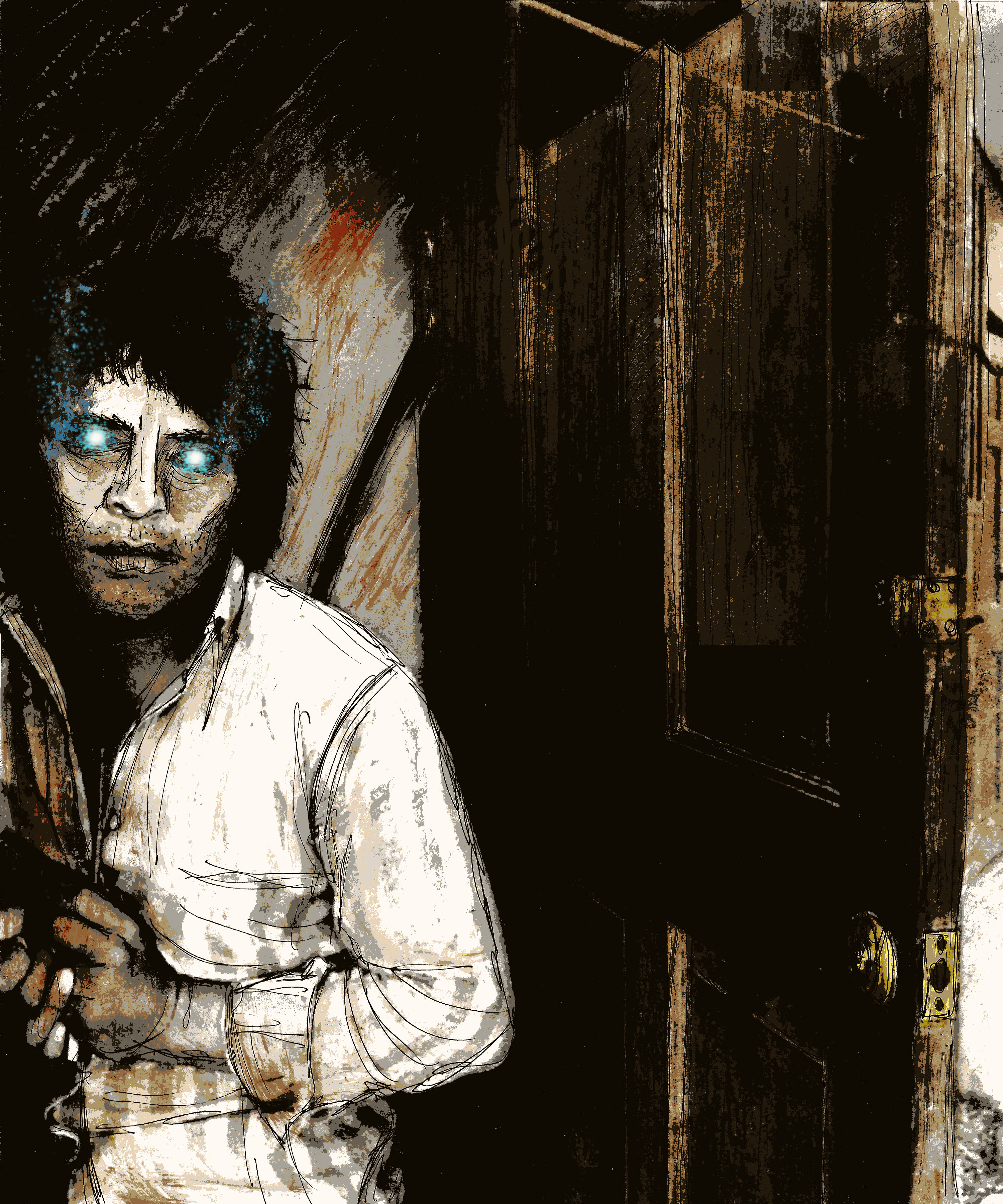
I knew that my family wasn’t going to make a big deal out of my eighteenth birthday. It would have been nice if they’d at least been there, but with Dad incarcerated in a Trongodian prison and Uncle Bruce doing business in Egypt, it just wasn’t going to happen.

I had modest plans to mention it in front of the girls and use my birthday as an excuse to go out for frozen yogurt later. I was–as I had been for so many years–stuck at boarding school with nothing to do but antagonize the administration. Earlier that morning, I had stolen a cow’s heart from one of the biology labs, and then hidden it in an absurd location within the English department. I had decided that was an adequate celebration of my legal adulthood, and when you thought about it, that cow’s heart was really a gift that would keep on giving. That is, as it slowly started to rot …

But, as it turned out, Bruce had made plans for my birthday. When I was called down to the school’s administrative office, I was initially worried that they had already found my cow’s heart. I was pleasantly surprised to find out that Uncle Bruce was taking me home for the weekend.

Continue reading

Posted in Fiction | Tagged , , , | 1 Comment

Isaac’s Butterfly

An essay by Abraham J. Miles, provided by Dan Hart
Art by Leigh Legler


1991-07-07 – 16:00

My son discovered a giant green moth today. Its wing patterns are asymmetrical, with five-fingered jagged appendages peeling off the edges. It has three antennae protruding from its head instead of two. I’ve never seen anything like this and believe it must be a new species.

The autopsy and final determination will have to wait, however–Isaac nearly threw a tantrum when I reached for the ethyl acetate. He begged me not to kill his butterfly. He said we should study it instead.

Isaac is almost eleven–too old for such misplaced emotional fits. But the boy is sharp, and he is right that the moth seems to employ atypical aerial maneuvers. For now, I’ve agreed to keep the insect alive for further study.


1991-07-09 – 16:00

Isaac continues to call the moth a butterfly despite my frequent corrections. Much to my chagrin he has even given the specimen a name: Dave.

“Do you really think Dave is a new species?” My son never grows tired of the question. He ecstatically dances around my study, bursting with energy. “Do you think they’ll name it after us?”

I cautioned Isaac it might not be a new species. That we won’t truly know until after the autopsy.

Isaac’s eyes widened.

“Son, this is just like the frogs you dissected. Less, even. It’s just an insect.”

“You don’t understand!” Isaac scooped up the moth’s jar and stormed out of my study to his room, slamming the door behind him. He’s been in there over an hour.

I’m sure he’s fine, but I had thought I’d prepared him better for this turbulent part of his life. I guess no matter what you do, a boy’s hormones will rage.


Isaac's Butterfly


To read the rest of this story, check out the Mad Scientist Journal: Summer 2013 collection.


Abraham J. Miles received a PhD in Entomology from UC Davis in California. After his wife died, he retired to the Montana mountains where he researches native ecosystems and collaborates on papers in his free time.


Dan Hart is a writer and systems engineer working, arguing, and hiking in Silicon Valley with his boyfriend. Dan maintains a blog and list of publications at http://www.danhartfiction.com. He believes in the power of fiction as a tool to solve real world problems.


Leigh’s professional title is “illustrator,” but that’s just a nice word for “monster-maker,” in this case. More information about them can be found at http://leighlegler.carbonmade.com/.

Posted in Fiction | Tagged , , | Comments Off on Isaac’s Butterfly

Less Than Five Days Left to Save the World

And by “save the world” I mean “submit to the special call for submissions.” If you have a story you’d love to submit, especially one that wouldn’t otherwise fit our guidelines, send it in! We also need more fictional classified ads and questions for the advice column. For details on what we’re looking for, check out our Submissions page.

Posted in Administrative | Tagged | Comments Off on Less Than Five Days Left to Save the World

Effects of Subcranial Electrode Implantation on Neurological Function: Insights from a Case Study

An academic paper by Flavius Vulnificus, PhD, as provided by Carl Grafe
Art by Luke Spooner


ABSTRACT

While electrical brain stimulation is commonly used as a treatment for disorders like Parkinson’s disease and epilepsy, the neurological effects of direct exposure to electric pulses over time are not clearly understood. In order to investigate the matter, I developed a novel battery-powered device that would, when implanted at the base of the cranium, send a steady current of electricity into the basal ganglia of the brain. The trial is ongoing, but in the short time since I implanted the device, dramatic alterations in mood and behavior have been observed.

INTRODUCTION

The sequence of events that resulted in this experiment requires some explanation. As you have likely already noted from my name, I have in recent years published several psychological papers while employed as a tenure-track faculty member at the University of Houma. After five years of teaching classes, publishing papers, and, in my view, reasonably tolerating the slew of political and interpersonal tedium that is imbued in academia–particularly in psychology departments–I was suddenly and inexplicably terminated. The official reason given was that my “personality disorders” were disrupting other professors’ ability to do their work. I’m sure you can imagine the relish with which the chair of a psychology department would slap that diagnosis on one of her subordinates. Although I had been involved in some lighthearted sabotage–just pranks, really–of several co-workers’ research projects in order to improve the morale of the department–which I might add was sorely needed given everyone’s apparent inability to take a joke–I know the real reason for the dismissal was jealousy. Approximately $600,000 worth of research funding was received by my colleagues the year I left ($500,000 worth of which I subsequently destroyed, ha ha!), and yet all of it was worthless, mere children’s toys compared to the neural electrophoresis work I was engaged in. Yet it was ended with the simple swish of a signature on a pink slip.

After struggling for several months to find another position commensurate with my superior ability, my house foreclosed and I moved into my mother’s basement, where I now reside. Dark were the months that followed, filled with daytime television and frozen pizzas. Initially, the very thought of such a lifestyle would have made me shudder, but I have to admit I’ve started to develop a bit of a taste for it–especially Mexican-style. Anyway, after months of depression and languor, I was one day immersed in an installment of “General Hospital” when it occurred to me: I’m a PhD psychologist! Why am I sitting around miserable when I can self-treat? There was no institutional review board to stop my research, no chair or dean or university president to inhibit the ideas that my mind alone could summon. I could do it all on my own. And thus this research study was initiated.

Effects of Subcranial Electrode Implantation on Neurological Function: Insights from a Case Study


To read the rest of this story, check out the Mad Scientist Journal: Summer 2013 collection.


Dr. Flavius Vulnificus served for several years as a distinguished professor of psychology at the University of Houma. His studies at the University were primarily devoted to neural electrophoresis, an area of research he has continued to pursue in independent practice — his latest results have been prominently featured for the past several nights on the evening news. He enjoys practical jokes, long walks on the beach, and collecting memorabilia.


Carl Grafe lives with his family in the Salt Lake Valley, which he enjoys on days when it’s not snowing. His nascent career as a mad scientist ended abruptly in fourth grade when he tried to convert a record player into a robot arm in a rainstorm and received some electric pulse stimulation therapy as a result.


Luke Spooner a.k.a. ‘Carrion House’ currently lives and works in the South of England. Having recently graduated from the University of Portsmouth with a first class degree he is now a full time illustrator for just about any project that piques his interest. Despite regular forays into children’s books and fairy tales his true love lies in anything macabre, melancholy or dark in nature and essence. He believes that the job of putting someone else’s words into a visual form, to accompany and support their text, is a massive responsibility as well as being something he truly treasures. You can visit his web site at www.carrionhouse.com.

Posted in Fiction | Tagged , , , , | Comments Off on Effects of Subcranial Electrode Implantation on Neurological Function: Insights from a Case Study

That Man Behind the Curtain: July 2013

And now, the secret numbers behind the mad science.

Continue reading

Posted in Administrative, Man Behind the Curtain | Tagged | Comments Off on That Man Behind the Curtain: July 2013

A Bright Future

An essay by Keeper, as provided by Jamie Lackey
Art by Justine McGreevy


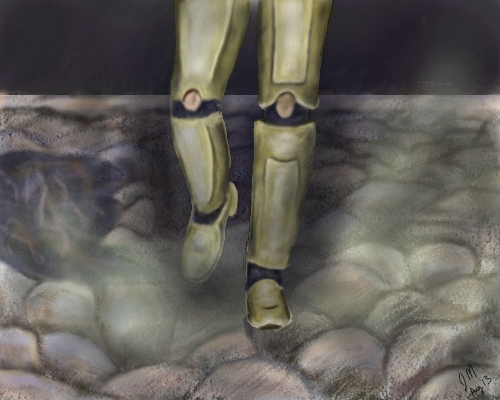
I strode through the long twilight shadows. My metal feet clanged against the cobbles as I dodged plumes of noxious steam rising from manhole covers and jumped puddles covered with filmy layers of oily sludge. Human offal lined the streets. I was glad that I’d never been equipped with olfactory receptors.

I hated this city. Any being with an ounce of vision could see that it was nothing more than a glorified rats’ nest, filled with women of loose morals and men made superfluous by advancing technology.

I reached my master’s dingy quarters. The cramped, damp space was lit with a single oil lamp. The windows had been boarded over, and a soiled cot occupied half of the floor. My master slouched behind his roll-top desk, cradling an ugly pen.

My master had kept better quarters, once. He’d been selling off his fine furniture, piece by piece, to support his vile habits.

I expected that the desk would be gone soon.

A Bright Future


To read the rest of this story, check out the Mad Scientist Journal: Summer 2013 collection.


Keeper is a self-aware automaton who is diligently working to rid the world of humanity and its accompanying filth.


Jamie Lackey lives in Pittsburgh with her husband and their cat. Her fiction has been published by over a dozen different venues, including The Living Dead 2, Beneath Ceaseless Skies, and Daily Science Fiction, and she has appeared on the Best Horror of the Year Honorable Mention and Tangent Online Recommended Reading Lists. She reads slush for Clarkesworld Magazine, works as an assistant editor at Electric Velocipede, and helped edit the Triangulation Annual Anthology from 2008 to 2011. Her Kickstarter-funded short story collection, One Revolution, is available on Amazon.com. Find her online at www.jamielackey.com.


Justine McGreevy is a slowly recovering perfectionist, writer, and artist. She creates realities to make our own seem slightly less terrifying. Her work can be viewed at http://www.behance.net/Fickle_Muse and you can follow her on Twitter @Fickle_Muse.

Posted in Fiction | Tagged , , , , | Comments Off on A Bright Future

Frankenstein’s Fallacy: Optimizing the Process of Electrically-Based Corpse Resurrection

An essay by Doctor Timothy Straznovic, as provided by David Ferris
Art by Dawn Vogel


It’s the same old story: scientist cannot find love (or is sterile), scientist seeks progeny, scientist creates life using crimes against nature, and lives happily ever after with his new son/daughter/slave. Some of us take the nice, predictable route, and build ourselves a robot. But what about the more adventurous of us?

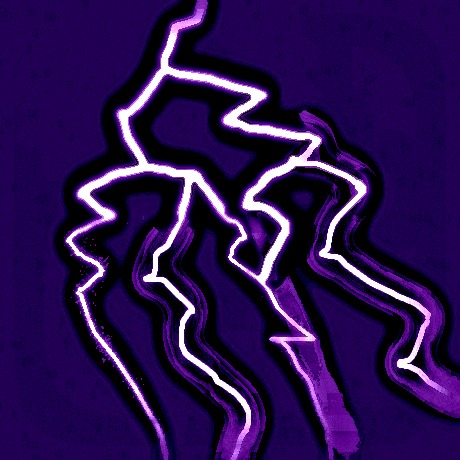
The real classic in this field is the resurrection of corpses. Simply find your nearest graveyard, dig up a few bodies, stitch them together, and wait for a convenient lightning bolt. But is this really the best way to go about it? This method leaves so much to chance that it can result in tragedies such as burnt body parts (Killpatrick, 2004), lobotomy (Andronostav, 1929), and the classic fault, a genuine sense of entitlement (Frankenstein, 1818). As seen in Dr. Victor Frankenstein’s seminal work, “Life, or: How I Learned to Stop Worrying and Hunt the Monster” (1820), we see that if performed incorrectly, the “lightning bolt method” can result in unfortunate results for all involved.

Frankenstein's Fallacy: Optimizing the Process of Electrically-Based Corpse Resurrection

To read the rest of this story, check out the Mad Scientist Journal: Summer 2013 collection.


Doctor Timothy Straznovic is a tenuous professor of Biodeadical Engineering at Painbridge University. He has previously held positions at Pale, Axeford, and the Masochistic Institute of Technology. In his spare time, Timothy enjoys long walks on the beach, short walks on the beach, and middle-of-the-range walks on the beach. Timothy lives with his wife, Eris, his son, Gregory, and his 327 undead revenants, all of which respond to either Archibald, Wilfred, or Martha.


David Ferris is an undergraduate Electrical Engineering/Mathematics student at the University of Newcastle, Australia. He has a website at http://randomini.com/ which has not been updated in pretty much forever. This is the first writing piece he’s ever gotten published. Besides, like, one or two things, but those were years ago. Like, waaaaaay back in school. And they were TERRIBLE, let me tell you what. Spelling and grammar mistakes EVERYWHERE. He hasn’t really gotten that much better, to be honest. This is pretty terrible stuff.


Dawn Vogel has been published as a short fiction author and an editor of both fiction and non-fiction. Although art is not her strongest suit, she’s happy to contribute occasional art to Mad Scientist Journal. By day, she edits reports for and manages an office of historians and archaeologists. In her alleged spare time, she runs a craft business and tries to find time for writing. She lives in Seattle with her awesome husband (and fellow author), Jeremy Zimmerman, and their herd of cats. For more of Dawn’s work visit http://historythatneverwas.com/

Posted in Fiction | Tagged , , , , | Comments Off on Frankenstein’s Fallacy: Optimizing the Process of Electrically-Based Corpse Resurrection

Review of Benedict Hall

A review by Dawn Vogel

Benedict Hall by Cate Campbell


Boeing engineers, female doctors, and high society collide in the 1920s Seattle of Cate Campbell’s novel, Benedict Hall. Four very different points of view intertwine to tell the story of the Benedict family and their associates as they adapt to a changing world following the conclusion of the Great War.

Margot Benedict works as one of the few female doctors in 1920s Seattle. She is hounded by her brother, Preston, while the rest of her family, while not openly antagonistic, wish that she had chosen another field. Her allies include Blake, an elderly African American man who has served the family for many years, and Frank Parrish, a compatriot of Preston’s during the War. When Frank Parrish arrives in Seattle looking for work, he becomes swept up in the friction between Margot and Preston. Though his association with the Benedicts gains him a position at Boeing, it also leads to his undoing.

Campbell paints a gorgeous picture of Seattle in earlier years. Those familiar with the area will recognize street names and neighborhoods, and perhaps even some of the businesses of yesteryear. Equally well-rendered are all of her characters, both those who are the point-of-view characters, and those who are secondary characters. From the high born Benedicts to their servants and other lower class people with whom they interact, every character in the book seems like a real person.

As a historian and a Seattle resident, I really enjoyed reading Benedict Hall. The little details really made the book come to life for me, and the plot was engaging and interesting from start to finish. Campbell’s novel is well written, and would appeal to anyone interested in the history of Seattle or the history of medicine. It may also be of interest to fans of Downtown Abbey, covering a similar time period to the later seasons of that show.


Posted in Reviews | Tagged , | Comments Off on Review of Benedict Hall

The Warning Sign: Dr. Maxwell’s Notes on First Contact

An essay by Dr. Arlen Maxwell, as provided by S. R. Algernon
Art by Luke Spooner


[These journal entries were found on the desk of Dr. Arlen Maxwell, who was last seen in a state of partial undress in the woods around the University. He has been sighted washing himself vigorously in a nearby stream and muttering something about Hoskins. His current whereabouts are unknown.]

Entry 1: March 30, 2042

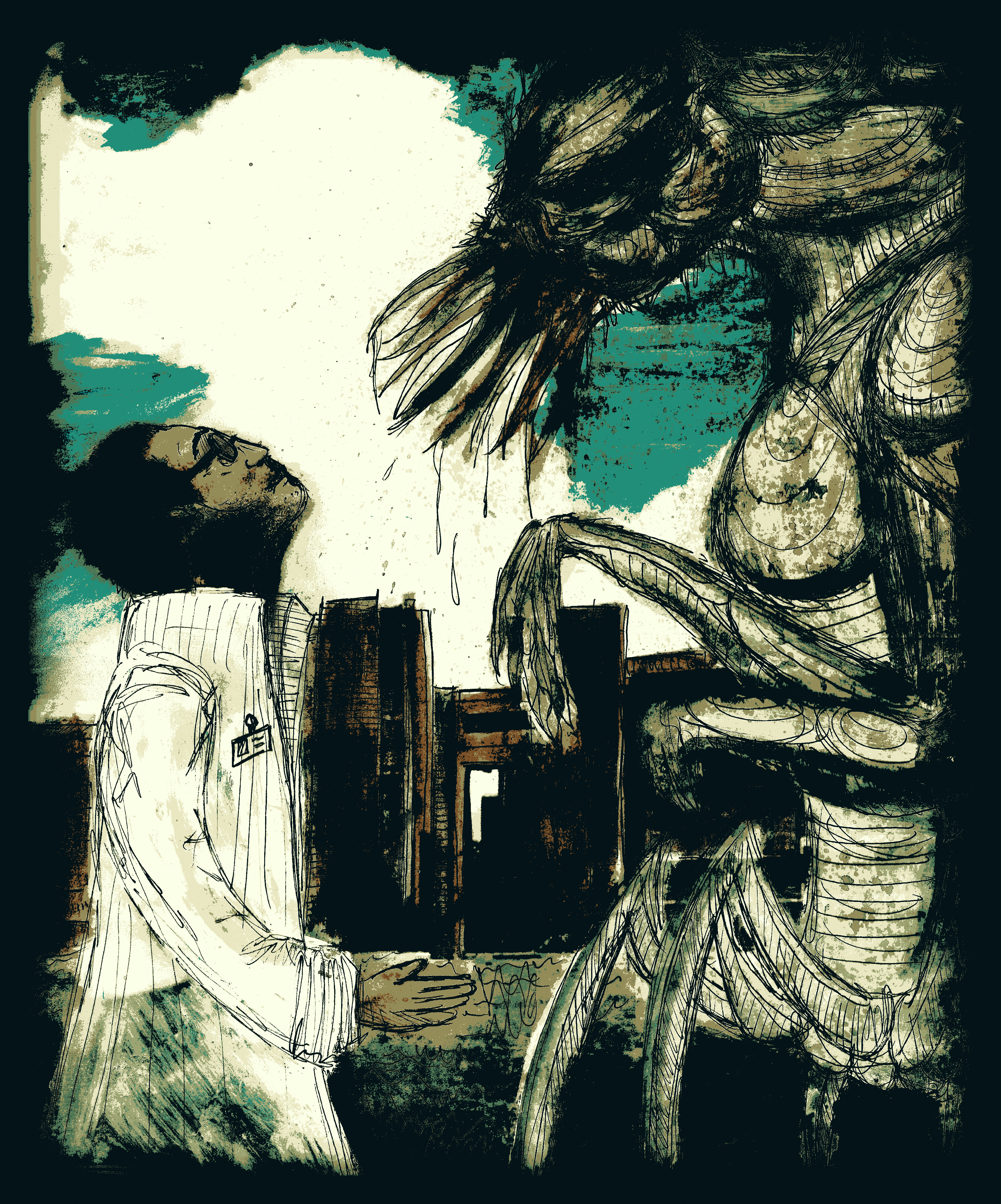
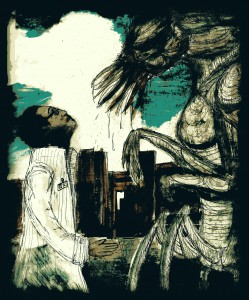
The Star-Weavers have contacted us! For decades, they have ignored our transmissions, even as they scattered their interstellar beacons across the solar system. This morning, everything changed. A Star-Weaver was here, on our little campus, and not just for a recon flyby, but to see us face-to-face. What follows below is for posterity. Dr. Elaine Hoskins and I were the only ones in the lab when the Star-Weavers arrived, and I have read enough of Hoskins’s manuscripts to know that if there is to be a competent firsthand account, I must do it myself.

The quad was empty when their craft touched down. Even campus police were nowhere to be found. In fact, if the campus had not been so quiet that day, we never would have heard their cloaked ship crush a bike rack as it landed on the quad or noticed the divots that it left in the grass.

“Hoskins,” I said, “They must have finally heard our welcome message. All that work decoding the beacon’s standard greeting has finally paid off.” I looked around my lab desk for my tablet and realized that I had left it at home. “Get the welcome message and meet me downstairs.”

“I lent my copy to Barry Qin,” said Hoskins, “for the conference.”

“Damn,” I said, “We’ll have to improvise.”
The Warning Sign: Dr. Maxwell's Notes on First Contact


To read the rest of this story, check out the Mad Scientist Journal: Summer 2013 collection.


Dr. Arlen Maxwell taught xeno-semiotics and introductory xeno-communication at a university that, until recently, was known mainly for its picturesque campus and lush, spacious quads. Human Resources has no forwarding address on file for Dr. Maxwell, but the rumor around the department is that he has left for greener pastures.


S. R. Algernon studied fiction writing and biology, among other things, at the University of North Carolina at Chapel Hill. His writing interests include sociological science fiction, Japanese science fiction, alternate histories and puzzle stories like Asimov used to write. He currently resides in Singapore.


Luke Spooner a.k.a. ‘Carrion House’ currently lives and works in the South of England. Having recently graduated from the University of Portsmouth with a first class degree he is now a full time illustrator for just about any project that piques his interest. Despite regular forays into children’s books and fairy tales his true love lies in anything macabre, melancholy or dark in nature and essence. He believes that the job of putting someone else’s words into a visual form, to accompany and support their text, is a massive responsibility as well as being something he truly treasures. You can visit his web site at www.carrionhouse.com.

Posted in Fiction | Tagged , , , , , | Comments Off on The Warning Sign: Dr. Maxwell’s Notes on First Contact

A Special Call for Our Special Call for Submissions

It is time once again for our special call for submissions to fill out our quarterly collections. Because November is crazy with conventions and National Novel Writing Month, we will not be doing a call that month. If you have something you want to try and submit, this will be your last chance before February.

What are we looking for?

  • Flash and Short Fiction: This will be for the “fiction” section of our quarterly magazine. We have a bias towards speculative fiction, but will consider non-speculative pieces. Heck, it doesn’t even need to have mad scientists. We’re hoping to accept 6-8 pieces to be spread out between two quarterly anthologies.
  • Fictional Classified Ads: We are again looking for people to submit classified ads appropriate to a mad scientist journal.
  • Questions for Advice Column: We will again have our advice column and would love for people to submit mad scientist advice questions.

Please pop over to our Submissions page for details about how to submit things and what we pay.

Posted in Administrative | Tagged | Comments Off on A Special Call for Our Special Call for Submissions