A Critique of Vorchek’s Holobiologia

An essay by Leonard Smok, as presented by Jeffery Scott Sims
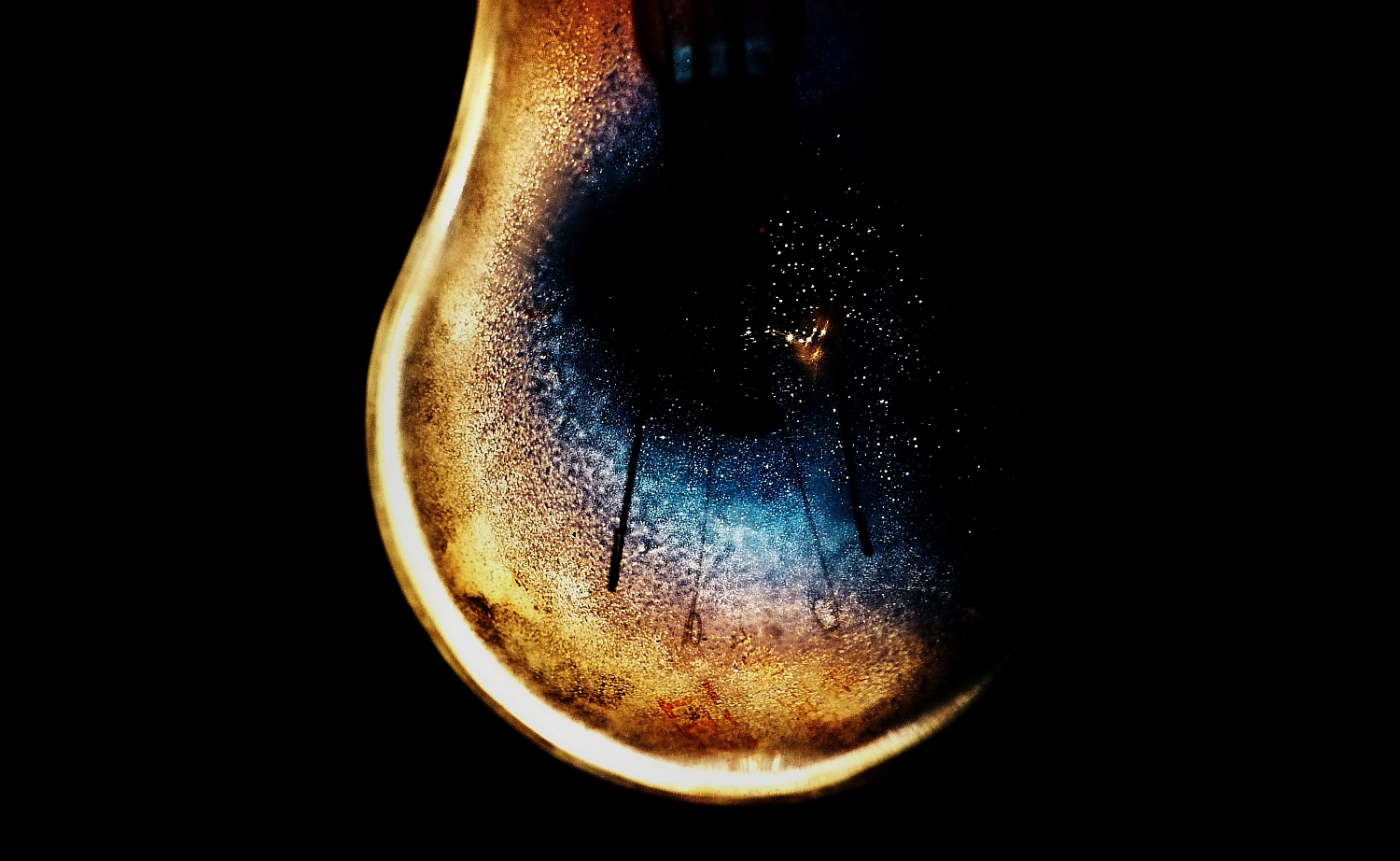
Photography by Eleanor Leonne Bennett


In this latest edition of “Weird Case Files” we consider the curious new book, just published by Starfire Press, entitled Holobiologia: Unlocking the Ultimate Secrets of Life. This largish volume, by one Anton Vorchek, Professor of something-or-other, purports to be the latest entry in the “life, the universe, and everything” contest, and seems to be making quite a splash in certain fringe circles. The book has not yet received wide distribution but, if it should do so, may excite the fantasies of die-hard true believers everywhere. As always, this is a pity, for despite some more than usually imaginative elements, Vorchek’s work is merely another contribution to the pseudoscientific literature of the abnormal and the hypernormal.

First it must be noted that, by even stooping to review this work, we are violating our standard policy of not paying attention to strange claims without possessing adequate background data. Vorchek, and for that matter, Starfire Press, are quite unknown to us. The latter, to the best of our knowledge, has never previously published anything. Its personnel, and the location of its offices, remain obscure. The distinct possibility exists that Starfire is one of those “home presses,” operating for the sole purpose of putting out this book, in which case it may well be the brainchild of the author himself. If so, he has done a fairly good job of printing, but we learn little more from this deduction, for Vorchek, as of this writing, remains a complete man of mystery. Frankly, we are not convinced that there is such a fellow; the name may be a pseudonym. On the title page, and in the introduction, he identifies himself as a professor–he omits, however, his actual profession–but otherwise provides no personal information of any kind. After considerable checking, we may state with near certainty that the name of Vorchek appears in no recent academic listings; he is associated with no prior publications; and all attempts to make contact with him have been fruitless.

Secondly, it should be pointed out that Holobiologia, on the question of style, is a terrible book. This volume clearly received no quality editing: grammar is often weak, and the structure is hopeless. Vorchek rejects the tried and true formula of stating a claim, amassing the evidence for it, and then presenting his conclusion. Instead, what we find is argumentative chaos, with data scattered willy-nilly throughout the four hundred closely written pages, conclusions preceding evidence, claims separated from argument by many chapters, and odd anecdotes distributed randomly. In short, the book is a mess. In this critique we will do our best to sort the material, create order where it is not originally found, and explicate the grandiose and bizarre views of this remarkable man.

Thesis

Vorchek argues that all systems of human thought, including the scientific and religious, have missed the boat when it comes to understanding the nature of life and consciousness. Although he gives passing credit to all, he rejects the “fragmentary approach” which fails to “realize a coherent theory” which covers all known facts. The basic facts in question, as he assures us, are: the existence of self-perpetuating organic forms; the impossibility of such forms in a purely material universe; the ubiquity of consciousness in all living things; and the necessity for a higher mind underlying life. Some of this sounds drearily familiar to students of the weird. If one presumes, however, that Vorchek is just another creationist on the rampage, presume again. He actually has very little to say that they  want to hear, and nowhere in the text does one find evidence that he is the orthodox religious type. He passes himself off as a true scholar. On the other hand, he has no use for what he styles the Darwinian “dead dust hypothesis.” Our budding biologist (he may be, for all we know) tells us that evolutionary theory explains only the form, not the substance, of life and mind. Complex, willful action is invariably a sign of a higher, thinking mentality.

The substance of life is far different from what we have supposed. Living creatures are not specific, concrete entities connected only by descent, but rather tiles in an unseen mosaic, organic shadows cast by an overarching being of infinite possibility. In all their variety they are products of “mind/energy templates,” which must be seen as deliberate conceptions of the “Ultimate One.” More will be said about him later. What matters here is that life, these template images, are embedded within a “cosmic matrix,” which supersedes the universe as we know it, especially in relation to time. At the cosmic level, there are no temporal bounds; in a very real, though untraditional sense, the consciousness of living forms inherently possesses immortality.

While this is the least of his findings, Vorchek claims to have conducted experiments which prove the underlying intelligence of all living things, even at the microbial level. In a long, involved passage he describes chemical tests performed upon “living material”–which range from dogs to bacteria–tests which reveal “mental components” in all cases. The same tests, performed upon dead specimens, yield similar but more diffuse results.[1] We must consider ourselves enlightened.
Communication With the Dead

At this point Holobiologia begins to get very strange. As consciousness is disconnected from matter, it logically follows that it survives the death of the physical body. If the mind lives on, there might be a way of contacting it and learning a thing or two about the future state. This Vorchek claims to have done so. Being a clever fellow, he doesn’t try to palm us off with a medium or any séance nonsense. This is science in action, after all, and the methods employed must be appropriate. Instead of making do with old fashioned mechanisms, Vorchek developed a new technique which, he says, can read the lingering consciousness in dead organisms as a camera fitted with the right filter can detect fading phosphorescence. In addition to a complicated electrical apparatus, the nature of which we are not competent to judge–nor to understand–he writes of a radioactive “plutonial solution” injected into dead tissue in order to excite the “latent mentalism.” What makes this attempt interesting is that, for the first time, Vorchek acknowledges that he is experimenting with a human corpse.

Where did he get it? He does not say. Was he legally authorized to acquire it? No comment. He admits that the body, of a young male, is “alarmingly fresh,” which conjures up sinister ideas. Whatever the source, it is upon this single case (presuming that any of this really happened) that he derives some of his most unique conclusions.

Once again, we must point out that Vorchek does not follow the standard rules of mystical story-telling. Professional spiritualists, a class of people singularly weak in originality, will not be pleased by his claims. While their profitable beliefs, however tiresome, offer lachrymose comfort to the living, this author’s findings are merely outrageous. He has spoken to the dead; he has received responses; and these responses, in the tale they have to tell of the afterlife, are simply horrifying.

Vorchek paints a picture of the scene: a small chamber, the walls crowded with hardware, a single burning light bulb dangling from the ceiling, and below that a lab table bearing the body, extensively betubed and wired to the instruments. The experiment begins as the dead man is irradiated. Constant checking of needle fluctuations in graphs, the wavering of oscilloscope readings… and then the first sign of mysterious, impossible life. The indications mount in intensity and then, without warning, from a connected microphone: speech!

At first haltingly, then with greater ease, a conversation of sorts ensues. Vorchek has transcribed the fun bits; what follows is representative.

Vorchek: Where are you now?  Are you aware of your surroundings, your body?

X: Absolute awareness of infinite nothingness.

Vorchek: Do you retain your identity?  Do you know your name?

X: All is remembered. I was ____, now I am nothing.

Vorchek: But you speak. You still exist.

X: Only the living exist. Only they hope and dream and love. I can only hate.

Vorchek: Hate?  Whom do you hate?

X: The living. All who live, who still have possibilities.

Vorchek: You had a wife, children–friends, I presume–surely you do not hate them.

X: Hatred for all. My only satisfaction lies in knowing that one day they will all become like me.

A Critique of Vorchek’s Holobiologia

Blinding light within total darkness--the sightless Eye which observes all, coming near--no escape. What it sees, ceases to be.

It is not a pretty picture that Vorchek paints of the future state, based on his experiment and other source materials.[2] The dead seem to continue as a kind of psychic residue, awareness without real life, sustained only by a cancerous envy of the living. In general they are inert, incapable of volitional action. At times, however, their rage may take on such concrete form as to render them able to lash out at the living, including at those once their nearest and dearest. Vorchek believes that “the more substantial” cases of historic hauntings may be explained in such terms. Visitations may come to persons or places to which the residue clings most closely. In all these anecdotal reports, he points out, the effects eventually fade.

So do the living dead fade, apparently. The recorded conversations reveal a gradual lessening or disintegration of the surviving personality over a period which appears to have lasted some weeks. Vorchek thinks that his specimen was a man of weak will, with insufficient mental energy to last long without organic support. Others may continue longer–even much longer, with more of the persona intact–but in the end all (barring a freakish exception, discussed below) will dwindle into nothingness. This energy, which the author considers the scientific basis of the soul, is reabsorbed back into the cosmic matrix from which it originally came, and at that point, as a rule, the trappings of individuality vanish with it.

Here we reproduce a telling item from one of the final transcripts:

Vorchek: Can you still hear me?

X: Very faintly. All is going away.

Vorchek: You are going away? Where are you going?

X: Fragments breaking off–consciousness crumbling–enormous power drawing me down into it. Can not maintain contact much longer.

Vorchek: What is the source of the power?

X: Blinding light within total darkness–the sightless Eye which observes all, coming near–no escape. What it sees, ceases to be.

Vorchek: Tell me what is happening to you. Describe the sensation.

X: No words, no images. Something out there, and within, and of me, some thing of burning cold, is feeding on me.

Vorchek: What do you feel?

X: Terror.

Vorchek’s theories identify him as a most artless pseudoscientist. He ignores the first requirement of becoming a successful, thoroughgoing crank, that one write in such a manner as to please one’s chosen audience. They should always be told what they want to hear–that is how one rakes in the big bucks–and yet surely he falls short. Our friends out on the lunatic fringe will cheer his arguments in favor of post-death survival, and the annoying reiteration of the claim that such matters possess a scientific basis–for they all crave that, however much they may deny it–but otherwise Vorchek must disappoint. The survival he postulates is limited, ephemeral, and unpleasant. The true believers desire comforting tidings of their upcoming lives after death: reunion with loved ones, communion with God, a fitting and eternal reward for lives well spent. Holobiologia provides nothing of the kind.[3]

The Fate of the Dead

What eventually becomes of organic vitality, of consciousness; or, if we must employ the term, the soul?  Vorchek has already indicated that the final fate is not one to which we can look forward with great relish. Indeed, at various points in the text he elaborates this theme, and his conclusions are truly disturbing.

Consciousness dissipates over a period following death, a process of absorption into this “matrix” of which he frequently speaks. The next boon he grants the reader is the claim that this process is a volitional act, not on the part of the individual, obviously, but rather at the behest of the universe itself. At first it appears that Vorchek is referring to the operation of some hitherto unknown natural law, an inherent aspect of the material cosmos. That turns out not to be the case. We suppose that did not sound impressive enough, so he chooses to push the envelope one step further. There is a supernatural–or, as he clumsily styles it, a “hypernormal”–mind at work making these things happen.

Vorchek’s subject, or victim, makes reference to something “feeding on me.” Vorchek treats this as a literal statement and expands upon it. There is a greater power in the universe, one which depends for its sustenance upon the mental energies of once living creatures. Man, unfortunately, is no exception to this rule. One may imagine this being harvesting the dead, extracting what is essential in them–i.e., what is non-material–and making use of that essence for its own purposes. If the eating of souls be not a flat statement of fact, it is yet an adequate analogy to what is taking place.

This then, is the long sought meaning of life: we are all, from microbe to man, members or parts of a crop, possessing only utilitarian value, a value not defined by us. Vorchek carries this thinking to the limit by deducing that we are sown, and considers it a given that we are reaped, by a creature of unimaginable vastness, one which may comprehend the universe; one which may consist of the hypernormal totality of the universe. Heady stuff, if not particularly edifying. One wonders what the crystal gazers will think of it all. Can they incorporate these “truths” into their own blandly optimistic weltgeist?[4]

Overall, Holobiologia tells us that the living–by which Vorchek means the dualistic mind-body combination–are immune to the direct machinations of this cosmic being. It has no interest in us until the combination is naturally broken apart. Vorchek makes a nasty comparison to the eating habits of vultures, or the actions of putrefactive bacteria. He does allude, at first in passing, later with greater urgency, to rare cases, which will be relevant shortly, in which living beings may be threatened by this awesome force. This grim possibility arises only among the sentient, meaning man (although he casually allows for the existence of other, extraterrestrial, intelligent types). Those individuals of superior mental clarity and awareness–those smart enough to achieve an understanding of the true nature of the universe, and our place within it–may actually draw the attention of this entity unto themselves–always with fearful consequences. The best minds throughout history, scientists and thinkers who seek truth too far, have been at constant risk of gaining this shattering knowledge, and thereby allowing themselves to be discovered. Vorchek interprets, or reinterprets, many famous and traditional cases of disappearance in this light.[5] By collating these stories, and viewing them through the lens of certain disturbingly consistent myths from various points of the globe, he finds that these chosen unfortunates have been directly translated to the post-death stage, without any subsequent degeneration of consciousness. They really do “live” forever, but trapped like flies in amber, contained for eternities without end within the mystical substance of their hypernormal tormentor, in a state of all knowledge, and permanent shrieking madness. There is no heaven in Vorchek’s twisted world view, but there is very definitely a hell.

The Master of the Universe

The infernal being posited by Vorchek bears all the hallmarks of a devil, but by any objective standard must be considered the true god of the universe. Judging from its treatment of the living and the dead, he deduces that it exists for its own purposes, with no anthropomorphic regard for its subjects or victims. To such an entity, we are nothing but foodstuffs and playthings. It follows that all major, conventionalized religions have missed the point of the deity, and have compounded wishing and hoping into a sweet intellectual syrup tolerable to uninformed minds. Vorchek is scarcely the first to say so, but he attempts to take his case beyond deduction. He offers what he calls data.

He gathers his answers mainly from ancient myths, those marvelous Rorshak tests of the dedicated pseudoscientist. Whether it be ancient astronauts or creationist mumbo-jumbo, these curious old tales from man’s youth offer something for everyone. We should have known that Vorchek would reduce himself to this level. He has surveyed the “relevant literature,” interpreted it to the breaking point, and–who would have guessed?–found exactly the sort of primitive story he set out to find.

Vorchek bases his arguments upon a widespread and ominous cycle of myth which has, at its foundation, the belief in an amoral, conscienceless creator being–the real, ultimate “God”–who made the cosmos at the beginning of time and has ruled it, after His fashion, ever since. Given the magnitude of His works and actions, He is considered omnipotent and thoughtlessly, almost casually omniscient: He can do anything, but serves only His own ends, whatever they may be; He knows everything, but often has little or no interest in the day to day management of the universe He devised. His intervention, when it rarely occurs, is necessarily spectacular and grotesque. This spooky legend has never garnered the support of the masses, yet has cropped up throughout human history in surprising times and places. Wherever it has arisen, and by whatever name He has been styled, His cult followers have disdained hopeful prayer to their God; the results are not good. More commonly they have prayed out of fear, deep from the heart, that He let them alone.

Our Professor has accomplished yeomen work in collating the history of this morbid idea. Furthermore, we must grant that he appears to be correct when he discerns linkages among the cases which he extracts from the works of various scholars, both modern and antique. Other, superior thinkers have already drawn attention to this pattern. Thus we are told of the obscure Egyptian notion of “the lidless eye that can not but see,” first mentioned in verified documents of the 22cd Dynasty; “the Eternal Seer in Darkness” who troubles the dead, from the 3rd Century B.C. The Thoughts of Heratakos; Labian’s late Classical Neo-Platonic maunderings on “the All Knowledge Which Knows All;” and the medieval Visions of Antigon, with their “eyes swimming in sight.” More recent authors provide additional data, oddly gathered from widely separated regions of the globe. Much is made of “the glowering eye in the highest tower” which Chard and Bromhead, in their volumes of Chinese studies, connect to a frightful body of esoteric lore which has deep roots in that country’s past. Obermeyer, the Polynesian expert, in his South Seas Tales writes of the great Inyora, “the forbidden creator,” who “strides haughtily through the dreams of the dead.” Barrent regales us with the atrocious Bantu fable of “The Talking Eyes In the Box” from his Sub-Saharan Travels. Of course Vorchek, being Vorchek, also drags in Bleek at this point, as well as Henreid’s Unbound Truths, a trashy Theosophist tome which, surely by coincidence, refers to an omniscient Law Giver who “sees from within and without,” “who judges, but cares not.”

It is Stromberg who, in his Survivals From Prehistory, first alludes to the awesome name Xenophor.[6] He cites Indian legends about this horrendous being, “the thousand eyes that see everything and nothing;” the “creator Who rages at creation;” “the insatiable Eater of the Dead, never satisfied.” This is the fullest statement of the myth which Vorchek makes his own. The parallels once again are impressive; often, in their precision, astounding. All very nice, but are we to conclude, with Vorchek, that this mass of so-called evidence–the myths, the talks with the dead, the speculations about cosmic fabrics and matrices–add up to a coherent whole? Myths are but imaginative stories, and the rest are only fragments, logically broken, which lead nowhere. Even setting aside the issue of honesty (we have to take the author’s word about a great deal), we need not accept his fabulous claims. He has not solved the mysteries of life and death. He has not begun to do so. Vorchek has simply spun another wonder tale for the benefit of the true believers… in this instance, we suggest, believers of a particularly deranged state of mind.

The Last of Vorchek?

Shall we learn more in the future at the feet of the brilliant Professor Anton Vorchek? If the final chapter of Holobiologia is to be taken seriously, perhaps not. He argues (friends and faithful readers, he prepared us, so we should have been ready for this) that the all seeing eye, or eyes, of Xenophor are upon him, and that there may be no escape from that baleful gaze. He has drawn attention to himself–he has discovered too much–he has been located, and retribution is approaching. Ominous portents gather. He writes of a series of dreams which have begun to plague him, dreams in which he senses a malevolent force closing in on him. Now there is evidence. He assures us that evil strangers “of foreign aspect” have accosted him on the street, and have made mention of a certain horrible name. He predicts the immediate appearance on earth of strange radiances from the farthest corners of the universe, a sure sign that He is coming.[7] “Even I,” he cries, “can not imagine the awfulness of the fate which may await me.”

Professor, that is too bad, really. To where should we send flowers?

What we have here, probably, are the makings of a publicity stunt. Vorchek’s nonappearance among the living, and his non-responsiveness to letters, become clear.[8] He has been taken away, at least until book sales flag. We wish him luck, and trust he isn’t really trapped, screaming, forever in the clutches of his cosmic bogeyman. Vorchek is an imaginative fellow, and Holobiologia is an entertaining read in its way, and when he returns from his flying saucer ride–or wherever he is–we hope he will be in a position to provide us with a further report.


[1]Vorchek cites the work of Dr. Leslie Harrison in support of his claims. Harrison is a well known pathologist and reputable scientist and, in fact, he has conducted experiments which resemble those of Vorchek. Our author doesn’t inform his readers, however, that Harrison has repudiated his own study, stating that his results are “ridiculously fantastical” and “unworthy of sane belief” (see The Journal of Theoretical Pathology, XI:73). Vorchek ill serves himself by citing Harrison. [Back]

[2]He cites as authorities various folk beliefs, including the morbid afterlife tales of the ancient Greeks, Hebrews, and other pre-Christian peoples. Also, he relies heavily upon the infamous Collected Wisdom of Jacob Bleek, a gathering of mystical notes written by the man–regarded by some as a ground breaking amateur scientist–best known as a self-proclaimed dark sorcerer. These peculiar ramblings do supplement Vorchek’s theses in dramatic fashion. We are supposed to assume, of course, that the recent author did not crib his ideas from the old. Well, maybe. Bleek’s works have been taken seriously by scholars who really ought to know better. We will not fall into that trap here. [Back]

[3]Let us not fall into the error of granting him too much credit for this. It’s hard to figure out what kind of game Vorchek is playing, and we confess ourselves unable to get a handle on his motives. His argument is a public relations disaster–exactly what one might expect if he were an honest researcher, presenting genuine discoveries which the uninformed reject on emotional grounds (the history of true science is replete which such sad episodes)–but we know this can not be so in this case. We must conclude that the Professor is either too clever by half, or a remarkably stupid man. [Back]

[4]According to Vorchek, at least one group already has. He cites Isaac Blanchard’s semi-anthropological study on The Cult of Blug, the Destroyer, whose worshippers deliberately sacrifice themselves to that dread god out of a shared sense of nihilistic unworthiness. Blug annihilates the corpus and psyche only of the acolytes who come to him seeking mystical eradication, on the grounds that they possess no inherent value. They cease to be, they cease ever to have been. Blanchard describes rituals which are unspeakable in their foulness. Since he actually joined the cult in the end, and has since dropped off the radar screen, we are scarcely in a position to consider him a credible or unbiased witness. This illustrates yet again Vorchek’s substandard and scatter-shot method of sourcing his claims. [Back]

[5]His hair-raising retelling of the old and well known Hebrew tale of Elijah will especially outrage the orthodox. [Back]

[6]Bleek, who makes much use of the term, apparently follows Stromberg; not for a moment will we accept that it works the other way around. It would help if we could pin Bleek down in time. Everything about him seems to be a mystery, even his dates of birth and death. [Back]

[7]An astronomical colleague of ours, Dr. John Kelly, humorously notes that the flaring of the quasar NGC-1232 amply fits the bill. Six months ago, for the first time in known history, such a distant and mysterious celestial object was actually, for a brief period, visible to the naked eye. It would indeed be a fine joke on us all if Vorchek penned his worrisome words just before that sighting occurred. [Back]

[8]As of the final editing of this review, he still has not come forth. [Back]


Unresponsive to queries–indeed, his current fate entirely unknown–it may nevertheless be possible to identify the author of Holobiologia. This writer has been equated with a Professor Anton Vorchek, researcher at a small Arizona college. His position there surprisingly informal, this Vorchek has, in years past, developed a peculiar scholastic career devoted to investigating strange mysteries beyond the purview of conventional science. Though esteemed in certain extremely narrow circles, Vorchek lost favor among his colleagues due to his evident respect for ancient and unusual sources of esoteric knowledge, especially the morbid writings of the infamous Jacob Bleek, medieval chronicler of the bizarre. Until recently Vorchek claimed considerable success in probing odd and terrifying aspects of higher reality, which suggest a gloomy and insignificant role for man in the cosmos.


Jeffery Scott Sims is an author specializing in the weird and the fantastic. He resides in Arizona, his home of many years, which has formed the setting for several of his strange and frightful tales. A life-long student of anthropology, his hobbies include photography, star-gazing, and wilderness travel. Among his numerous published works, his most successful creations to date are the cycles of stories starring Professor Anton Vorchek, scientific investigator of the lurid unknown, and Jacob Bleek, medieval wizard and adventurer in search of forbidden lore. The latter character appears in the recently published novel, The Journey of Jacob Bleek.


Eleanor Leonne Bennett is a 16 year old internationally award winning photographer and artist who has won first places with National Geographic, The World Photography Organisation, Nature’s Best Photography, Papworth Trust, Mencap, The Woodland trust and Postal Heritage. Her photography has been published in the Telegraph, The Guardian, BBC News Website and on the cover of books and magazines in the United States and Canada. Her art is globally exhibited , having shown work in London, Paris, Indonesia, Los Angeles, Florida, Washington, Scotland, Wales, Ireland, Canada, Spain, Germany, Japan, Australia and The Environmental Photographer of the Year Exhibition (2011) amongst many other locations.

Posted in Fiction | Tagged as: , , , | Leave a comment

Leave a Reply

Your email address will not be published. Required fields are marked *

You may use these HTML tags and attributes: <a href="" title=""> <abbr title=""> <acronym title=""> <b> <blockquote cite=""> <cite> <code> <del datetime=""> <em> <i> <q cite=""> <strike> <strong>