Nathaniel K. Miller enters the Clarion Write-a-Thon

MSJ contributor Nathaniel K. Miller has signed on to participate in Clarion’s 2012 Write-a-Thon. This fundraiser benefits the Clarion Science Fiction & Fantasy Writers’ Workshop. Those interested can pledge to donate based off of the number of words, scenes, chapters, or stories a specific writer puts down on paper. If you are interested in pledging to support Nathaniel in this cause, you can visit his profile right here. Or you can visit the main page for the Write-a-Thon to learn more about the cause, see who else is volunteering to do this, or even volunteer yourself!

Writing begins June 24th and runs through August 4th, so act soon to help support this noble workshop.

Posted in Mad Scientist News | Tagged , , | Comments Off on Nathaniel K. Miller enters the Clarion Write-a-Thon

The Natural History of Carnivorism in Unicorns

An essay by Dr. E. Haraldson, presented by Torrey Podmajersky
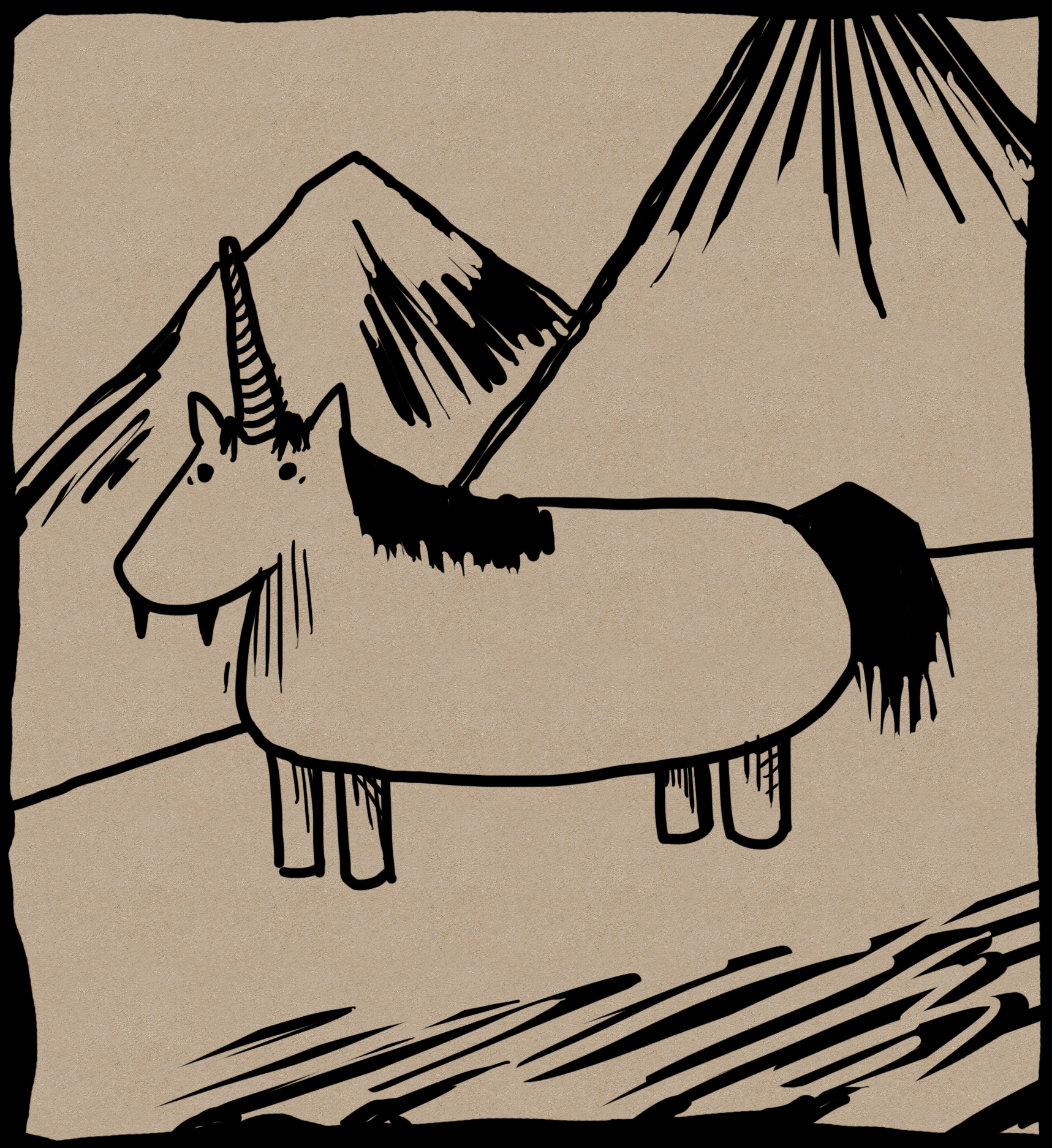
Illustration by Katie Nyborg


1. Introduction

Evidence of carnivorism in Equus ferus unicornus has been widely recorded, but until now neither studied nor explained by science. Unicorns have been credited and blamed with the deaths of animals including wolves, polar bears, wolverines, and humans.

In part because of the rugged, remote terrain of the wild unicorn habitat, researchers had been unsuccessful in making scientifically valid observations of carnivorous behavior in unicorn herds until the pioneering work of Marchand, Dubois, and Clampt in 2009.

The breakthrough occurred north of Canada, when two Arctic unicorns were recorded in the act of killing a polar bear. After dispatching it with their “horns,” they ingested stomach and intestines, then bit off and swallowed several mouthfuls of fur.i

In this paper, we combine original research with unique analysis of historical records, genetics, bacteriology, and dentition. The three modern unicorn herds studied in this research live in Alaska and the Aleutian isles, the ice floes north of the Arctic Circle, and the Northern Isles. Remains of a fourth, ancient population was discovered in the Yakut region of Siberia, and carbon dated to 4000-3800 BCE. Based on this information, we propose a mechanism for carnivorism in unicorns that correlates with all available data.


The Natural History of Carnivorism in Unicorns

The court record was first discovered by unicorn researchers because its evocative illustration was made available at auction.


To read the rest of this story, check out the Mad Scientist Journal: Spring 2012 collection.


Elizabeth Haraldsen earned her latest doctoral degree from the University of Northern Hamfordenshire for her work studying transitory herbological predation among arthropods. Her work has broadened to other forms of unique predation, especially focusing on evolution of species previously understood to be cryptozoological. Her current research expands beyond her recent focus on living equines to a study of the ectoplasmic Equus ferus ectomortus, commonly known as the “night mare.”


Torrey Podmajersky writes science fiction, fantasy, and stereo instructions for the 21st century. Drawing on experiences from science education to corporate communications, her stories confront the darkness in a relentless search for hope. Published work includes short a short story in Daily Science Fiction, post-apocalyptic anthology Finding Home, and young adult novel Gathering Grace. Torrey lives in Seattle with an antique cat, a new-minted adult, freeloading chickens, and a cutler. Follow her adventures on Twitter: @torreybird.


Katie Nyborg’s art, plus information regarding hiring her, can be found at http://katiedoesartthings.tumblr.com/

Posted in Fiction | Tagged , , , , , | Comments Off on The Natural History of Carnivorism in Unicorns

Therium 99

An essay by Virgil Ther, presented by Mark Andrew Edwards
Illustration by Katie Nyborg


Day 1: Early September

Dear diary,

Finally getting things set up around here. The grant money from the Department of Defense will be put to great use. And not just for this wicked cool digital recorder. Hello? Hello? Heh, I can change my voice with this. Awesome.

Ahem, as I was saying, transplant rejection is serious problem for more than battlefield physicians. I feel my work here on Therium 99 will benefit all of humanity, and not just the poor souls offered up on the battlefields of Asia.

True, there were some disputes over methodology back at the University but that is why I arranged to lease this charming old Victorian out here on the edge of town. There’s a lovely view of the surrounding countryside from the hill here, marred only by the cemetery.

The sterilization of the basement took longer than expected but there aren’t a lot of bacteria that can’t be wiped out by a pressure washer and several hundred gallons of bleach. There’s been some side effects on the plant life surrounding the house and I’ve had to sleep in my car for the few days but I think the lung damage was minimal. Nothing a little Therium 99 can’t fix. I can’t wait to whip up a batch.


Lab equipment requisition: look into a backpack carry system for the pressure washer, hyperbaric chamber (for nap times and to clean out lungs).


Day 3:

Therium 99 does not cure respiratory damage. Luckily, I seemed to have bounced back without too much trouble. My voice is a little hoarse but the coughing has stopped. Good thing, too. I was getting tired of sterilizing my work area every time I barked up some lung tissue.

Though the Therium 99 does not replace damaged tissue or speed the healing process or taste very good, as an anti-rejection treatment it is 79 times more effective than OKT3 or Therium 5. Heh. I’ll be another Dr. Strazl, once I get my work published. Yes, Dr. Ther … I like the sound of that.

I wonder if I could do a lung transfer with sufficient quantities of Therium 99 and a clean workspace? Not on myself, of course, but the idea is intriguing. Normally a lung transplant is a major surgical event. I wonder how much easier it will be with Therium 99? Well, only one way to find out.


Lab equipment requisition: one rat (white), one goldfish (gold), scalpel, incinerator (just in case).

Therium 99

Lab equipment requisition: one rat (white), one goldfish (gold), scalpel, incinerator (just in case).


To read the rest of this story, check out the Mad Scientist Journal: Spring 2012 collection.


Virgil Ther is a former graduate student at the Massachusetts Institute of Technology. The Department of Biological Engineering has no comment at this time regarding his alleged involvement with the events in rural Pennsylvania. His thesis advisor recalls him as a “passionate student” and “an excellent grant application writer” with “a bright future ahead of him once he settles down a bit.”

He is currently missing and assumed devoured.


Mark Andrew Edwards resides in Monroe, WA, occasionally downwind from farm country. He enjoys reading, writing and amateur cat taming. He does not perform amateur organ transplants in his basement. This is his first publication in any form.


Katie Nyborg’s art, plus information regarding hiring her, can be found at http://katiedoesartthings.tumblr.com/

Posted in Fiction | Tagged , , , , | Comments Off on Therium 99

Losing It

An essay by Samantha Higson, as provided by Davin Ireland.


“Don’t talk to me about the ironies of life,” Josh Rideout complained for perhaps the twentieth time that afternoon, “I’ve had it up to here with ironies. Big ones, small ones, they’ll be the death of me yet.” Possibly to illustrate the point, he shook another Lucky Strike free of the pack, lit up using the butt of its still-smoking predecessor, and puffed a few times to get it going. This was back in the days when smoking in pubs was still allowed, and nobody had even heard of a subatomic codon mutator.

“Just look at the state of the damned planet,” Josh groaned, and rubbed a hand across his eyes. “The second biggest killer of young people in the United States today is obesity, Sam. Fucking obesity. Not war, not AIDS, not crossing the street on a Friday night. No chance. Too many chilli dogs, that’s what doing it. How’s that for ironic, huh? On one side of the world, gluttony and over-indulgence are killing people like there’s no tomorrow; on the other, there is no tomorrow. It’s famine and starvation all the way.” Josh blew smoke at the ceiling and offered me a look of utter bewilderment. “How many innocent people die in the Third World every century from a lack of that which we throw away? Hundreds of thousands? Millions?”

I glanced about the rear of the darkened pub as I considered my response, but salvation seemed nowhere nearer than it had at lunchtime when I’d bumped into Josh upon exiting the downstairs Ladies’ Room. It had proven one of those random, chance encounters that only seem to occur when you’re least expecting it … and are therefore least able to deal with. Josh Rideout, the dashing young medical student who’d turned the last two years of my pharmacology degree upside down, and I had to run into him at the most awkward of moments. Who’d be pregnant, I ask you?

Losing It

The second biggest killer of young people in the United States today is obesity, Sam. Fucking obesity. Not war, not AIDS, not crossing the street on a Friday night. No chance. Too many chilli dogs, that’s what doing it.


To read the rest of this story, check out the Mad Scientist Journal: Spring 2012 collection.


Joshua Mitchell Rideout (born 13 April 1974) is a British evolutionary biologist and historian of science credited with developing the notorious subatomic codon mutator, a tool for hyper-accelerated genetic manipulation. Rideout is an emeritus fellow of New College, Oxford, and one of the most contentious writers of popular science in the world today. He is currently serving a thirty-year life sentence at Sing Sing Correctional Facility, New York, for murdering his long-time friend and collaborator, the synthetic chemist Dr Robert Clementine, during a professional dispute.


Davin Ireland was born and bred in the south of England, but currently resides in the Netherlands. His fiction credits include stories published in over sixty print magazines and anthologies on both sides of the Atlantic, including AeonUnderworldsThe Horror ExpressZahirComets & CriminalsRogue WorldsStoryteller Magazine and Something Wicked. You can visit his site at http://www.davinireland.com


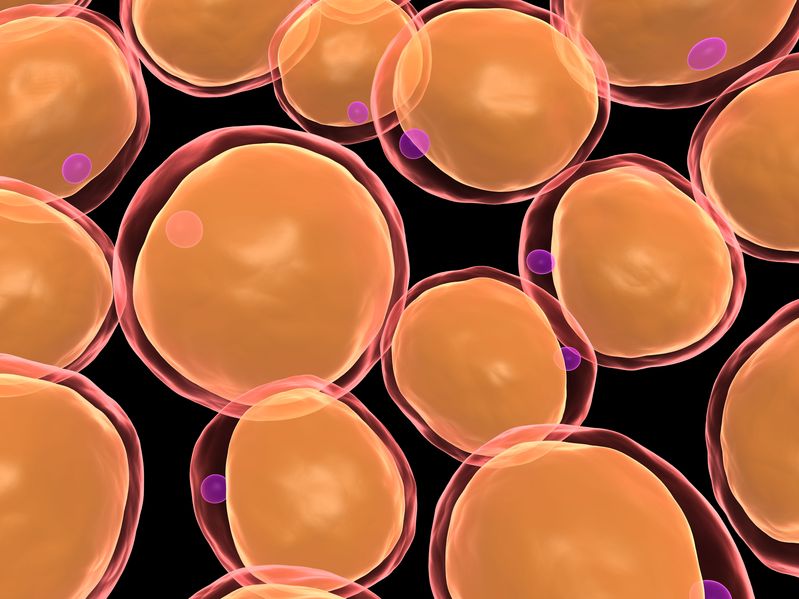
Picture of fat cells from 123RF Stock Photo.

Posted in Fiction | Tagged , , , , | Comments Off on Losing It

Our Crystal Sky Is Cracking

An essay by Odette Begichev, presented by Rosemary Jones
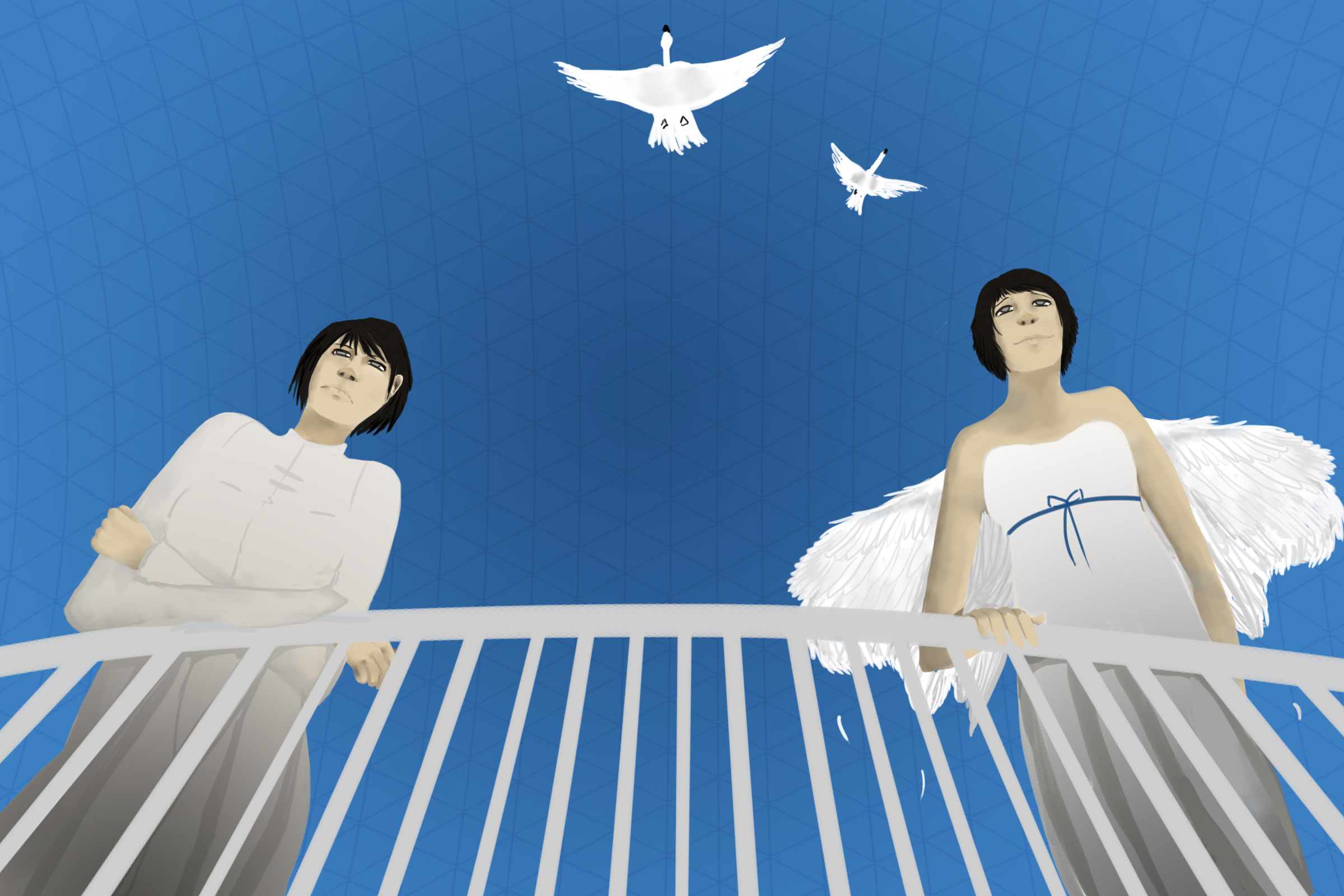
Illustration by Katie Nyborg


Come away from the window, Father. Turn away from the dark reflections in the glass. The lights went out hours ago. Let me warm your hands in mine. I will pour some wine for you. Father, look at me, for I am the last real thing left in the world that we made.

I know you mourn her. How could you not? Odette became so beautiful. You created perfection, like the snow you made to fall from the ballroom ceiling—only everything melts away at last, even here. There, did you hear that? The sky is starting to crack.

I remember the night that you asked for my help. “Come,” you said to me, and I ran down the winding stair to your room beneath the lake.

How we loved that room. The green light that flickered across the walls, the beakers of phosphorescent liquids, the gleaming tools of brass and steel, your leather bound journals chained and padlocked to the scarred tables, the barely audible hum of the computers, and far, far beneath our feet, the thrumming pulse of the generators that you designed to keep our world locked in perpetual summer. You captured science, your perfect science, in that room beneath the dark waters. And that night, the glowing schematic of your dream, your most fabulous design, your queen of swans, your beautiful woman with white wings danced across your computer screens. “This will be my finest creation,” you said to me as I clapped my hands at your achievement.

So I carried all your instruments back and forth, poured steaming liquids from bottle to glass, and turned the pages to record your notes. “Books are safer than computers,” you said, “harder to steal from a distance than the information committed to a network.”

Actually, I thought you kept the books for the spectacle of it all. It made you seem more mystical, more magical, in some way. I know it always impressed me.

So, that night, I even held the knife ready for you. Do you recall when you cut my arm? I did not cry out when you took my flesh for your creation. You smiled at me then. I remember that smile very clearly. I thought our night of magic would never end, that dawn would never find us beneath the lake. I wanted that night to last forever.


Our Crystal Sky is Cracking

How could you steal my name as well as my face? How you make your creature sweeter, make her more lovable than me?


To read the rest of this story, check out the Mad Scientist Journal: Spring 2012 collection.


Pyotr Ilyich Begichev

Considered one of the leading mutationists of his generation, Begichev perfected such exotic creatures as the unicorn and the chimera. For decades, his creations were treasured by hunters. When species rights began to become a more popular political movement, he left the inner planets to pursue private employment with more discriminating clients. According to later biographers, he had one or two daughters named Odile and/or Odette (there is some confusion on this point).

Odile Pyotrova

The madwoman known as the Swan Killer became a media sensation following the death of Pyotr Ilyich Begichev and the destruction of the astroid used as the von Meck summer home. She recorded several “confessions” after being captured by Imperials, which she would later reverse. She claimed her father died of a broken heart, although others have claimed that foul play occurred. The postmortem damage to his body made a definitive autopsy impossible.


Rosemary Jones

Rosemary Jones writes adventures set in shared worlds like the Forgotten Realms and Cobalt City. Her short stories have appeared in numerous anthologies. She loves mad science in all its weird and wonderful forms, and many mad scientists both historical and fictional dwell in the numerous books that share living space with her. Current writing projects can be found at www.rosemaryjones.com.


Katie Nyborg’s art, plus information regarding hiring her, can be found at http://katiedoesartthings.tumblr.com/

Posted in Fiction | Tagged , , , , | Comments Off on Our Crystal Sky Is Cracking

That Man Behind the Curtain: April 2012

There has been some positive interest in a regular blog post about the behind the scenes of making an e-zine. I’ve never done anything like this before, so it’s been a chance to see what editors face. For this first post, my thought is to also cover the initial genesis and the lead-up to publication.

Continue reading

Posted in Administrative, Man Behind the Curtain | Tagged , | Comments Off on That Man Behind the Curtain: April 2012

The Exploded Manifestations of Ari Ascher

An anonymous essay, presented by Nathaniel K. Miller


A heavy wave slams against the hull of the skiff, jolting me to awareness. The sea is black around me, full of looming spirit dangers, of the unknown and the unknowable. In the distance, the island juts from the roiling surface, a ten-mile plateau perched just out of range of the violence below. The sheer cliff walls slope downward from all points, protecting the inhabited surface from wind, weather, and prying eyes cast up from passing boats. I make out the hint of a particularly tall edifice, spiraling skyward like a castle spire. It fades out of view almost as quickly as it appears.

I have been trying to remember with clarity an image from my youth, an image so ubiquitous that I scarcely recall its details. In the picture, Ari Ascher is a young man, and on his lips an almost-smirk is forever frozen below those bright and brilliant eyes. If anything served to burn this particular image into the collective awareness of my world, it was this tentative quality, this absence of completion. For if he was able to resolve his life, he did not do it amongst his countrymen. If his story reached an end, it did so here, on Ascher Island.

Why Dr. Ascher has conceded now to be not only interviewed, but visited as well, is a mystery I do not expect to discern. Certainly it is due to his own inclinations, however alien, and not to my own profile or record. For two decades, Ari Ascher has remained remote and invisible, despite requests from every journalist and dignitary alive. If I am sure of one thing, I am sure of this: it has nothing to do with me.

When we reach the island’s walls, I fear we will smash into them at full force. At the last possible moment, the hull begins to hum; a dim, eerie light envelops the craft, raising us in a column of electrically-charged air. I almost laugh; there is something comical and unreal about the color, like a ghost ship in an old movie. We sweep upward, barely skirting the rugged cliff walls, until we arrive at last on a small loading port. I wobble off the skiff, vaguely nauseated and clinging to my small shoulder-bag.

The captain, my only guide, is silent, as he has been for the whole of our trip. A strangely-lit man, he is clearly better suited to solitary work than to even low-level diplomacy. He begins the trek toward the heart of the settlement, and I follow him dutifully.

The path is long and broad, and dimly lit; I see the wide swaths of farmland on either side, stretching out and up the gentle slopes that bound the occupied plateau in a subtle bowl. Further on, a handful of large structures resolve into view; woven together by multiple paths, these few, spare buildings hold the whole of life here.

Finally, we reach the central building, a monolithic temple-like structure around which all others are constellated. The streets are empty, as are the open-arched corridors of this great hall; the whole city sleeps as one, it seems. I am shown to my room, where I join them in this great community event. I am asleep when my head hits the pillow.

#

Before my eyes ever open, I hear the sounds of life rattling through the walls. It is a familiar set of morning sounds, a sort of absent bumping and shuffling. I make a mental list of things that evade me: motivation. Recollection of my arrival. Feeling in my toes. The sun glances the edge of the thick, rough-cut glass that serves as my room’s tiny porthole; I squint away the light, trying to stay in the private world behind my eyes.

A knock on the door pulls me out of it. “Come,” I croak. My breath is thin, my voice rusty and unused. A trim man enters–my guide from the night before–carrying a tray of food. He wears a grey tunic and that elusive expression, and I can see that he is not accustomed to such domestic tasks. Despite my lethargy, I pull my soul out from storage and attempt to make conversation. “Faring well after your late night?” He appears confused, but I let it pass, still too groggy to press very hard. He sets the tray down on my bedside table. “When you are ready,” he says, and leaves to wait outside. I dress alone, feeling coarse and stiff. Leaving my food and my bed behind me, I set out to explore the world of Ascher Island.

The story of Ari Ascher is known, in the sense that all great stories are known: It is everywhere, but always incomplete. According to history, legend, and popular knowledge, Ascher was a prominent scientist, a public figure, and more or less privately, a radical philosopher. Instrumental in various debates of historical significance, his eloquent and humanizing words made the impending future seem familiar, friendly, and hopeful. A “real scientist” with a gift for succinct explanations and inspiring extrapolations, Ascher became a hero for the thinking masses.

Outside of the public view, Ascher led major research projects at Avington and Mass-Orga, the fruits of which–terminal energy, selective adaptation, and biocomputing, to name a few–were the wonders of the age. But his popularity with the progressive sphere was set firmly against constantly escalating tensions. These tensions came from all directions–the academic community, the government, and what he called “The Committee.” In volume one of his memoirs, Ascher describes this group as “those constant crusaders against thought, word, and deed, whether in the name of gods or ‘natural laws,’ whose faces change throughout the ages, but whose tolerances are never swayed by reason, prosperity, or the absence of divine retribution.”

Ascher absconded with a boatload of supplies and a small army of hired help in the second year of Cohesion. Amidst accusations of illegal research projects and a climate of dangerous nationalism, Ascher did what so many of the other outspoken critics had only threatened–he left. For months, the press waited for the thousand-odd laborers to return, but they never did. In years to come, travelers abroad would bring home tales of union-workers living lavishly in villas throughout the world. But these were only rumors. It was half a decade before Ascher Island was marked on any map, such disclosure being ultimately unavoidable for what had become a sovereign nation in a designated safe-zone of international waters. After the fog of Cohesion cleared, Ascher–or rather his memory–became the focus of an unspoken and unspeakable national regret. In the minds of his former countrymen, he filled the abstract abscess in the national spirit, becoming a surrogate for what had been lost and would never return.

#

My guide leads me to a large foyer where I wait to be formally received. I have yet to see anyone else, but I recall the sounds of preparation when I awoke, of people unknown readying for their day. How many live here? More importantly, who are they? I suppose they must be the workers who stayed, their sons and daughters. But I know enough to be prepared for other possibilities.

Finally, my guide returns, leading me down a long hall into what looks like a large nave. I had expected to be ushered into an office, maybe circulated around a small reception party–a few wizened old workers, dignified by years of hardship and isolation, asking questions about the world outside, offering drinks and handshakes and maybe a clue as to why I had been allowed to see what had been hidden from so many. I find instead a room full of people, easily a hundred, with their backs turned to me. Together, we face the podium, where a single man stands, dignified, imposing, grey as stone. His eyes meet mine and he smiles. I turn to my guide for reassurance, but I find myself alone.

The man keeps his gaze fixed on me as he speaks. “I would like to welcome our guest. He is, as most of you know, a journalist. Please be kind and open with him, as I’m sure you would anyhow.” Looking me directly in the eye, he says, “On behalf of all Ascher Island, greetings.” He smiles, his poise perfect, and motions me forward.

As I shake his hand, I recall that famous photograph, aged and dated even in my youth. Looking ahead, I know that this man is Ascher–and yet he is not a day older than in that antique image. “Meet my family,” he says, and turning around, I already know what I will find. His smile flashes like a spark in my mind, becomes the smile of my guide, the smile in the photo. Looking out over the population of this place, a hundred iterations of that stoic smile meet me, beams of good will radiating outward from the endless rows of identical faces. A multitude of Ari Aschers–young, old, and everything in between.

#

 

The Exploded Manifestations of Ari Ascher

Looking out over the population of this place, a hundred iterations of that stoic smile meet me, beams of good will radiating outward from the endless rows of identical faces. A multitude of Ari Aschers–young, old, and everything in between.


To read the rest of this story, check out the Mad Scientist Journal: Spring 2012 collection.


The author is a career journalist who happened to become an amateur anthropologist during his time on Ascher Island. Since his return, he has “retired” from mainstream journalism to pursue freelance work and a degree in Cultural Anthropology. He wishes to remain anonymous.

Ari Ascher’s biography is a matter of public record, at least to the point of his great departure, and is outlined by the author in his account.

He is both dead and very much alive.


Nathaniel K. Miller was born in Virginia and grew up in Pennsylvania, spending time in Arizona, South Carolina, and New York City before returning to school to pursue a PhD in Psychology. He lives with his wife and two cats. This is his first published story.


Art courtesy of 123RF Stock Photo
Posted in Fiction | Tagged , , , | Comments Off on The Exploded Manifestations of Ari Ascher

An informal poll about content

Hello folks! I’ve had a couple people ask me about the behind the scenes of running Mad Scientist Journal. So I thought I’d ask the people who follow along if that would have any interest to them. My main thought is a once a month piece recapping how things have gone the previous month: How many submissions we’ve gotten, how much it costs to run the thing, maybe lessons learned recently. I’m fine being transparent about the mechanics of this. Is this something you’d like to know about? Or are you really just here for the fiction and don’t want that interrupted by something that breaks the illusion of the scientific journal?

So please contact me in whatever format you prefer and let me know. Tweet me, comment on where ever you follow us at, email me at madscientistjournal@gmail.com etc.

Thanks!

Posted in Administrative | Tagged | Comments Off on An informal poll about content

Proton Pursuit

An essay by Dr. Lars, as presented by D.K. Snape


There’s a flaw in the Hadron Collider. I know it. So do you, if you search down deep. Remember how queasy you felt when they first talked about starting it up? Remember all the protests?

We finally accepted it. We had to. Otherwise, the damn thing’d never get turned on. And we needed it for science.

See, they never mentioned to anyone outside a select few that we’d been visited by aliens. And offered a place in the Galactic Worlds. If, and only if, Earthling scientists could answer basic physics questions. It’s all about being in ‘the know,’ you understand.


Proton Pursuit

See, I’m on a hunt for the loose proton. The one we let loose at just under the speed of light.

The scientists built the Collider using alien specs. We had to use our own ingenuity, our own metals, and our own manpower. They oversaw the final test run. And found it good enough.

One of our own found the design flaw. After the thing was turned on, of course. CERN shut it off for a whole year to find that flaw. We could only hope it got patched up real good.

But…

The thing had already sprung a leak. Lost one tiny proton beam. Just one.

And it’s my job to capture the thing.


To read the rest of this story, check out the Mad Scientist Journal: Spring 2012 collection.


About Dr. Lars

Uber geek with an unwillingness to let go and a wicked sense of wit.

Finished undergrad degrees (three – in physics, math and engineering) at thirteen. Masters Theses in Quantum Theoretical Maths, Geophysics, Atmospheric Engineering, Orbital Engineering, Biologic Indigenous Molecular Matter Movement, and a few others on Core Movement Mathematics by eighteen. PhDs, all fourteen, in Rotational Space Time Continuum as Applied to Planet Earth’s Molecular Makeup, with special regards to Protons, hurtling through the Milky Way Galaxy. Oh, and Fluid Dynamics as applies to Terminal Escape Velocity of Molecular Constructs.

Because of his thorough theoretical knowledge of proton movement, Lars has been co-opted by CERN for the duration of this planetary study as a bounty hunter for the possible stray proton which could be categorized as primary in the cenote fluctuational events effecting Earth.


D.K. (Dekes to friends) has been scribbling tales since age three. Why stick with the on-so-boring truth when good fiction can make it so much better? Rich imagination resulted in many spankings for telling ‘untruths’ Dekes writes to depict world events in a way that appeals to imagination. Dekes will take any humdrum media explanation and add a spin to create a real tale. Write on Dekes!


Art courtesy of 123RF Stock Photo.

Posted in Fiction | Tagged , , , | Comments Off on Proton Pursuit

Some newsly bits

Just a quick note to let you guys know about some small changes done to the site.

I’ve added a few social media thingies, so each story will have a link to share it. If you like the stories you read here, and want to see more of them, please share the stories so that more people can join them. This whole project relies on people knowing about it. Obscurity will not see this through. So if you are so inclined, spread the word.

I have also added a donate button. Currently I fund this out of pocket. It isn’t horribly expensive, but it isn’t free either. In the long term I will probably have some small, tasteful ad space. But Project Wonderful wants much more content on the site before they approve it. Until then, and maybe even after, I’ll have the donate button available if people want to at least offset some of the expenses.

Finally, I have updated the submission guidelines. The big thing that I’ve included is that I’m now expanding submissions to include artists. If you would like to illustrate the stories on Mad Scientist Journal, check out what we ask of people on our Submissions page.

You may now go back to your regular goofing off at work.

Posted in Administrative | Tagged , | Comments Off on Some newsly bits