Losing It

An essay by Samantha Higson, as provided by Davin Ireland.


“Don’t talk to me about the ironies of life,” Josh Rideout complained for perhaps the twentieth time that afternoon, “I’ve had it up to here with ironies. Big ones, small ones, they’ll be the death of me yet.” Possibly to illustrate the point, he shook another Lucky Strike free of the pack, lit up using the butt of its still-smoking predecessor, and puffed a few times to get it going. This was back in the days when smoking in pubs was still allowed, and nobody had even heard of a subatomic codon mutator.

“Just look at the state of the damned planet,” Josh groaned, and rubbed a hand across his eyes. “The second biggest killer of young people in the United States today is obesity, Sam. Fucking obesity. Not war, not AIDS, not crossing the street on a Friday night. No chance. Too many chilli dogs, that’s what doing it. How’s that for ironic, huh? On one side of the world, gluttony and over-indulgence are killing people like there’s no tomorrow; on the other, there is no tomorrow. It’s famine and starvation all the way.” Josh blew smoke at the ceiling and offered me a look of utter bewilderment. “How many innocent people die in the Third World every century from a lack of that which we throw away? Hundreds of thousands? Millions?”

I glanced about the rear of the darkened pub as I considered my response, but salvation seemed nowhere nearer than it had at lunchtime when I’d bumped into Josh upon exiting the downstairs Ladies’ Room. It had proven one of those random, chance encounters that only seem to occur when you’re least expecting it … and are therefore least able to deal with. Josh Rideout, the dashing young medical student who’d turned the last two years of my pharmacology degree upside down, and I had to run into him at the most awkward of moments. Who’d be pregnant, I ask you?
Losing It

The second biggest killer of young people in the United States today is obesity, Sam. Fucking obesity. Not war, not AIDS, not crossing the street on a Friday night. No chance. Too many chilli dogs, that’s what doing it.

“Samantha? Sam?”

The only other person in the corridor at the time had been a dishevelled figure leaning against a cigarette machine for support. A thick shock of hair hung down in his eyes, and when I turned at the sound of my name, he offered me the kind of stupid, sloppy grin that drunks always seem to exhibit when caught in a situation they cannot think themselves out of. But it was him, all right. Joshua Mitchell Rideout, former campus Casanova and all-round likeable rogue, a dozen years down the line. Still rapier-thin, still every inch the black-clad rebel. And then there was me: Samantha Higson, née Beaumont, eight months pregnant, bladder crushed to the size of a chestnut, waddling out of the toilet after the umpteenth emergency pit stop of the day.

I’d been trying to effect an escape ever since.

“The thing is,” Josh continued, “I don’t blame the folks across the pond one little bit.” He quaffed back a mouthful of brandy, wiped his lips on the back of one hand, and briefly seemed to lose the thread of his narrative. That was a relief. The Josh I knew had always been broad-minded and tolerant–yet the condescending, distinctly anti-American tone of his monologue was not only disturbing, it was profoundly out of character. I found myself wondering what on earth could have brought it on.

“Mind you,” he resumed, plonking his glass on the table hard enough to attract stares, “it can’t be easy being the most powerful nation on earth. The strongest economy, the fastest cars, the biggest dreams. Little wonder they have the biggest waistlines. I was in New York recently, and you could feel it in the street. The weight of expectation, the pressure to succeed. If you ask me, the only way your average American citizen can measure up is by literally increasing in size. It’s the only response that makes sense.”

“Look, Josh,” I interrupted, and waited as he flicked a long cone of ash into the ashtray, “I don’t mean to be rude or anything, but sweeping generalisations of this kind–”

“What’s the matter, you don’t believe me?”

“I didn’t say–”

“Because all you have to do is open your eyes. Go to any McDonald’s in the country and order yourself a meal. Nobody says ‘Supersize that burger, honey’ or ‘Supersize those fries for me.’ No way, it’s ‘Supersize me’ every time. Supersize fucking me, Sam. How can we expect the U.S. to empathize with the rest of the world when most of them barely resemble the human race anymore?” He expelled a lungful of acrid smoke, and treated himself to more brandy. “Think about it. You put a two-hundred-and-ninety-pound shut-in from North Haven, Connecticut, next to some emaciated East African, they don’t even look like the same friggin’ species, am I right? Where’s the identification, Sam? Where’s the empathy?” He wiped his mouth on the back of one hand, and looked at me. “And we’re going the same way.”

“Josh,” I said slowly, “that’s enough.” I spoke quietly and without inflection, but drunk or not, my former lover knew I meant it. Josh had been knocking back the doubles since before my arrival, and now his gaze was filming over like a puddle in a cold snap. The one thing I didn’t need right then was an unconscious ex-boyfriend sprawled in the back of my car. Especially with Darren’s mother arriving from Eastleigh that very evening to walk me through the final stages of the pregnancy. But what could I do? I was a married woman, I had responsibilities. How on earth could I concentrate on the injustices of the world when I’d be up to my elbows in soggy nappies within weeks?

“I’m sorry, Professor,” I sighed, and struggled to my feet, “but I can’t do this. I understand your frustration, and believe me, I sympathize. At least with some of what you said. But part of you has gone bad, Josh. You were always angry. You were never this bitter.”

It was a dreadful thing to say, and I regretted it the moment the words were out of my mouth. Seeing the once-brilliant but erratic Josh Rideout alone and dejected in the back of some old dive I barely considered worth pissing in, twelve long years after we had parted company on difficult terms, was almost too painful to bear. But it was more than that. Despite his vitriolic opinions and haggard countenance, I found myself struggling with the notion that Josh still genuinely believed in something–even if that something had distorted his world view beyond recognition.

I, on the other hand, was rapidly losing faith on all fronts. Don’t get me wrong, Darren’s a lovely bloke. Trouble is, the man I married has never enjoyed the best of health, and by the time we discovered I was expecting, his failing constitution had pretty much ruined his chances of a decent career. Add to that a greedy, uncommunicative son from a previous marriage, and you can appreciate why we were becoming desperate at a time when most couples are ecstatic. Bumping into Josh should have cheered me up, if only because it proved there was someone else in the world even more miserable than me. But nothing could have been further from the truth.

I caught sight of him in a wall mirror as I vacated the table and made for the street. I wish I hadn’t. Alcohol had reduced a once handsome man to a pitiful caricature of his former self. His hair, as thick and wild as ever, was matted and prematurely grey; unidentified stains decorated the front of his shirt; an unkempt rash of stubble at his cheeks and throat indicated days of neglect. I kept going. I was halfway between our booth and the dimly-lit exit when something struck the arm of a chair to my left and skidded across the adjacent table top. A paperback book. Worn but otherwise perfectly serviceable, it came to rest between a damp patch and an abandoned pint glass. I reached out and picked it up. The cover was lurid, brightly coloured, and not altogether unfamiliar. But it was the name of the author that grabbed my attention.

Professor J. Mitchell Rideout.

I’d seen it before, of course–crowding out the other bestsellers on the shelves at Waterstones and W. H. Smiths. I’d even teased Darren on occasion that my old flame had finally come good, never once suspecting how right I’d been. Part of the reason for that almost wilful act of ignorance, I suppose, was the name itself. Like people, names tend to change over time. Take mine. I was christened Samantha, went through the education system as Sammy or Sam, arrived where I am today as plain old Mrs. Higson. It was the same with my brother, Justin, for whom the abbreviation Just eventually grew into Justice and finally Judge. He qualified as a solicitor around the time I got engaged. But with Josh it was different. Consistent only in his inconsistencies, utterly dependable in his erraticism, Josh had always been good old Josh, no more, no less. His name, like his demeanour, never changed.

Guess I was wrong about that.

Professor J. Mitchell Rideout. I caressed the book, turned it over in hands that trembled only slightly. The formula was populist and wildly successful. Soundbyte science for the masses. The poor man’s Stephen Jay Gould, was how one uncharitable reviewer had described its author. That made sense. Josh’s problems had never been of an intellectual nature. He simply lacked the temperament to restrict himself to one particular field of interest. He was a speed-grazer, a pioneer, a rampant polymath with opinions on everything. So what did he do? An essay here, an article there, the odd lecture when it suited him. With shrewd editing and strong narrative tone, that stuff added up to bestselling non-fiction the way pennies add up to pounds. And despite a wealth of opportunities, I had failed to make the connection.

But wasn’t there something wrong here? Although recent, the author photograph on the back cover bore only a passing resemblance to the wretched figure now hunched over a grubby brandy snifter in the corner of some rundown pub in South London. What could possibly have happened to reduce him from that to this? I gravitated back to the booth, and seated myself without another word. Like Josh himself, the tale that followed was packed with caveats and contradictions. For every professional success, personal devastation; for every public victory, domestic failure. Academically, Josh had achieved more than I would ever have dreamed possible, and with such verve and aplomb that the need for compromise barely surfaced. Privately, however, he was constantly at war with himself. Lost loves, squandered opportunities, the tragic death of a fiancé. No wonder he’d thrown himself into his work.

“Despite a loyal reading public, and a staggering amount of money in the bank,” he admitted, “I still considered myself a failure. I had become a household name but wasn’t improving lives, I was meeting deadlines but had forsaken my ideals. Until, that is, I bumped into a synthetic chemist by the name of Bob Clementine at a seminar in Massachusetts. That afternoon changed my life forever.”

I gleaned from the remainder of Josh’s narrative that the aforementioned Clementine was the former deputy director of a major academic laboratory in Boston–a man who’d earned a reputation as a maverick and an innovator for steadfastly refused to accept the limitations of his chosen field. After a particularly fractious ethics debate that saw him publicly ridicule a number of his colleagues, he resigned his post to pursue his research independently. That’s where the trouble started. Clementine had spent the six years prior to meeting Josh fighting a war of attrition with everybody from the Food & Drug Administration to the Surgeon General, yet not a single federal institution would acknowledge the stunning results he’d achieved in combating the effects of induced drug addiction in mice and rats. That’s probably because his success relied heavily upon the emerging–and largely unpredictable–field of nanotechnology.

It was at this point that Josh’s account descended into mumbling incoherence. There were numerous slurred references to mechanosynthesis, molecular assemblers, and colloidal quantum dots, but most of the jargon he used meant nothing to me. As time went on, however, the main thrust of the story emerged. Simply put, Clementine had developed a range of nanobots capable of intercepting and flushing controlled substances from the bloodstream, usually in a matter of minutes. By the end of the fifth trial, the bots had become so good at their job that a hit on a crack pipe elicited little more than a few seconds of mild euphoria on the part of the patient–who at that stage of the proceedings was a specially bred macaque named Horace. The U.S. government then flatly rejected an application for human trials, and the project stalled. With funds at a dangerously low ebb, Clementine began looking for someone to champion his cause and attract fresh investors. Josh more than fit the bill, and soon joined the team full-time.

Despite its initial promise, the relationship proved a destructive one. Engulfed by an ambition far beyond their reach, the two men quickly rationalized their way into breaking the law when Clementine’s father suffered a stroke a week before entering hospital for a triple bypass operation–a condition that rendered him virtually inoperable. The stroke itself had been the result of clinical obesity, and it was this that provided the duo with a fresh impetus.

“Almost right away we realized we could re-programme the bots to perform essentially the same function on a different substance,” Josh enthused, “namely saturated fats. Within weeks we had created a new generation of molecular machines capable of flushing all harmful cholesterol from the digestive tract. We weren’t nearly quick enough to save Bob’s father, of course, but by the anniversary of his death the cure for heart disease, obesity, and weight-related diabetes was not only conceivable but within reach.

“Josh, that’s marvellous,” I whispered, “my God, think of the lives saved.”

But my former lover was already shaking his head. “If only it were that simple,” he muttered, and fumbled another Lucky Strike from the pack. He leaned forward and snapped his lighter to the cigarette without taking his eyes off mine. When he spoke again, his delivery was slow and deliberate. “Imagine this,” he said, exhaling a thin plume of smoke from the corner of his mouth, “eating as much as you want, whenever you want, with no thought for the consequences. That’s what we were offering society, Sam. A licence to gorge. In effect, we’d be giving couch potatoes the world over the excuse they’ve been waiting for all these years. Within a generation, the whole concept of personal responsibility would be replaced by some boffin in a lab coat telling you he could make it all better again. I tried to warn him.”

Sadly, Josh explained, Bob Clementine had refused to listen. The loss of his father, which at first stung him into action, soon drove him to frightening levels of militancy. He became so enraged at the governments of the Western World for standing by and watching large chunks of their respective populations literally eat themselves to death, that he swore the worst kind of revenge. Cut to the chase, he traded science for terrorism.

Josh ran his hands through his ash-coloured hair. “Bob’s manifesto couldn’t have been simpler, or more radical,” he confided. “Develop the most potent bot cultures possible, insert them into the food chain at the earliest viable opportunity, and let them pick the human body clean of fat like … well, like vultures picking a corpse clean of flesh. And I’m not just talking about reaming out diseased arteries, Sam. Bob wanted it all. Adipose tissue, cholesterol, triglyceride levels, the lot. He even dreamt of destroying appetite through artificial manipulation of the hypothalamus.”

“That’s crazy talk,” I scoffed … yet somehow I believed every word of it.

Josh certainly did. “All you’d need are a few drops of a self-replicating culture released into the water supply of any major city,” he insisted. “Not that Bob was ever going to be satisfied with half measures. He kept raising the bar, kept revising his estimate of what the human body could tolerate in terms of a minimum fat percentage. Four percent for men, he reckoned. Then he said three was probably a better bet.”

“But that’s nowhere near enough,” I protested, and felt the baby kick inside of me. “Even the fittest of athletes struggle to maintain that kind of low for any length of time.”

Josh swallowed, and gave me a look of undisguised misery. “For women it was ten.”

“Ten,” I repeated, “ten percent? But women cease ovulating at ten, Josh. Ten percent body fat means the end of the human race.”

“I know,” he moaned, “I know. But it got worse after that. Within weeks of conceiving the initial plan, Bob settled on a final figure of one percent for men and eight for women. One percent body fat, Sam. That’s when I started getting really scared. Bob vowed he was going to teach the world a lesson it wouldn’t forget. He wanted people to look in the mirror each morning and know the face of famine. To see the skull beneath the skin, that’s how he put it. He wouldn’t listen. I tried to reason with the man, tried to make him see sense.” Josh’s bottom lip trembled at the memory. He wasn’t in tears–not yet, anyway–but his eyes shimmered with the kind of pent-up emotion that would find expression sooner rather than later. “Bob was just too far gone by that time,” he added. “He had taught the bots to breed at an astonishing rate, had increased their obsolescence quotient way beyond our initial agreement …”

He must have caught the sceptical look on my face because he waved a hand, as if scrubbing his words from the air. “Even with its inbuilt reproductive capabilities, each culture was designed to self-destruct within weeks of conception. As a safety precaution, you understand. Bob recalibrated the mechanism.”

I could barely bring myself to ask the question. “By how much?”

The great professor reached for his drink with fingers that shook like petals in a stiff breeze. He drained the last of the brandy in a single noisy gulp, and grimaced. “A thousand years,” he winced. “But a thousand years means no more us, Sam. Babies need fat to grow and develop, we need it to store energy, as protection against the cold –”

“I know what it does, Josh,” I reminded him, “I have a medical background too, remember?” Right about then, though, I had never felt less like a pharmacologist and more like a helpless mother-to-be. “If this is a joke,” I implored him, “please stop now. It isn’t funny any more.”

My former lover glanced at me in a way that suggested it no longer mattered who I was, and plonked his glass down on the table. I guessed his reaction would have remained the same had I been a stranger or his best friend. It was the story that mattered, not the listener, and the story needed telling. I didn’t quite understand just how strong that urge was until Josh made his next confession.

“I had to kill him,” he said. The admission arrived quite matter-of-factly, as if he were stating a fondness for duck à l’orange or daytime TV. “When I realized Bob was planning to dump the latest bot culture into the New York sewer system, I poisoned his lunchtime soda and got out of the country as quickly as I could. And I took this lot with me. For safekeeping.”

Josh indicated a frayed leather satchel stuffed with documents, folders, and neatly-labelled DVDs. It sat beside him in the upholstered booth, an innocuous brown pouch more dangerous than any dirty bomb or filovirus. I knew there were people willing to pay millions, if not billions, for the secrets it contained.

“What are you going to do with it?” I asked, barely able to comprehend the enormity of it all.

“Do?” Josh leant back and closed his eyes. “Joseph, Mary, and all the saints, Samantha,” he whined, “what am I going to do? I can’t just throw it away, can I? But if I pass this little bag of tricks to the authorities, I’ll be implicating myself in a high-profile murder case. What kind of a choice is that?”

I held my opinions in check. I know a rhetorical question when I hear one, and Josh had posed several for which no answer would suffice. Besides, if there was anything left of the man I once knew, he’d do the right thing in the end. When his posture sagged and his breathing became deeper and more regular, however, it occurred to me that he might be engaged in something a mite less strenuous than reflection. The light snoring that ensued only confirmed this. I can’t say I was surprised. Joshua Rideout was a fugitive–a drunken, exhausted, international fugitive–and the confession had lifted a terrible weight from his soul.

Oh, well. Just because Josh was plagued by his conscience didn’t mean I had to be plagued by mine. On the contrary. With a baby on the way, and Darren’s health showing no sign of improvement, one man’s misfortune was starting to look like this woman’s salvation. The knowledge evoked a number of intriguing scenarios. Having done my post-graduate research at a large biotech company, I knew a bit about how the medical establishment worked. Who owned what, who answered to whom … and more importantly, where the money went. Particularly that last point. Over the course of his unburdening, Josh had glanced repeatedly at the cluttered little table that stood between us as if he were afraid it might vanish in a puff of smoke. The surface was littered with all manner of pub detritus. Empty cigarette packets, overflowing ashtray, used glasses, a disposable lighter, even an uneaten packet of dry roasted peanuts. But right in the middle of it all, partially covered by the encroaching debris, lay a silver hip flask engraved with the initials BC.

I shook it free of the assorted clutter and hefted it in my hand. Not entirely empty, by the feel of it. I unscrewed the lid. No alcohol fumes invaded my nostrils. I gave it the gentlest of shakes. Maybe an inch or so of colourless liquid sloshed around at the bottom. What had Josh said to me? All you’d need are a few drops released into the water supply of any major city. I quickly screwed the lid back on, and tried to order my thoughts. If adjustments could be made to the culture’s operating parameters — eight percent body fat for men, say, and twice that for women, the dose to last for one year instead of a thousand, bots trained merely to trim cellulite instead of eradicating it — why, potentially you’d have the most lucrative slimming aid in history. The beauty of it was, you’d only need to show the multi-nationals a fraction of your research to prove its authenticity. And if that didn’t work, how about a live demo involving a nice plump rat and a drop of joy from the magic flask?

I checked Josh’s breathing one last time. Out for the count. Without making a fuss, I crammed the flask down between a pair of cardboard folders, and wedged the hefty satchel under my arm. As I slipped out of the pub moments later, I drew not so much as a second glance. And the best thing about it? Poor old Josh could never report me to the police. The prime suspect in a homicide is hardly a credible witness, is he? Especially when there’s no evidence to support his outrageous claims.

Cheerfully oblivious to the aches and pains of pregnancy, I strolled through a city brimming with good fortune and April sunshine. I treated myself to a chocolate muffin at a Bermondsey tea shop and sang along to the radio during the drive home. Then I chose a comfortable armchair by the window and planned a few calls. My lethargic, overweight husband and equally delightful step-son were busy caning the Wii in the parlour, and their excited whoops and hollers soon grated on my nerves.

“Turn that bleedin’ racket down!” I yelled through the wall, and dialled the first number on my list.

The sofa surfers ignored me. They always did. But they won’t for much longer. Nearly ten years of research and development have passed since that day. Our 63rd and final round of mammalian testing is about to begin. I have become a millionaire many times over in the interim, but the only other person in the family who knows the full extent of my wealth is our nine-year-old daughter, Jade. A lovely little wisp of a thing, she is. Funny, but she doesn’t take after her daddy one bit. Not that I’m complaining. Darren is going on a crash diet soon, and that surly teenage brat of his will be joining him. And if the insurgent bot cultures don’t kill them, formal human trials are next.

Otherwise? Well, I’ve always looked good in black. I’m sure Josh would approve … wherever he is.


Joshua Mitchell Rideout (born 13 April 1974) is a British evolutionary biologist and historian of science credited with developing the notorious subatomic codon mutator, a tool for hyper-accelerated genetic manipulation. Rideout is an emeritus fellow of New College, Oxford, and one of the most contentious writers of popular science in the world today. He is currently serving a thirty-year life sentence at Sing Sing Correctional Facility, New York, for murdering his long-time friend and collaborator, the synthetic chemist Dr Robert Clementine, during a professional dispute.


Davin Ireland was born and bred in the south of England, but currently resides in the Netherlands. His fiction credits include stories published in over sixty print magazines and anthologies on both sides of the Atlantic, including AeonUnderworldsThe Horror ExpressZahirComets & CriminalsRogue WorldsStoryteller Magazine and Something Wicked. You can visit his site at http://www.davinireland.com


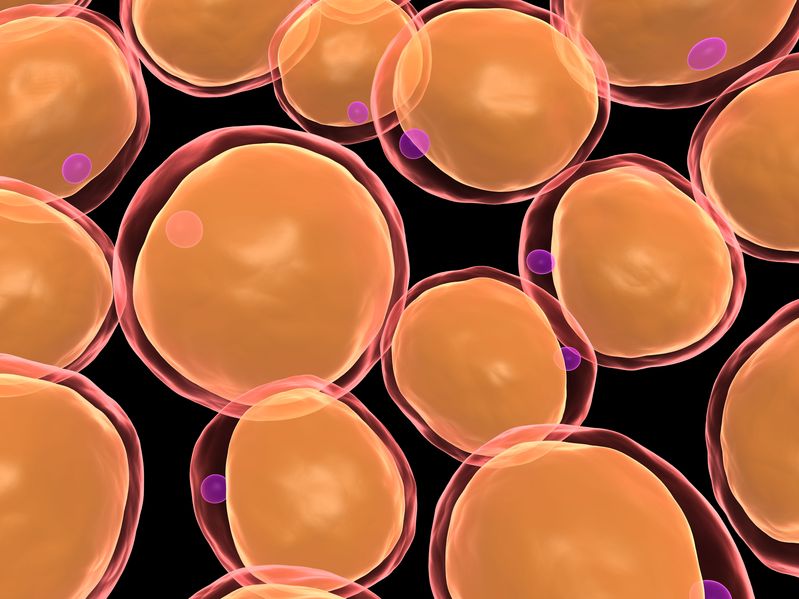
Picture of fat cells from 123RF Stock Photo.

Posted in Fiction | Tagged as: , , , , | Leave a comment

Leave a Reply

Your email address will not be published. Required fields are marked *

You may use these HTML tags and attributes: <a href="" title=""> <abbr title=""> <acronym title=""> <b> <blockquote cite=""> <cite> <code> <del datetime=""> <em> <i> <q cite=""> <strike> <strong>